Fuel prices
Swiss fuel prices hit a new yearly high
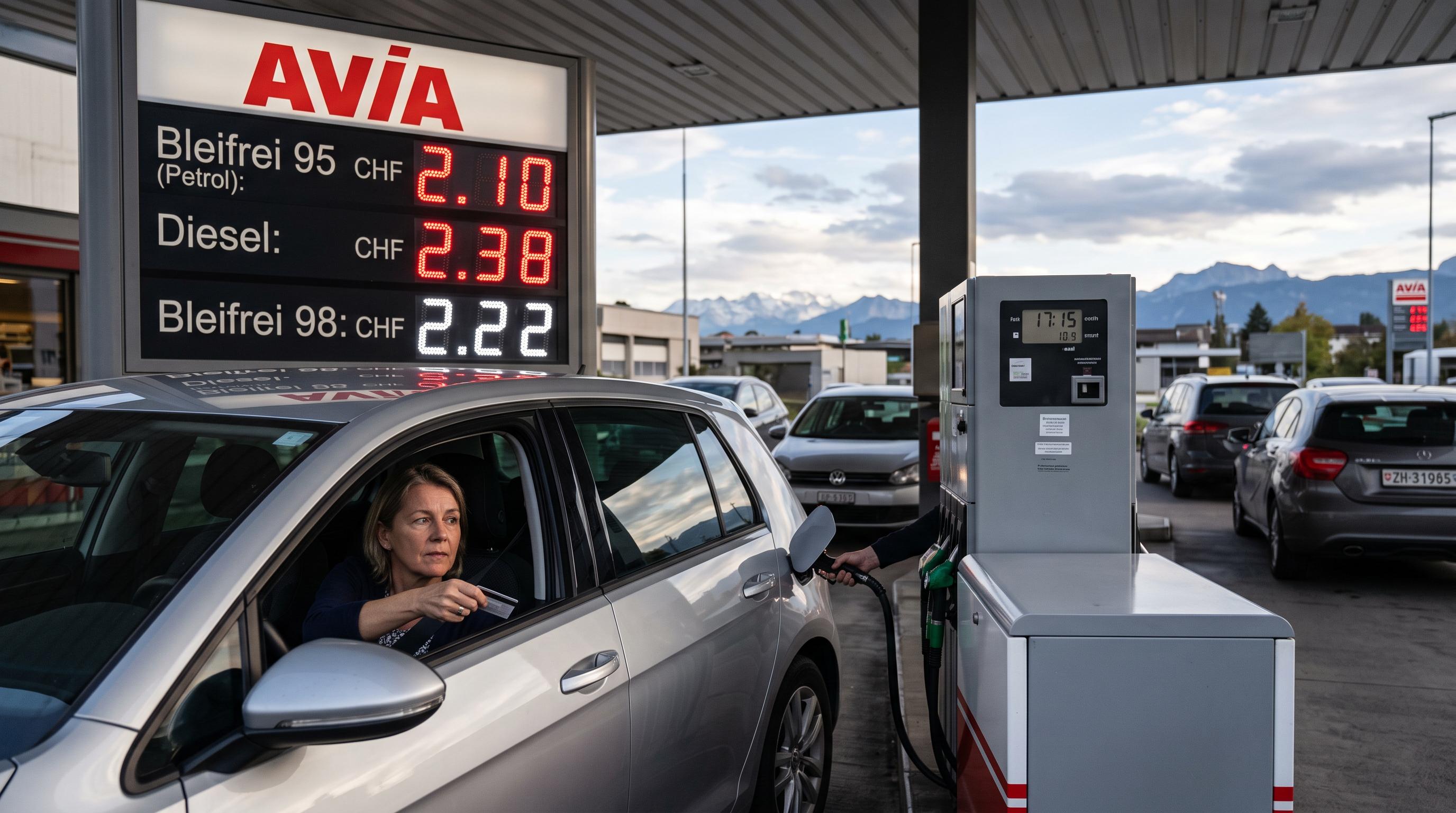
Average Swiss petrol prices have reached CHF2.10 per litre and diesel CHF2.38, approaching the records set after Russia’s invasion of Ukraine and adding pressure to household and transport costs.
Pump Prices Break Higher
CHF 2.10 per litre for unleaded 95 marks a new yearly high at Swiss filling stations, according to the latest figures from Touring Club Switzerland. The average rose by 5 centimes in a single week, extending a steady climb that is feeding directly into the cost of commuting, deliveries and everyday travel.
Diesel has moved even closer to the peak reached during the energy shock that followed Russia’s invasion of Ukraine. The average now stands at CHF 2.38 per litre, just 2 centimes below the 2022 record of CHF 2.40. Unleaded 98 costs an average of CHF 2.21.
The increase has gathered pace over the year. Petrol is up around 27% since January, while diesel has risen around 33%. For a driver buying 50 litres of unleaded 95, the current average represents a pump bill of about CHF 105, before any local price differences.
The figures published on September 16, 2026 give Swiss households and businesses little relief at the end of the summer travel period. They also show how quickly international energy pressures can reach the forecourts of a country that imports most of its fuel and depends heavily on road transport.
Diesel Closes In on the 2022 Peak
Diesel is now within 2 centimes of its 2022 record, putting the current rise in direct perspective. In the months after Russia invaded Ukraine, unleaded 95 reached as much as CHF 2.31 per litre and diesel climbed to CHF 2.40. Today’s prices remain below those peaks, but the gap has narrowed sharply.
The comparison matters because the 2022 surge changed household budgets and operating costs across Switzerland. Car-dependent workers paid more to reach jobs, while companies faced higher bills for transport, construction and deliveries. The latest figures revive that pressure without yet matching the previous petrol record.
The price increases have also been uneven by fuel type. A 27% rise for petrol since the start of the year compares with a 33% increase for diesel, a difference that affects the commercial vehicles, vans and lorries that move goods across the country. Businesses generally pass some transport costs through supply chains, although the effect depends on contracts, fuel use and the ability to adjust prices.
Touring Club Switzerland’s averages describe the national market. Individual stations can charge more or less depending on location, competition, rental costs and purchasing arrangements. Drivers in border regions may also compare Swiss prices with those across the frontier, adding another layer to local competition.
Global Supply Chains Drive the Rise
Rotterdam, the dollar and the Rhine help set the price at Swiss pumps. Touring Club Switzerland identifies three major influences: refined-product prices on the Rotterdam exchange, the US dollar exchange rate and freight rates for shipping on the Rhine. Each link in that chain can affect what Swiss motorists pay, even when conditions at a local station appear unchanged.
The market is also dealing with reduced refining capacity. Experts cited by Keystone-SDA point to refinery destruction connected to the wars in Iran and Ukraine as another reason for the current price pressure. Damage to refineries can restrict supplies of usable petrol and diesel, tightening the market even when crude oil production itself does not change by the same amount.
Crude prices have added fresh momentum. Brent briefly traded above USD 108 per barrel on Wednesday morning, a level last seen in July. Higher crude prices can filter through to refined products, though the timing and size of the effect depend on exchange rates, transport costs, inventories and refinery margins.
For Switzerland, these international movements arrive through a tightly connected supply system. A stronger dollar can increase import costs, while higher Rhine freight rates can raise the expense of bringing fuel inland. The result is a domestic price shaped by events far beyond the forecourt.
Higher Fuel Costs Reach Every Road
The outlook offers no immediate sign of cheaper fuel. Brent crude has returned above USD 108 per barrel, while refinery capacity damaged by conflict continues to weigh on product supply. If crude and refined-product prices remain elevated, Swiss motorists and transport operators are likely to face continued pressure at the pumps.
The impact will extend beyond private cars. Diesel is widely used by freight operators, delivery fleets and other commercial vehicles, so sustained increases can raise the cost of moving goods between Swiss cities and across the country’s mountain routes. Households may also feel the effect through delivery charges and the prices of products that require road transport.
Switzerland maintains compulsory fuel stockpiles that can be used during shortages, as reported by Swissinfo in May. Those reserves are designed for supply emergencies, however, and do not automatically lower prices during a period of expensive crude, shipping or refined products.
The next price moves will depend on several variables: the Rotterdam market, the dollar, Rhine freight rates, refinery availability and the direction of Brent crude. For now, the figures provide a clear measure of the squeeze. Petrol has risen more than a quarter since January, diesel by one third, and diesel is already within touching distance of its 2022 record.