F-35
Lawmakers demand answers over Switzerland’s troubled F-35 purchase
Parliament has questioned Defence Minister Martin Pfister over serious shortcomings in Switzerland’s procurement of F-35 fighter jets, including the absence of a fixed price despite earlier assurances. The Federal Council is expected to respond to auditors’ findings in December.
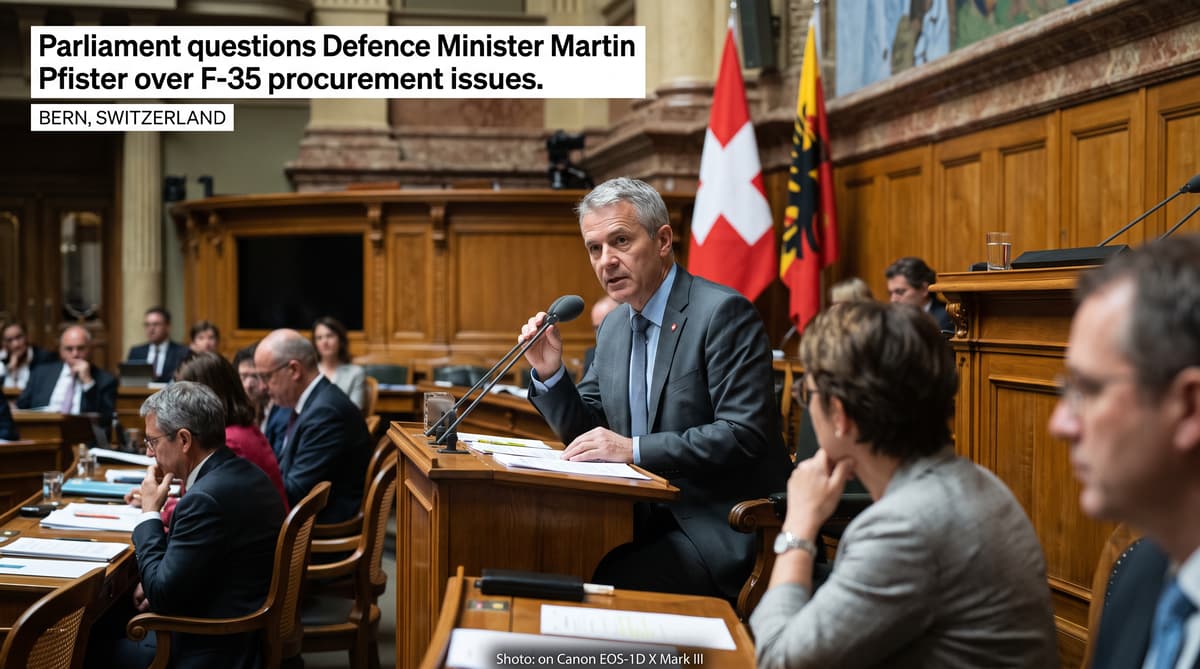
Nineteen questions landed on Martin Pfister’s desk as Parliament demanded clarity over Switzerland’s troubled F-35 purchase. The defence minister faced lawmakers two weeks after auditors exposed serious weaknesses in the negotiations for the US-built fighter jets.
The September 8 report found that Switzerland had no fixed-price agreement, despite earlier assurances from former defence minister Viola Amherd and the military procurement agency armasuisse. The finding has placed the government’s handling of the deal under sustained political pressure and revived questions about who approved the negotiating strategy.
Lawmakers also asked whether the procurement could lead to criminal consequences. Pfister repeatedly declined to provide a substantive conclusion, saying the Federal Council would state its position in December. That timetable leaves Parliament waiting for the government’s formal response while financial and legal questions remain open.
The dispute concerns a programme worth billions of francs and a central element of Switzerland’s air defence policy. The government has already reduced the planned fleet from 36 aircraft to 30 after the United States demanded higher prices. It has also requested additional funding to address the increase.
The Fixed-Price Dispute
The missing fixed price sits at the centre of the controversy. Switzerland’s earlier public statements suggested that the country had secured protection against unexpected cost increases during the F-35 negotiations with Washington. The auditors’ findings challenge that account.
The report identified serious shortcomings in the negotiation process and raised concerns about the way officials handled advice from the external consultancy Homburger. Lawmakers have focused on a possible conflict of interest involving the consultancy’s role in decisions connected to the fixed-price issue.
Pfister defended the use of outside advisers, calling it standard practice. He also said the report had found no unlawful conduct or financial loss under liability law. That assessment has not ended the political dispute. Parliament still wants to establish who knew that a fixed price had not been agreed, when they knew it, and how the information was presented publicly.
The distinction matters for accountability. A procurement process can comply with legal rules while still failing to give elected officials and the public a clear picture of the financial risks. The Federal Council’s December response is expected to address both the auditors’ findings and the chain of responsibility.
Six Fewer Jets, Higher Costs
Switzerland has cut the planned fleet by six aircraft, from 36 to 30. The reduction followed higher prices demanded by the United States and changes the scale of the country’s most expensive military procurement programme.
The government has asked Parliament for CHF394 million to cover additional costs. By the end of June, Switzerland had already paid nearly $2 billion for the jets. The total budget earmarked for the programme stands at CHF6.4 billion.
Those figures explain why the procurement has become a parliamentary priority. Every change to the number of aircraft affects the Swiss Air Force’s future capabilities, training requirements, maintenance arrangements and long-term operating commitments. A smaller fleet may reduce the immediate purchase burden, while also narrowing the margin available for deployment and maintenance.
Pfister told lawmakers that operating costs remained on track to meet the budget. The statement addresses one part of the programme’s finances. Parliament’s broader concern is the gap between the public understanding of the purchase and the price exposure revealed by the auditors’ report. That gap now requires a formal explanation from the Federal Council.