Swiss politics
Guy Parmelin to leave Swiss government at end of year
Guy Parmelin will leave the Swiss Federal Council on December 31 after 11 years in government. Report on his decision, his record as economics minister and rotating president, and the political implications of the coming succession process.
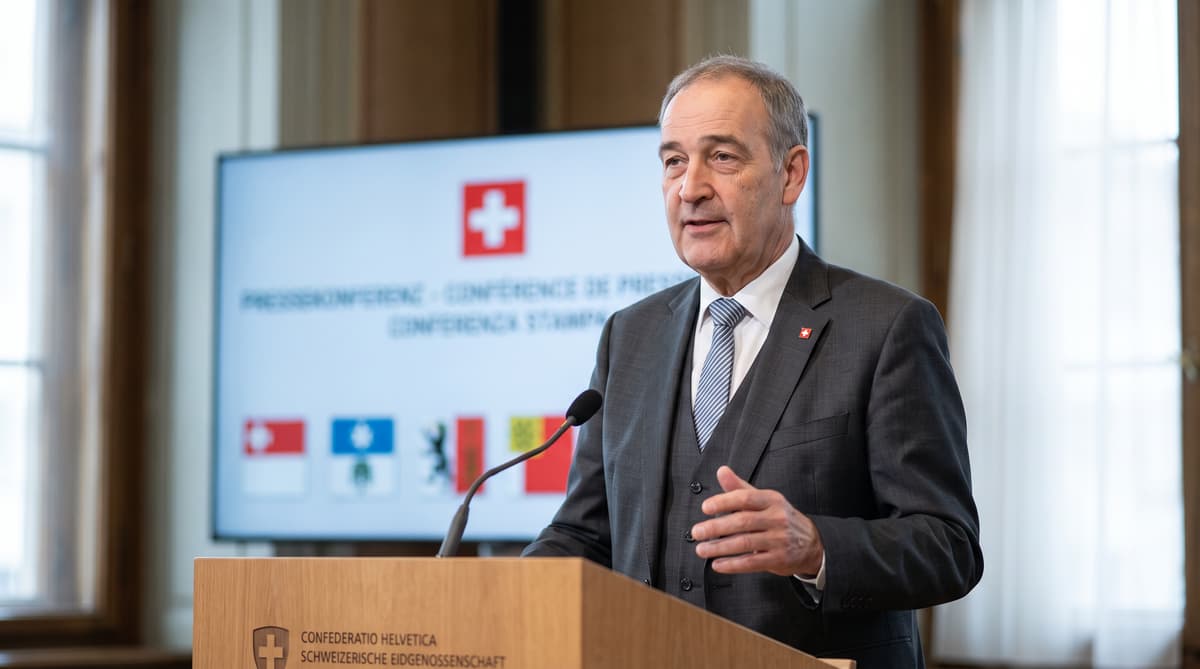
Guy Parmelin will leave office on December 31 after 11 years at the centre of Swiss politics. The 66-year-old economics minister announced his resignation in Bern on October 2, ending a Federal Council career that began with his election in late 2015. He said he wanted to make room for “new blood in these times of great uncertainty”.
Parmelin presented the decision with his familiar calm and a touch of humour. He rejected speculation about health problems, including repeated reports about back pain, and said he would continue working until the final minute of his mandate. “The passion for the job is no longer as strong as it was at the start,” he told reporters.
His departure carries immediate political weight. The Swiss People’s Party must now identify a candidate for one of the government’s seven seats, while Parliament will decide the successor on December 9. The party has set October 23 as the deadline for nominations. Parmelin has urged several motivated candidates to come forward, including national parliamentarians and elected representatives from the cantons.
A quiet minister finds his voice
A record 203 votes for the presidency marked Parmelin’s rise in national standing. When he entered the Federal Council, the winegrower from Bursins in canton Vaud was largely unknown outside political circles. He kept a low profile and often ranked in the lower middle of surveys measuring popularity and influence among ministers.
That image changed over time. Parmelin’s measured style, practical language and growing command of German helped him build credibility beyond the People’s Party’s traditional base. By 2026, business leaders in German-speaking Switzerland were describing him as a reliable advocate for the country’s economic interests.
The rotating presidency gave him a wider platform, although the office carries limited additional constitutional power. It placed him in the public eye during a year of diplomatic and economic pressure. Parmelin’s final term therefore leaves a more substantial political impression than his understated early years suggested. His record will be judged partly through the agreements he helped secure, and partly through the succession contest now opening inside his party.
He takes on Washington
The US tariff dispute became the defining test of Parmelin’s second presidential year. Swiss exporters faced uncertainty as Washington imposed unilateral additional tariffs and the wider direction of US trade policy remained unsettled. Parmelin worked with State Secretary Helene Budliger Artieda to pursue practical relief for Swiss industry.
According to the source report, his direct contacts with decision-makers close to the US government helped Switzerland secure concrete breathing space for exporters. The approach suited Parmelin’s political style: discreet negotiations, close attention to economic consequences and limited public theatre.
The episode also strengthened his reputation in Switzerland’s German-speaking economic centres. Financial investor and Partners Group co-founder Alfred Gantner praised Parmelin’s efficiency and negotiating ability. That support mattered because Parmelin had previously faced mild scepticism from parts of the business community.
His performance demonstrated the reach of the economics ministry during a period when foreign policy, trade and domestic prosperity became tightly connected. It also gave the outgoing minister a final achievement he can take into the succession debate.
The succession tests party discipline
Parmelin’s final year also tested his relationship with his own party on European policy. The source report identifies the EU dossier as one of the central decisions of 2026, placing the People’s Party’s hard line on Europe alongside the government’s responsibility for Switzerland’s economic and diplomatic interests.
That tension will shape the succession contest. The People’s Party controls the seat Parmelin has held, yet its parliamentary group and cantonal organisations must find a candidate who can represent the party while functioning inside a consensus-based Federal Council. The choice will signal how the party wants to approach relations with the European Union, trade partners and Switzerland’s business community.
Parmelin’s record offers both a model and a warning. He maintained his identity as a right-wing People’s Party politician while earning respect beyond party ranks. Candidates will face pressure to demonstrate ideological loyalty, administrative competence and the ability to negotiate across Switzerland’s linguistic and political divides. The Federal Assembly will ultimately weigh those qualities when it votes on December 9.
He leaves a crisis-tested record
The Covid-19 crisis remains Parmelin’s most difficult memory from office. As economics minister, he helped communicate restrictions that forced businesses and activities to close. He recalled meeting entrepreneurs who feared bankruptcy and described the period as one of the hardest moments of his career.
He believes Switzerland came through the crisis relatively well compared with other countries, while acknowledging the human and economic damage caused by the shutdowns. The experience shaped his emphasis on sound public finances, innovative businesses and the need to avoid complacency.
Parmelin also leaves with a warning about the changing demands placed on the Federal Council. Since 2016, he said, international conferences at presidential level have multiplied. Switzerland must ensure that its government is represented as geopolitical competition intensifies and personal diplomacy becomes more difficult.
He will spend the remainder of 2026 managing the economics portfolio and completing his presidential duties. After December 31, he joked, he expects six months to clear out his office. For Swiss politics, the more immediate task will be choosing the person who inherits his seat, his responsibilities and the scrutiny attached to both.