Crans-Montana
Switzerland and Italy remain deadlocked over Crans-Montana fire victims’ medical bills
Italy and Switzerland remain at odds over CHF1.5 million in medical costs linked to the Crans-Montana fire tragedy.
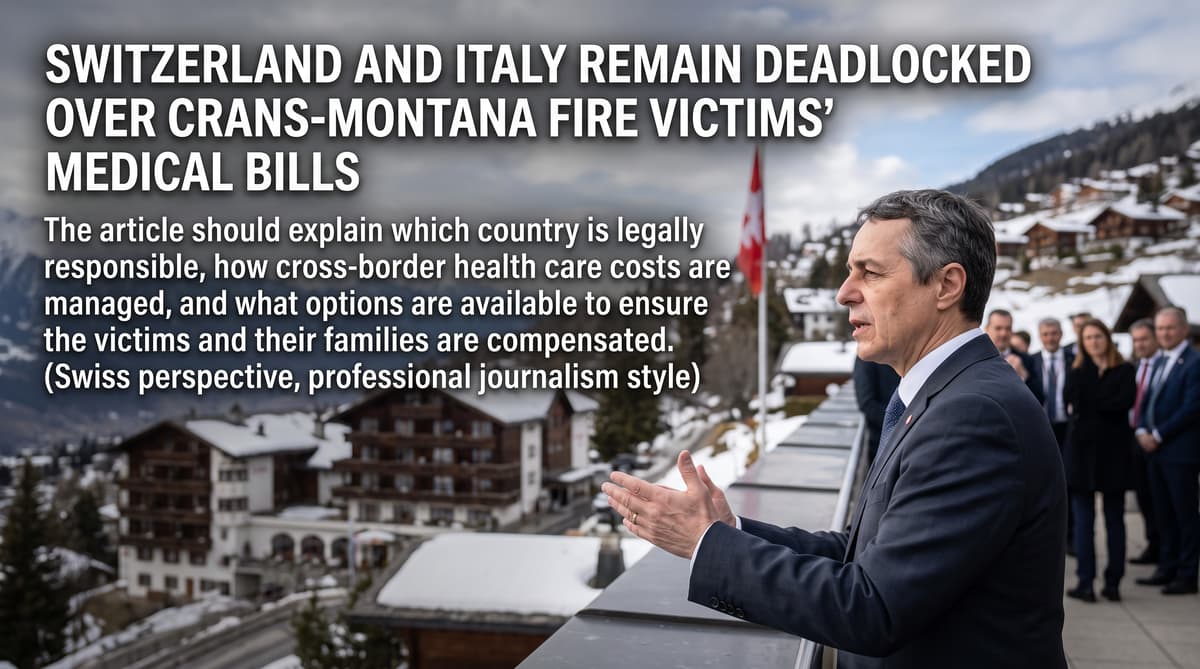
CHF 1.5 million in medical costs remains unsettled nine months after the Crans-Montana fire, leaving Italy and Switzerland locked in a dispute over who should pay for treatment delivered in Valais. The bill concerns 12 Italian victims who were taken to Swiss hospitals after the blaze at the Le Constellation bar on January 1. The fire killed 41 people and injured 115.\n\nThe immediate financial question now sits alongside a wider legal and diplomatic debate. European arrangements generally assign cross-border medical costs to the patient’s country of residence. Italy has rejected the bill, while Swiss officials have yet to identify a mechanism that would resolve the issue without leaving families exposed.\n\nThe dispute became personal for the Marcucci family. Manfredi Marcucci, badly burned on his back, hands and arms, spent 15 hours in intensive care in Sion before doctors airlifted him to Milan. His father, Umberto, later received a demand for CHF 66,800. He told RTS that Switzerland should suspend reimbursement claims until investigators establish responsibility for the fire.\n\nSwiss President Guy Parmelin promised a solution after meeting Prime Minister Giorgia Meloni in early May. By October 9, the Federal Council still had not delivered one.
Separate Aid From Liability
The disputed CHF 1.5 million is one part of a much larger Swiss response to the tragedy. The federal government has released CHF 35 million for victims, while Valais has provided more than CHF 2.3 million. The Beloved Foundation, financed partly by the canton, has a budget of CHF 24 million.\n\nThose commitments have not erased the disagreement over hospital invoices. The Italian government said in April that it would not cover the costs, despite the cross-border healthcare rules cited by Switzerland. The distinction matters for the families: President Parmelin said in Rome on May 6 that hospital bills would no longer be sent to Italian victims’ relatives, yet the underlying liability between the two states remains open.\n\nFor Switzerland, the issue touches both public finances and the handling of a disaster involving foreign nationals. The country has already channelled substantial aid, but accepting the hospital costs could establish a political precedent for cases in which responsibility for an accident or criminal negligence remains under investigation. Refusing payment, meanwhile, risks prolonging pressure on families already dealing with severe injuries and rehabilitation.\n\nThe Federal Council is expected to decide soon. Until then, hospitals, insurers and public authorities remain caught between treaty obligations and the exceptional circumstances of the fire.
Make Bern Choose a Position
The political split in Bern reflects two competing readings of Switzerland’s responsibility. Green Liberal parliamentarian Céline Weber has urged the Federal Council to insist that Italy honour the agreements governing treatment abroad. She argues that the rules must apply during crises as well as ordinary travel or medical emergencies.\n\nSocial Democrat Laurence Fehlmann Rielle takes the opposite position on the practical solution. She has called for Switzerland to forgive the bill and accept responsibility for victims caught in an exceptionally serious event. Her proposal would end the immediate dispute, though it could leave questions about the final allocation of costs unresolved.\n\nThe argument also carries diplomatic weight. Parmelin’s May meeting with Meloni produced a public assurance that families would not receive further hospital bills. The absence of a completed settlement has since kept the issue alive in Rome and Bern, adding a cross-border healthcare dispute to the political fallout from the fire.\n\nThe legal position will ultimately depend on how the relevant European arrangements apply to this case and how Swiss authorities treat pending investigations into responsibility. The political decision will determine whether the government pursues reimbursement, absorbs the charges, or creates another arrangement for the Italian victims.
Put Recovery Ahead of Red Tape
For Manfredi Marcucci, the dispute is measured in surgeries and lost independence, not treaty language. He will soon undergo another operation on his hand in an effort to regain flexibility. The 17-year-old will also have to give up the guitar, one of his hobbies before the accident. His treatment began in Sion and continued in Milan, making the disagreement between the two healthcare systems part of an already complicated recovery.\n\nThe case illustrates why the Federal Council’s next decision will draw attention beyond the CHF 1.5 million total. A payment arrangement could prevent further contact between families and disputed invoices. It could also clarify how Switzerland handles emergency care for foreign victims when an investigation into the cause of a disaster is still under way.\n\nItaly’s refusal has placed the Swiss government under pressure to defend existing agreements while protecting victims from additional administrative strain. Swiss lawmakers remain divided over whether legal consistency or a discretionary gesture should guide the outcome.\n\nThe immediate deadline belongs to the Federal Council, which is expected to decide soon. Its choice will settle more than a hospital account. It will show how Bern balances international commitments, local responsibility and the long recovery that follows a national tragedy involving visitors from abroad.