Politics
Why Switzerland’s parliament cannot topple the government
Switzerland’s Federal Council cannot be removed through a parliamentary no-confidence vote. The unusual constitutional arrangement separates the executive from ordinary parliamentary confidence procedures, offering stability but limiting a conventional accountability mechanism.
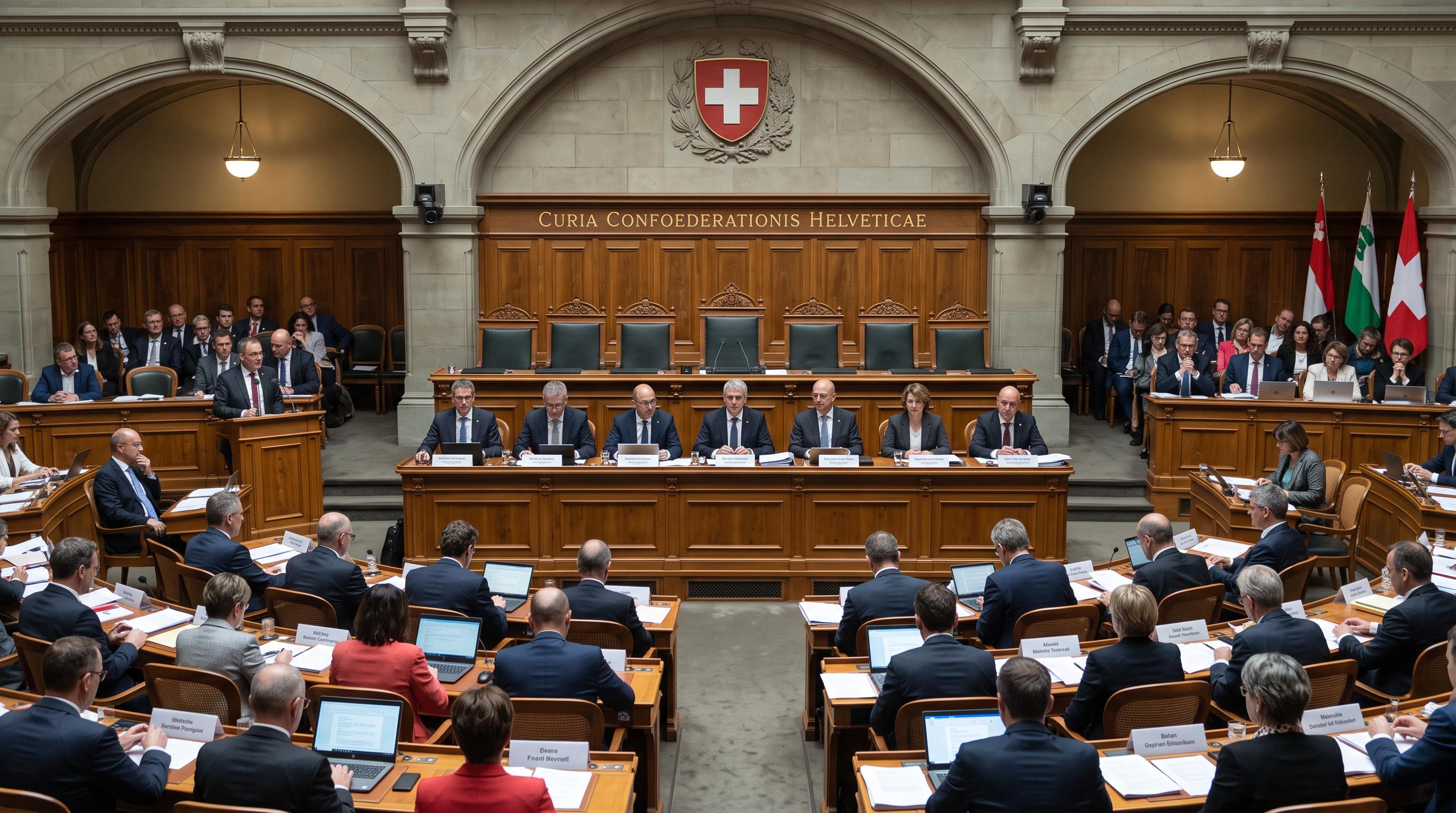
Swiss voters can change Parliament, not the cabinet
In 2027, Swiss voters will choose 246 members of Parliament, but the seven seats at the centre of government are unlikely to change. That gap captures one of the most distinctive features of Swiss democracy: Parliament elects the Federal Council, yet it cannot remove the cabinet through an ordinary no-confidence vote.
The arrangement gives ministers an unusual degree of security. A councillor can remain in office for as long as they choose, unless they resign, die, or fail to win re-election when Parliament formally reviews the cabinet after federal elections. That review is rarely decisive. Since 1848, only four sitting ministers have been rejected.
The system can look incomplete when measured against familiar democratic models. The United States elects its executive separately from Congress, with a popularly elected president. The United Kingdom allows Parliament to force out a government that loses its confidence. Switzerland has neither mechanism. Its ministers are chosen by legislators, but the legislature lacks the standard parliamentary power to dismiss them during a term.
That constitutional design matters as the next federal election approaches. Voters can reshape the 246-seat Parliament, alter the balance among parties, and influence the next selection of ministers. They cannot use the ballot to directly replace the Federal Council.
Parliament oversees, but cannot dismiss
The Federal Council sits outside the normal confidence cycle that governs most parliamentary executives. Switzerland’s seven ministers are elected by the United Federal Assembly, made up of the National Council and Council of States. Once elected, they do not depend on a continuing confidence majority to stay in office.
Parliament still has influence. It elects the councillors, approves legislation and the federal budget, scrutinises administration, and can apply sustained political pressure. The decisive power to topple the government, however, is absent. A parliamentary majority cannot simply declare that the cabinet has lost its mandate and install a replacement.
The post-election re-election vote provides a limited corrective. Every four years, Parliament is asked to re-elect the seven members of the Federal Council. In practice, the vote has functioned largely as confirmation. The historical record shows how rarely it produces a change: only four sitting ministers have been rejected since 1848.
This gives Swiss ministers continuity that many parliamentary colleagues elsewhere do not enjoy. It also shifts accountability away from a single confidence vote. Ministers must answer through parliamentary oversight, referendums, initiatives, elections, public debate, and the possibility of losing re-election. Those channels can constrain the executive, but none replicates a no-confidence motion.
Coalition politics replaces confidence votes
Switzerland’s executive is built as a coalition of four major parties, not as a government formed by one parliamentary majority. The long-standing “magic formula” distributes the seven Federal Council seats among the country’s biggest political forces. That composition encourages representation across ideological and regional lines, while making the cabinet a permanent coalition rather than a temporary alliance.
Political scientist Steffen Ganghof describes the arrangement as an “assembly-independent government”, a rare model also found in Bhutan and Suriname. He argues that the absence of a confidence threat can reduce the pressure on coalition partners to block one another simply to protect their governing position.
In Germany, Ganghof says, coalition parties must constantly keep one another satisfied. Vetoes can produce deadlock or push policy toward the lowest common denominator. Swiss ministers face a different discipline. They must negotiate inside a seven-member cabinet, reach collective decisions, and defend those decisions publicly as a body.
The result is the principle of collegiality. Federal councillors may represent different parties and political traditions, but cabinet decisions are presented collectively. The system asks voters and Parliament to judge a government that speaks with one institutional voice, even when internal negotiations reflect sharp disagreements.
Collegiality spreads executive power
Collegiality requires every Federal Councillor to stand behind cabinet decisions once they are made. Switzerland has no prime minister who can impose a programme on junior ministers, and no governing party can routinely threaten to bring down the cabinet if it loses an internal dispute. The seven members decide collectively and defend the result collectively.
That discipline shapes how ministers operate beyond the Federal Council’s meeting room. They must anticipate reactions from Parliament, the cantons, political parties, interest groups, and voters. Swiss direct democracy adds another layer of scrutiny. The government can propose and campaign for legislation, yet citizens retain tools that can challenge laws and constitutional arrangements.
Former Federal Chancellor Walter Thurnherr summarised the executive’s role in clear terms: “It initiates, proposes, consults, but it doesn’t definitively decide.” The Federal Council therefore operates as a powerful coordinator and agenda setter, while final authority is distributed across Parliament, voters, and the cantons.
This division helps explain why the absence of a no-confidence vote has not paralysed Swiss accountability. The cabinet cannot be removed by a single parliamentary motion, but its proposals move through several institutions before they become binding. Ministers must build support repeatedly, issue by issue, rather than rely only on a secure term of office.
2027 will test the system, not topple it
The Swiss model trades a clear parliamentary escape hatch for continuity, negotiation, and dispersed control. A government that cannot be toppled halfway through a legislative term can pursue longer projects without counting every vote as a survival test. Ministers also have room to represent competing political constituencies inside the same executive.
The price is less immediate responsibility. In Britain or Germany, a parliamentary majority can force a government to resign or trigger a change of coalition. In Switzerland, dissatisfaction usually works through slower routes: elections, parliamentary pressure, public campaigns, referendums, popular initiatives, and the periodic re-election of the Federal Council.
The next test will come in 2027, when voters renew the 246-seat Parliament. A new parliamentary balance could change the negotiations surrounding the Federal Council, even if the seven ministers themselves remain in place. Parties will campaign for influence over legislation and over the eventual re-election process, while voters will assess policies that the cabinet has proposed and defended collectively.
Switzerland’s constitutional design therefore makes government survival only one measure of democratic control. The Federal Council’s durability is built into the system, while its freedom to act is checked by Parliament, the cantons, direct democracy, and the need to maintain consensus across a divided political landscape.