Climate change
Why record ocean warming matters to landlocked Switzerland
Record ocean temperatures in the Mediterranean and globally are relevant to Switzerland through climate effects, Alpine weather patterns and freshwater systems. Researchers warn that ocean warming is amplifying risks far beyond coastal regions.
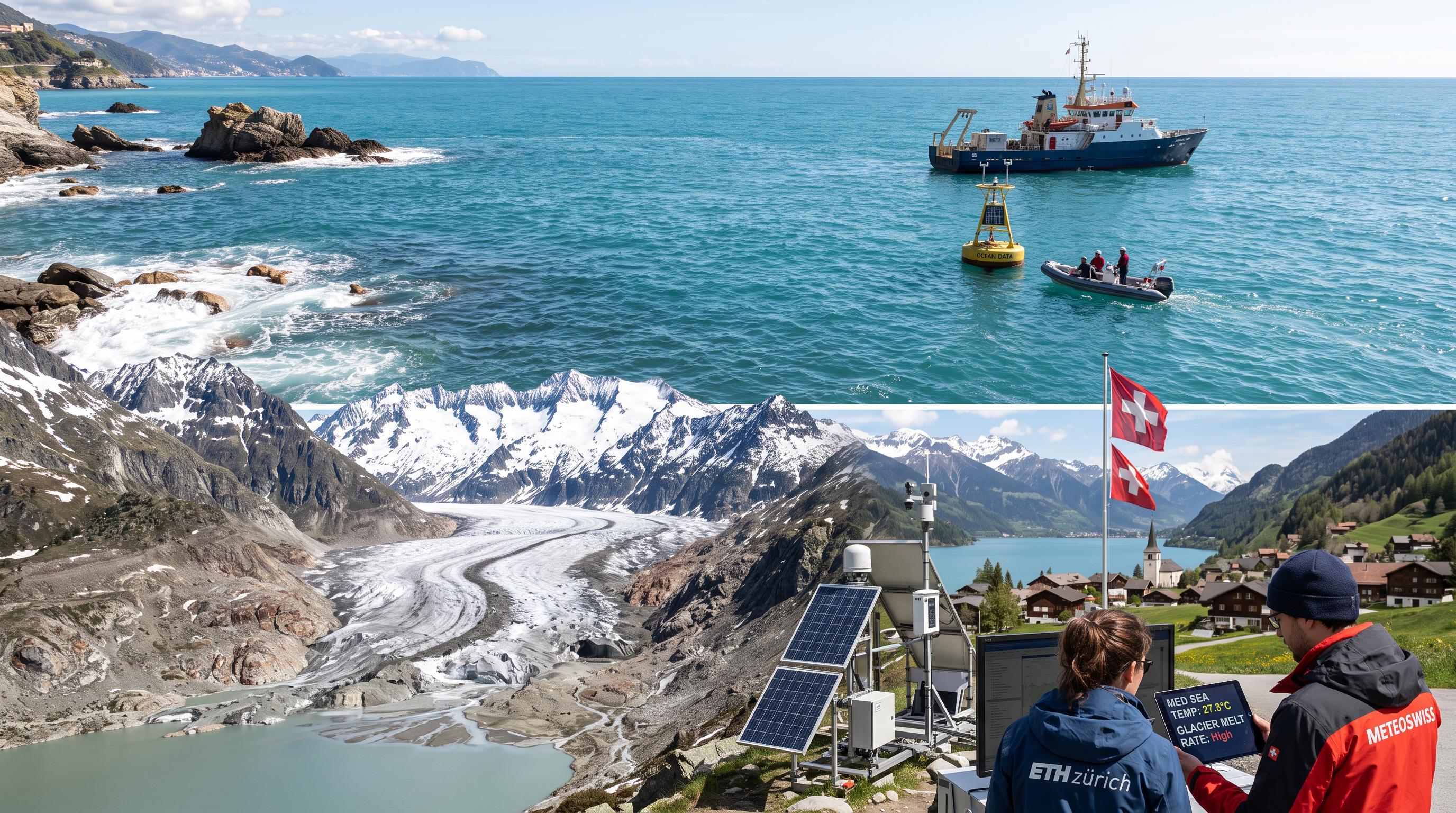
Track the Mediterranean’s Heat
33°C in the Mediterranean brought the ocean’s heat into sharp focus this summer. A buoy off the Balearic Islands recorded the temperature during August, just a few degrees below a hot bath. The reading marked an extraordinary peak for the Mediterranean, according to Thomas Frölicher, professor of climate and environmental physics at the University of Bern.
The heat extended well beyond one Spanish measuring point. Some Mediterranean areas reached up to 6°C above the seasonal average, while the global average sea surface temperature climbed to 21.1°C during the summer of 2026. That surpassed the previous record, set in 2024, which was also the hottest year since measurements began, according to the European Earth observation programme Copernicus.
Switzerland has no coastline, yet its weather and water systems sit inside the same climate system. Warmer seas add energy and moisture to the atmosphere, influence air circulation and help shape weather arriving over Europe. They also expose Swiss holidaymakers, food supply chains and neighbouring coastal economies to mounting risks.
Frölicher’s warning is direct: temperatures that currently appear exceptional could become normal within 10 to 20 years. The Mediterranean is close enough to Switzerland for changes there to matter well beyond the beach.
Follow the Heat Below the Surface
More than 90% of the excess heat produced by human activity enters the oceans. Carbon dioxide, methane and other greenhouse gases trap energy in the atmosphere. The sea absorbs most of that energy, delaying some atmospheric warming while steadily changing marine conditions.
The heat does not remain at the surface. It accumulates through the upper 2,000 metres of the ocean, with measurements around Antarctica and in the North Atlantic indicating that deeper waters are warming as well. This stored energy can persist for years and influence weather patterns after the original emissions have entered the atmosphere.
Marine heatwaves are also becoming more frequent, more intense and longer lasting. Across European ocean waters, the share affected by these events rose from an average of 40% in the 1980s to 98% between 2023 and 2025, according to the European State of the Climate 2025 report.
The trend reflects fossil fuel combustion, especially the burning of coal and oil. A World Weather Attribution study concluded that climate change is driving the exceptional temperatures recorded in European seas. Frölicher, who co-authored the study, said each additional tonne of carbon pushes coastal ecosystems towards conditions they have not previously experienced.
Read the Link to Alpine Weather
Alpine weather does not stop at the shoreline. The Mediterranean and the North Atlantic influence the air masses that reach Switzerland. When warmer water evaporates, the atmosphere can carry more moisture. Weather systems then transport that moisture northwards, where mountains force air upwards and can intensify rain and snowfall.
A single warm sea cannot determine the outcome of every storm over Switzerland. Weather depends on several interacting factors, including atmospheric circulation, local topography and seasonal conditions. Ocean warming changes the background conditions in which those systems develop.
For the Alps, that matters in several ways. More intense precipitation can increase the pressure on rivers, slopes and urban drainage systems. Warmer winters can shift precipitation from snow to rain at lower and middle elevations, while a changing snowpack affects tourism, hydropower and summer water availability. The same Alpine catchments also feed rivers that cross national borders.
Switzerland’s exposure therefore includes more than direct coastal impacts. Cantons such as Valais, Ticino and Graubünden face different combinations of flood, drought, glacier and landslide risks. Ocean conditions help shape the large-scale climate that these cantons must manage, even though the nearest coast lies far beyond the Swiss border.
Protect the Freshwater Link
Freshwater connects Switzerland to a warming world. The country’s lakes, rivers and glaciers respond to atmospheric conditions that are partly shaped by ocean heat. Rising temperatures alter evaporation, rainfall, snow accumulation and the timing of meltwater entering Alpine catchments.
These changes affect daily life. Hydropower operators must plan around shifting inflows. Farmers face greater uncertainty over summer water supplies. Municipalities must prepare for both intense rainfall and longer dry periods. Lake temperatures also influence aquatic ecosystems, drinking water management and recreation.
The impacts are uneven. A storm that brings damaging rain to Ticino may produce different conditions in the Engadine or the Bernese Oberland. Swiss climate adaptation therefore depends on local monitoring, reliable forecasts and cooperation between cantonal authorities, river basin managers and neighbouring countries.
Marine ecosystems face their own immediate pressures. Prolonged heat can push species beyond their capacity to adapt, with consequences for biodiversity, fisheries, food security and coastal communities. Switzerland can experience some of those effects through imported seafood, tourism and European trade, while its freshwater systems respond to the same warming climate through a different pathway.
The ocean is distant geographically, yet its heat moves through the atmosphere and the economy before reaching Swiss homes, farms and reservoirs.
Prepare Switzerland for the Spillover
The next 10 to 20 years will test Swiss preparedness. Thomas Frölicher expects today’s exceptional ocean temperatures to become familiar within that period if warming continues. That projection has practical consequences for Switzerland’s climate planning, even though national policy cannot control Mediterranean temperatures on its own.
Swiss authorities already manage risks linked to heat, floods, drought and unstable slopes. Ocean warming strengthens the case for treating those hazards as connected rather than isolated. Forecasting systems need to combine marine observations, atmospheric models, Alpine measurements and local emergency planning.
Cutting greenhouse gas emissions remains the measure that limits further warming. Adaptation will also be necessary because the oceans have absorbed vast quantities of heat and respond slowly. For Switzerland, that means protecting water infrastructure, updating flood maps, adjusting hydropower planning and preparing tourism regions for less reliable snow.
The country also has a stake in European cooperation. Mediterranean ecosystems, ports, food markets and transport networks support Swiss households and businesses. Damage along the coast can travel inland through prices, supply interruptions and migration pressures.
The latest records provide a clear benchmark. A 33°C Mediterranean reading, a 21.1°C global sea surface average and marine heatwaves affecting 98% of European ocean waters describe a warming system whose consequences reach far beyond the coastline.