Switzerland
Swiss pharma faces potentially huge losses from US policy shifts
An industry-backed study warns that changes in US pharmaceutical policy could cost Switzerland almost CHF95 billion by 2040 through weaker growth and possible relocation of production. The article should clearly distinguish the study’s scenarios from established forecasts and examine the stakes for jobs, exports and patients.
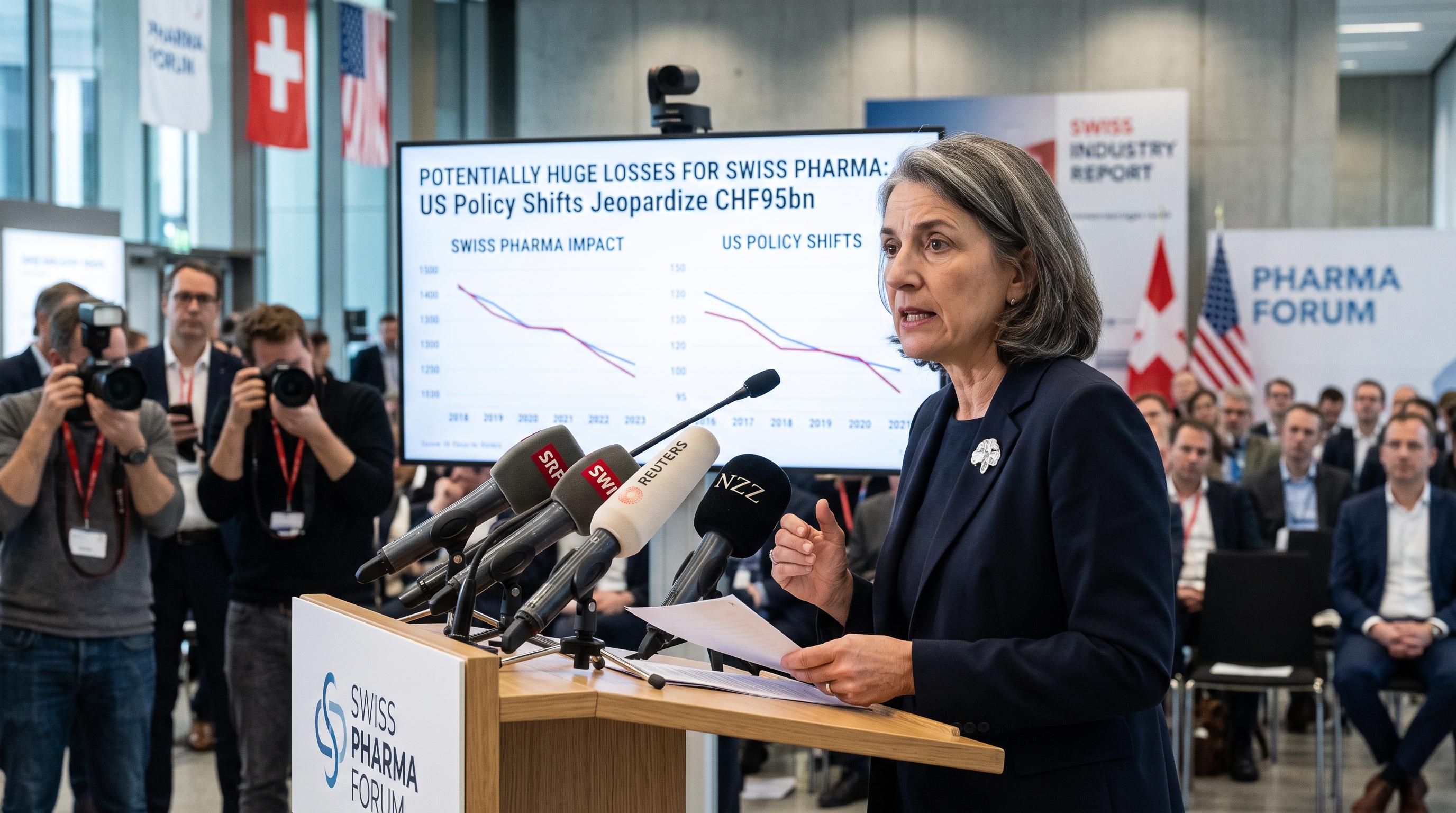
Swiss Pharma Counts the Cost of a US Policy Shock
A study commissioned by Interpharma puts as much as CHF 194.5 billion of Swiss pharmaceutical value added at risk by 2040. The warning arrives as Washington weighs policies that could reshape medicine prices and encourage drugmakers to move production capacity to the United States.
BAK Economics examined a reference path and three increasingly damaging alternatives. The figures are scenarios, not official forecasts or a confirmed bill for the Swiss economy. They measure cumulative losses in gross value added against the reference path. The two less severe scenarios produce shortfalls of CHF 27 billion and CHF 77.7 billion. In the structural break scenario, the loss reaches CHF 194.5 billion, or 22.4% of Switzerland’s current economic output.
The reference path already assumes a sharp cooling in the sector. Swiss pharmaceuticals grew by an average of 12.8% annually from 2015 to 2025. BAK expects average growth of 6.9% from 2025 to 2040 under its baseline assumptions.
That distinction matters. The study describes exposure to a policy shock, not a settled prediction. Its results depend on how US pricing rules evolve, how companies respond and whether production and product launches shift away from Switzerland.
US Price Rules Could Delay Swiss Medicines
US pricing policy could hurt Switzerland through decisions made far beyond the American market. The study focuses on a Most-Favoured-Nation, or MFN, approach that would link US medicine prices to prices in other industrialised countries.
The direct effect would be pressure on prices in the United States. The larger concern for Switzerland lies in companies’ response. If lower prices in one market influence prices elsewhere, manufacturers could delay launches in countries used as reference markets. Some medicines might not be introduced at all, the study says.
BAK Economics attributes around two thirds of the losses in the structural break scenario to this indirect channel. That estimate captures the commercial value of medicines that arrive later, or never reach the Swiss market, alongside the wider consequences for research, distribution and related services.
Interpharma says the mechanism is already affecting company decisions. Its member survey found that seven of 22 new innovative medicines were not submitted for inclusion on Switzerland’s Specialities List between January 2025 and June 2026. The list determines which medicines basic health insurance reimburses. The survey links those decisions to developments around the MFN approach, although it does not establish that every omission will become permanent.
For Swiss patients, access and timing therefore sit alongside trade and investment as key measures of the policy’s impact.
Factories, Exports and Cantons Face Different Risks
The United States absorbed 29.3% of Swiss pharmaceutical exports in 2025, making Washington’s choices a direct concern for Swiss factories and laboratories. The sector’s exposure extends across major production sites, research centres, suppliers and logistics companies.
A relocation of capacity to the United States could reduce demand for Swiss-based manufacturing and weaken the investment case for future facilities. The study examines that risk together with the pricing scenario. It does not say that companies have committed to a mass departure from Switzerland, nor does it identify a fixed number of jobs that would disappear.
That limitation is important for interpreting the headline figures. Gross value added measures the contribution of an industry to the economy. It is not identical to lost tax receipts, lost exports or redundancies. Employment would depend on which activities move, how quickly firms adjust and whether other businesses replace some of the work.
The consequences could reach beyond the largest drugmakers. Switzerland’s pharmaceutical cluster relies on specialised engineering, packaging, testing, transport, chemicals and professional services. Cantons with dense life science networks, including Basel-Stadt, Basel-Landschaft, Zurich and Vaud, would face different exposures depending on their mix of research, production and headquarters functions.
The study’s scenarios give policymakers a range of potential economic damage. They do not provide a regional job forecast. Switzerland would need separate analysis to assess effects on employment, public finances and individual cantons.
Switzerland Can Still Shape Its Response
Switzerland’s exposure will depend on corporate decisions that have not yet been made. Drugmakers could respond to US pressure by expanding American production, revising launch sequences, negotiating prices or maintaining Swiss operations while shifting selected activities abroad.
The Interpharma study provides a warning system rather than a timetable. Its reference scenario assumes that the Swiss industry continues to grow, though at a slower pace. The adverse scenarios then test what happens if US policy produces a structural break or milder disruptions. None of those paths is guaranteed.
The figures nevertheless identify pressure points for Swiss economic policy. Companies may weigh market access against manufacturing costs, regulatory predictability, skilled labour and proximity to research partners. Switzerland’s ability to retain high-value activities will also depend on how quickly authorities process medicine applications and how the health system handles prices without discouraging launches.
Patients will watch the reimbursement list more closely than the gross value added estimates. The survey figure of seven medicines out of 22 signals a possible access problem, but it does not measure future shortages or prove that all seven products will remain unavailable. Doctors, insurers and regulators will need evidence on therapeutic benefit, cost and supply for each medicine.
The next milestones are policy decisions in Washington and company investment plans. Until those become clearer, the CHF 27 billion to CHF 194.5 billion range should be read as a map of possible exposure, not a settled forecast for Switzerland.