permafrost
Thawing permafrost threatens nearly half of Swiss mountain huts
Thawing permafrost is threatening nearly half of the Swiss Alpine Club’s 152 mountain huts, forcing relocations and costly protection work. The collapse of the Mutthorn hut after years of damage has heightened concern about the risks to mountain infrastructure.
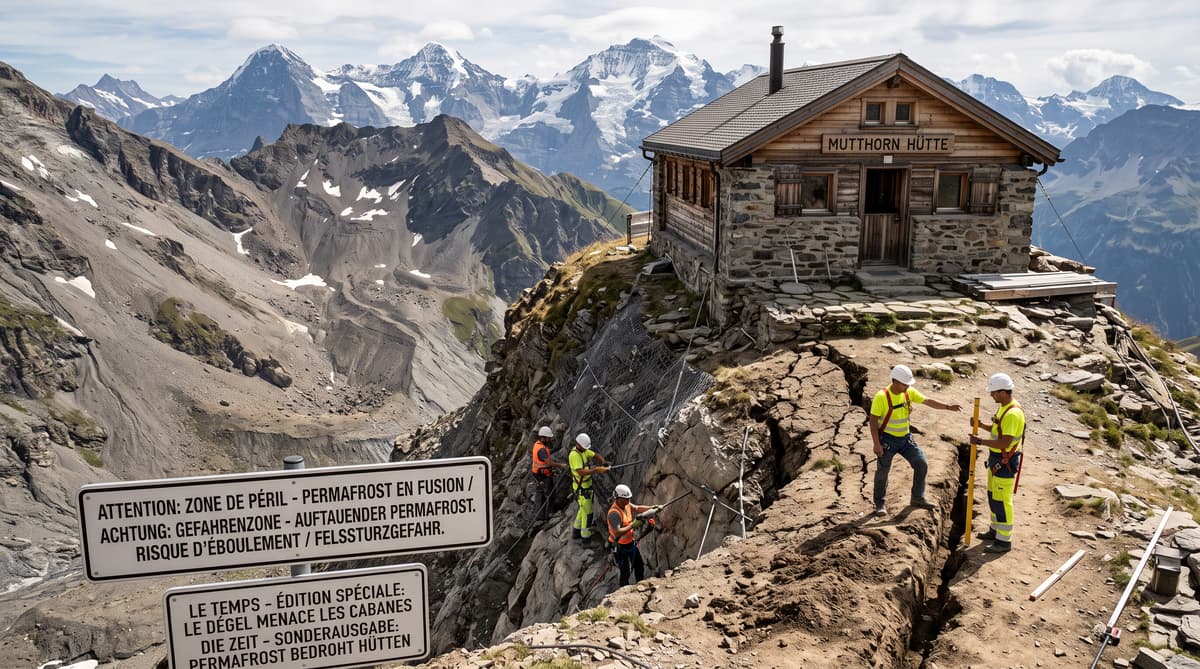
Sixty-five of the Swiss Alpine Club’s 152 huts sit in areas potentially threatened by thawing permafrost. The changing ground is already forcing the club to relocate buildings and invest in new facilities and protective work across the Alps.
The collapse of the old Mutthorn hut in the Bernese Oberland brought the risk into sharp focus. Closed since 2021, the hut had been damaged by widening cracks and faced the prospect of collapse. The SAC dismantled it in summer 2025. Its replacement now stands less than a kilometre away, on more stable ground and in a location less exposed to avalanches.
The shift affects more than buildings. Rockfalls, mudslides and ground movement are making routes to some huts more hazardous. For climbers and hikers, a familiar mountain refuge can depend on terrain that is changing beneath it.
Track the cracks above Mutthorn
Permafrost binds rock together, and its thaw can loosen the slopes above a hut. As ice within the ground melts, water enters cracks and weakens the surrounding rock. That process has been visible above Mutthorn, where a fissure measured 70 centimetres across in 2007 and later widened to nearly 1.5 metres.
Nils Hählen, head of natural hazards for canton Bern, said the timing and scale of falling rock cannot be predicted. He warned that collapse was certain. His assessment captures the challenge facing the SAC and local authorities: they must make decisions about buildings and access routes while the ground itself is shifting.
The threat extends beyond Mutthorn. The SAC says 65 huts are in areas potentially exposed to permafrost thaw. Routes can also be affected by rockfalls, mudslides and ground movement, adding another layer of risk for people travelling through the high mountains.
Move huts onto safer ground
The replacement Mutthorn hut cost CHF 4 million, after the old building’s dismantling added another CHF 400,000. The new hut was inaugurated in June 2026 on more stable ground, less than a kilometre from the original site and in a position less exposed to avalanches. Nearly 700 helicopter flights were needed for the project.
The cost drew criticism within the SAC, although two-thirds of members of the local section approved the project. The decision reflects the scale of work required when a hut can no longer safely remain where it stands. The club’s choices may include relocating buildings, simplifying them or making some mobile.
The Trift hut offers another example. An avalanche destroyed it in 2021 after nearby glacier melt had altered the terrain and expanded potential avalanche release zones. The replacement was moved one kilometre and cost CHF 5 million. These projects show how changing mountain conditions can demand both new sites and major construction budgets.
Budget for a moving mountain
The SAC estimates it will need CHF 6 million to CHF 7 million each year to adapt its huts to changing mountain conditions. The spending pressure comes from multiple fronts, including unstable permafrost, retreating glaciers and hazards that affect access. The club is seeking new sources of funding as it plans for the work ahead.
At the Konkordia hut in Valais, retreating ice has transformed the approach. The building once stood 50 metres above the glacier; it now rises roughly 300 metres above the ice. Visitors climb more than 500 steps, and the staircase must be extended every two or three years. The latest renovation cost around CHF 50,000.
The hut also depends on stored meltwater. Its 70,000-litre reservoir can supply almost 6,000 overnight stays. Manager Christoph Sager says the remaining water must last until the following May when meltwater runs out. The SAC’s Hut Commission chair, Hanspeter Bürgi, says the pace of change is catching the organisation by surprise.