national security
Swiss government adopts broader security strategy for 2026
The Federal Council has adopted Switzerland’s Security Policy Strategy 2026, combining civilian resilience, military defence and protection of critical infrastructure. Explain the strategy’s ten objectives and 46 measures, what vulnerabilities the government is targeting and how the approach changes Switzerland’s traditional security debate.
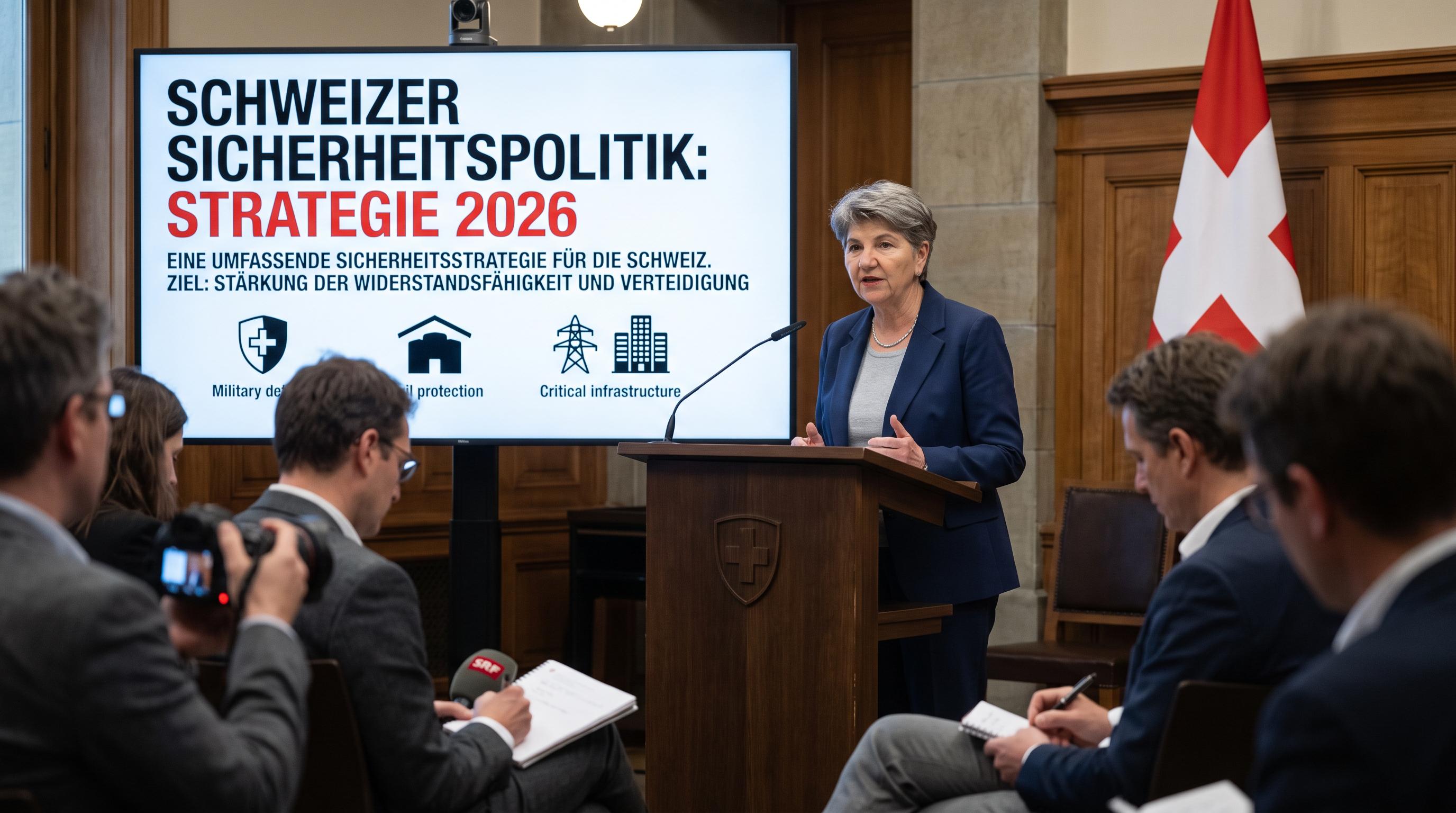
Bern widens the security brief
Switzerland has adopted a 2026 security strategy built around 10 objectives and 46 measures. The Federal Council approved the plan on September 18, giving formal shape to actions that several ministries had already begun preparing during the consultation process.
The strategy responds to a security environment the government describes as increasingly unstable. Its central concept is “comprehensive security”, bringing together civilian capacities, military defence and the protection of critical infrastructure. That scope reaches beyond the armed forces. It includes the state, the economy, society, cantonal authorities and private operators whose systems keep Switzerland functioning.
The Federal Council identified three priorities. Switzerland will strengthen resilience by reducing vulnerabilities and critical dependencies. It will improve defence and protection for people, institutions and essential infrastructure. It will also reinforce its ability to counter an armed attack, including through cooperation with partner states.
The decision marks a significant expansion of the country’s security conversation. Defence remains central, but the strategy places cyber and remote attacks, supply dependencies, organised crime and hybrid pressure within the same policy framework. The result is a national plan that treats security as a responsibility shared across government and society.
Map the vulnerabilities
The first priority is resilience, measured by how well Switzerland can absorb disruption. The strategy directs attention to vulnerabilities and critical dependencies across the state, the economy and society. The source document does not list every dependency individually, but its language points to a broad concern: systems that support daily life can become security risks when they rely on fragile links or are exposed to hostile interference.
That approach gives civilian authorities a larger role. Government services, economic networks and social institutions all become part of security planning. Protection cannot stop at the border or at military facilities when attacks can be launched remotely, influence can be exerted through hybrid methods, or organised crime can exploit weaknesses inside the country.
The second priority focuses on protection and defence. The government wants stronger safeguards for the population, public institutions and critical infrastructure. That includes infrastructure whose failure could disrupt communications, public administration or essential economic activity, although the strategy summary does not identify individual sites or sectors.
The policy therefore shifts attention from a single threat scenario to the resilience of interconnected systems. It asks federal and cantonal authorities to identify exposure, reduce dependence where possible and prepare institutions to continue operating under pressure.
Prepare for threats from above and afar
Hybrid threats, remote attacks and organised crime now sit at the centre of the government’s priorities. The strategy groups these risks under a security policy that must operate across civilian and military domains. Hybrid threats can pressure institutions and society through several channels, while remote attacks can reach Swiss targets without a conventional military incursion. Organised crime adds a domestic security dimension that cannot be handled by defence policy alone.
The emphasis on drones has made that shift visible. In December 2025, Parliament called for “immediate action” against drone attacks after several airspace breaches involving other countries. Defence Minister Martin Pfister later announced plans for a drone battalion by 2028. The army is also planning a drone centre to develop, test and deploy unmanned systems, according to related reporting cited by Swissinfo.ch.
These measures do not replace conventional defence. The third strategic priority is to strengthen Switzerland’s capacity to counter an armed attack, with cooperation from partner states included in the plan. Instead, military capability becomes one component of a wider structure that also covers surveillance, protection, law enforcement and institutional resilience.
The government is treating the security landscape as connected. A remote attack, a criminal network and a military threat may require different responses, but they can expose the same public systems and demand coordination between the same authorities.
Turn the plan into accountable action
Implementation began before the final strategy was signed. The Federal Council says relevant ministries were tasked with putting measures into practice at the start of the consultation process in December 2025. Officials justified that decision by pointing to the international security situation and increasing instability. The final document now makes implementation more concrete and binding.
Coordination will be handled by the State Secretariat for Security Policy within the Federal Department of Defence. A steering committee, requested by several political parties, has also been established. It will include representatives of the Confederation and the cantons, reflecting Switzerland’s federal structure and the practical role of regional authorities in policing, civil protection and crisis management.
Political parties broadly welcomed the strategy, but they also demanded clear prioritisation. That warning matters because 46 measures span several policy fields, while responsibilities are distributed among federal departments, cantons and private operators. A long list without sequencing could make accountability difficult.
The government must submit a progress report by the end of 2028. That deadline will provide the first formal test of whether the strategy has produced operational changes rather than another policy framework. It will also coincide with the planned creation of a drone battalion, giving Parliament and the public a concrete marker for assessing delivery.
Measure what comprehensive security delivers
The strategy changes Switzerland’s traditional security debate by linking defence to everyday resilience. For decades, discussions about national security often centred on the army, neutrality and the ability to defend territory. The 2026 strategy keeps armed defence in the framework, but it gives equal policy weight to civilian systems, critical infrastructure and internal security.
That broader definition reflects how modern disruption reaches Switzerland. A threat may target a public institution, a communications network, an economic dependency or an airport’s airspace. The response may require soldiers, police, intelligence officials, emergency services, cantonal authorities and private infrastructure operators to work from a common plan.
The strategy also gives cooperation a more explicit place. Switzerland’s ability to counter an armed attack will include work with partner states, while the domestic implementation structure will bring the Confederation and cantons together. The government has not published, in the source material, a detailed ranking of the 10 objectives or a full timetable for all 46 measures. Political pressure for prioritisation will therefore continue.
The next phase will be judged through budgets, responsibilities and measurable progress. By the end of 2028, Switzerland is expected to report on implementation. That report will show whether “comprehensive security” has become a functioning system across the country’s institutions, or remained a broad strategic label.