trade
Switzerland and India Seal Historic Free Trade Agreement
Swiss parliament approves comprehensive EFTA-India trade deal, securing customs relief for 94.7% of Swiss exports
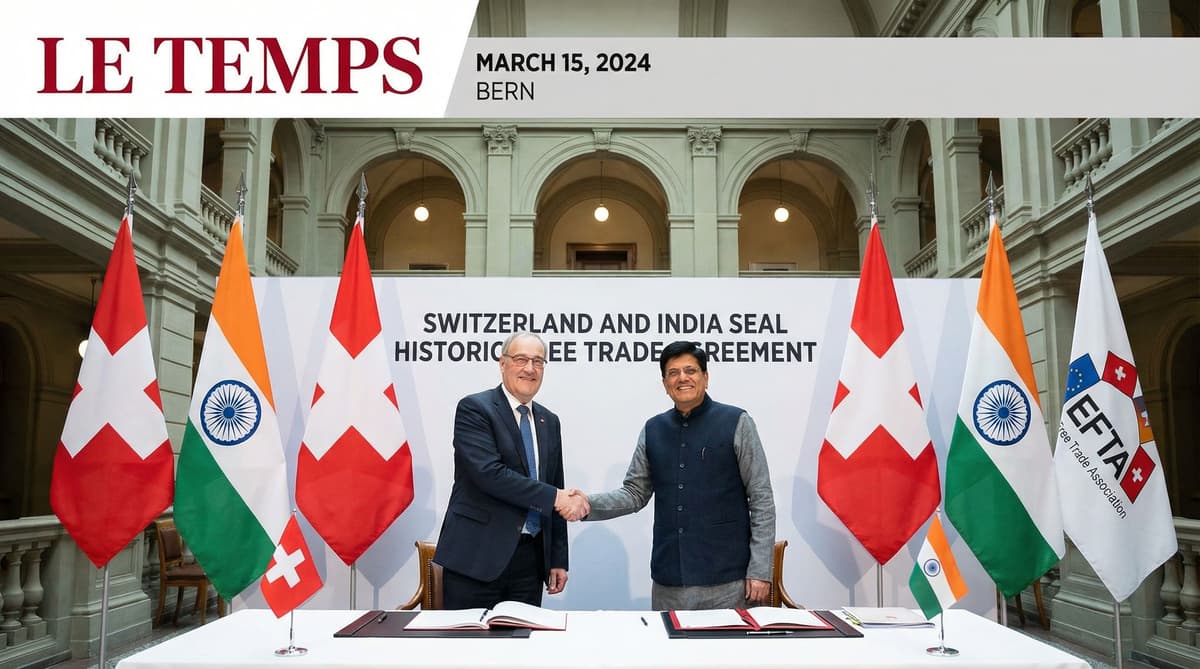
Sixteen years of diplomatic gridlock have finally shattered as the Swiss parliament officially ratifies the monumental free trade agreement between the European Free Trade Association (EFTA) and India. This is not merely a signature on paper; it is a definitive "diplomatic feat" that redefines Switzerland's economic footprint in Asia. After a grueling negotiation period that tested the resolve of diplomats from Bern to New Delhi, both chambers of parliament have given the green light, signaling a new era of cooperation.
The agreement, signed a year ago alongside EFTA partners Iceland, Liechtenstein, and Norway, now moves from potential to reality. Parliamentarians have hailed the move as a "milestone" and a "historic agreement," emphasizing the sheer magnitude of the breakthrough. While other nations struggle to find common ground in a fractured global economy, Switzerland has successfully cemented a pact that promises to unleash unprecedented opportunities. The wait is over; the doors to one of the world's most dynamic markets are now wide open for the Swiss confederation.
Shattering Trade Barriers
Customs relief for a staggering 94.7% of Swiss exports is now guaranteed, dismantling the formidable tariff walls that have long protected the Indian market. This figure represents a seismic shift for Swiss industry. For decades, Swiss exporters have grappled with India's notoriously high customs duties, which choked competitiveness and stifled growth. Today, those barriers crumble.
The implications for the Swiss economy are immediate and profound. From high-precision machinery to luxury goods, the vast majority of products flowing from the Alps to the subcontinent will now bypass crippling levies. This is a direct injection of competitiveness for Swiss businesses, allowing them to undercut rivals and penetrate the Indian consumer base with renewed vigor. While other trade deals often get bogged down in minutiae, the sheer scale of this tariff reduction—covering nearly 95% of exports—stands as a testament to the aggressive ambition of Swiss trade negotiators. The message to Swiss industry is clear: the Indian market is yours for the taking.
Navigating Political Turbulence
Despite the celebratory rhetoric, the path to ratification was not without friction, as the political Left confronted the government over the deal's ethical implications. While the majority cheered the economic windfall, left-wing parliamentarians voiced sharp dissatisfaction, particularly regarding the chapters on investment promotion. They argued that the agreement, despite including a section on sustainable development, lacks sufficient teeth to prevent investments that could cause environmental and social damage.
This dissent manifested in a partial abstention during the vote, highlighting a critical tension in modern Swiss foreign policy: the balance between aggressive economic expansion and global responsibility. The Left's hesitation serves as a stark reminder that while the deal is legally sealed, the moral debate continues to simmer. However, the parliamentary majority held firm, prioritizing the "historic" nature of the market access over these concerns. The government now faces the task of proving that this economic milestone will not come at an unacceptable social cost.
Diversifying Beyond Traditional Borders
Switzerland is aggressively pivoting away from over-reliance on traditional Western markets, and this deal serves as the lynchpin of that strategy. By securing this "diplomatic feat," Bern is not just boosting trade; it is strategically diversifying its geopolitical risk. Accessing the Indian market allows Switzerland to hedge against economic stagnation in Europe and volatility in other regions.
This move positions Switzerland—and its EFTA partners—at the forefront of European economic engagement with India. While the EU continues its own complex dance with New Delhi, Switzerland has cut through the noise to secure a first-mover advantage. The ratification empowers Swiss companies to establish a foothold before their competitors can catch up. As global trade dynamics shift unpredictably, Switzerland has anchored itself firmly to one of the world's fastest-growing economies, ensuring that the nation remains an agile and powerful player on the global stage.