environment
Swiss Forests More Resilient 25 Years After Storm Lothar
Quarter century after devastating Hurricane Lothar, Swiss forests show improved storm preparedness and management strategies.
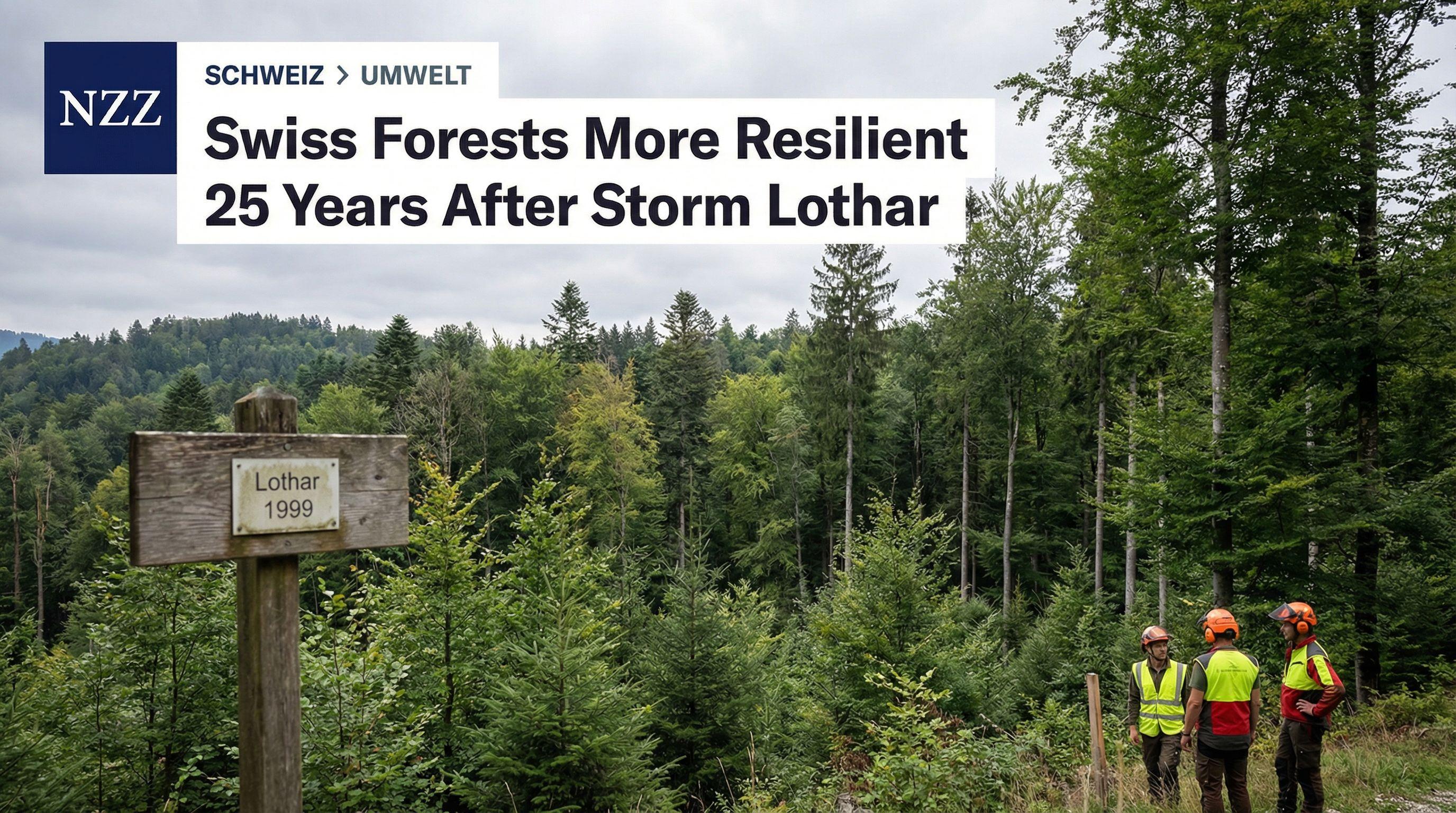
The Devastating Impact of Storm Lothar
On the morning of December 26, 1999, Switzerland faced one of its most severe natural disasters when Storm Lothar swept across the country with unprecedented force. The storm's devastating impact resulted in 14 fatalities and left an indelible mark on the Swiss landscape. The destruction was massive, with 14 million cubic metres of timber strewn across the ground, causing damage that would reshape forest management practices for decades to come.
The Federal Office for the Environment calculated the financial toll at CHF 1.35 billion, with CHF 600 million in building damage and CHF 750 million in forest destruction. The scale of the devastation was unprecedented, with approximately 2% of Switzerland's total tree population either toppled or severely damaged.
25 Years of Forest Recovery
In the quarter-century since Storm Lothar, Swiss forests have undergone a remarkable transformation. The catastrophe, while devastating, created an opportunity for natural regeneration and strategic forest management. The WSL's latest findings reveal that the disaster led to the development of more structured forest environments, creating new habitats for numerous plant and animal species.
One of the most significant changes has been the reduction of spruce trees on the Central Plateau, leading to a more diverse forest composition. This natural and managed diversification has created more resilient woodland ecosystems better adapted to face future environmental challenges.
Improved Forest Resilience
According to the Swiss Federal Institute for Forest, Snow and Landscape Research (WSL), today's forests are significantly better prepared to withstand extreme weather events. The transformation in forest structure and composition has created more robust ecosystems that can better absorb the impact of severe storms.
The reduction in spruce monocultures, particularly in the Central Plateau region, has been a crucial factor in improving forest resilience. Mixed forests with diverse species and age structures are naturally more resistant to storm damage and provide better protection against natural hazards.
Lessons Learned and Future Outlook
The lessons learned from Storm Lothar have fundamentally changed Swiss forestry practices and policies. The WSL's assessment confirms that Swiss forests are now better equipped to cope with future 'storms of the century.' This improved preparedness is the result of 25 years of dedicated forest management and natural adaptation processes.
Looking ahead, Swiss forest management continues to focus on building climate-resilient forests that can withstand extreme weather events while maintaining their vital functions for biodiversity, recreation, and natural hazard protection. The experience gained from Lothar has proven invaluable in shaping modern forestry practices and environmental protection strategies.