Trade
China and Switzerland agree to remove tariffs on almost all Swiss exports
China and Switzerland have signed an update to their trade deal that removes tariffs on almost all Swiss exports to China. The leaders of both countries hailed the agreement at a signing ceremony on Friday.
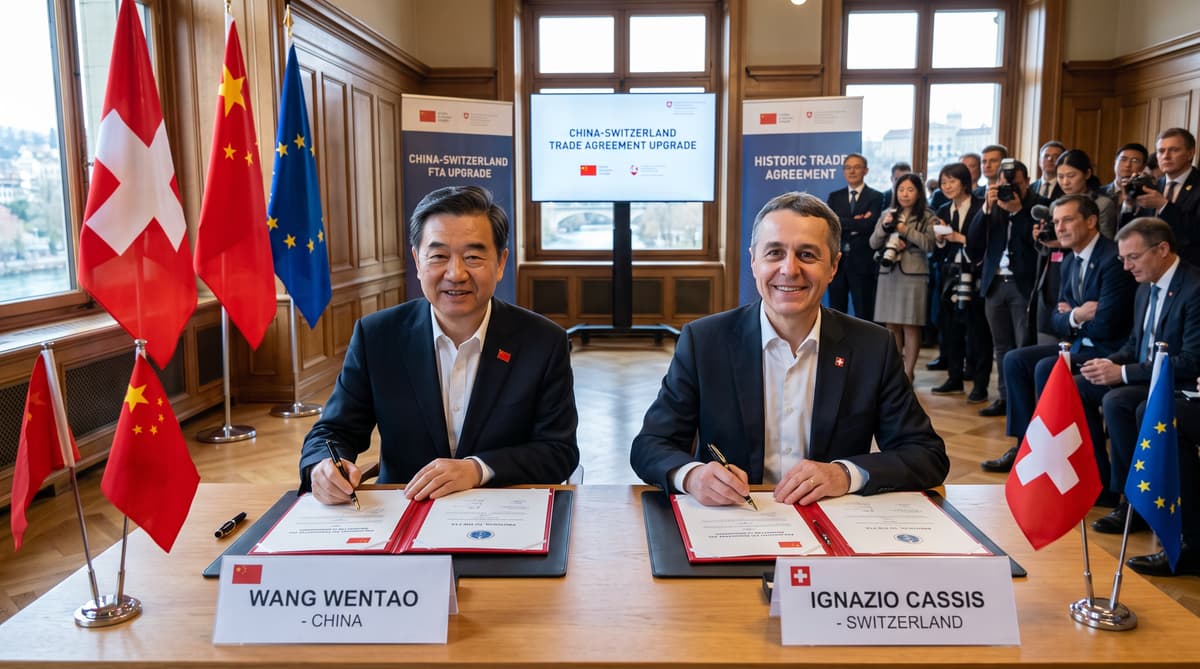
China will grant 99.8% of Swiss exports duty-free access over the next 10 years, under an updated trade agreement signed by Chinese leader Xi Jinping and Swiss President Guy Parmelin on Friday. The deal lifts tariff-free coverage from around half of Swiss shipments, opening a much larger share of the Chinese market to Swiss goods.
The leaders signed the update at Beijing’s Great Hall of the People, as China has raised trade barriers against many European countries and the United States in recent months. That backdrop has put Switzerland’s agreement under close scrutiny: observers see it as a possible test of how other economies might engage with Beijing.
Parmelin called the agreement “a new step” and said it also covers research, innovation, science and labour issues. Xi said the deal could bring greater confidence and certainty to China-Europe economic cooperation. For Switzerland, the tariff changes reach far beyond a symbolic signing ceremony, affecting established exports and expanding market access across several sectors.
Open New Markets for Swiss Exports
Swiss watches, cheese and coffee are among the products set to benefit from lower barriers. China will eliminate tariffs on all Swiss watch imports. Previously, only 1% of Swiss watches entered the market tariff-free. Producers will still have to pay China’s luxury consumption tax, so the agreement removes customs duties without eliminating every cost attached to watch sales.
Swiss cheese and coffee will also see tariffs removed. The change brings them into line with Swiss chocolate and wine, which already had duty-free access to China. These product-specific gains give the broader tariff figure a direct connection to Swiss export industries with established recognition in China.
The update also opens up greater access for Swiss providers in manufacturing-related services, aircraft maintenance and maritime transport. Those provisions extend the agreement beyond goods, giving Swiss businesses in technical and transport-related fields more access to the Chinese market. Parmelin pointed to the deal’s wider reach, saying it also encompasses research, innovation, science and labour-related issues.
Weigh the Two-Way Trade
The tariff cuts are reciprocal: Switzerland will remove duties on 97.3% of Chinese agricultural exports, compared with 80.1% under the previous agreement. The updated terms widen access for farm products moving in both directions, though the agreement’s headline export gain is the expanded coverage for Swiss goods entering China.
Trade between Switzerland and China, excluding gold and other valuables, reached around CHF 33.5 billion in 2025, according to Switzerland’s economic ministry. Swiss exports accounted for CHF 15.2 billion of that total, while imports of Chinese products amounted to around CHF 18.3 billion.
Those figures give the update weight in an already substantial trading relationship. Switzerland’s market access in China now extends across watches, food products, services and other sectors. The deal also arrives as Beijing’s trade barriers affecting European countries and the United States draw attention to the terms on which individual economies can maintain commercial ties with China.
Balance Openness With Security
Switzerland’s agreement with China is drawing attention well beyond its export industries. Switzerland is the only country in continental Europe with a free-trade agreement with China, while its relationship with the European Union is shaped by a raft of bilateral agreements that give it a major role in the bloc’s single market.
The updated deal was first announced by Swiss and Chinese officials in August, a year after US President Donald Trump imposed some of the highest US trade tariffs in Europe on Switzerland. The sequence has sharpened interest in how Bern manages economic ties with Beijing while weighing security and technological concerns.
Selina Hanni, a Swiss public affairs specialist at the World Economic Forum, wrote that Switzerland’s approach to weighing economic openness against resilience and security could set an example for other economies. The agreement’s practical test will unfold as its tariff provisions and expanded access take effect over the next decade, while Swiss officials continue to navigate trade, research and security interests.