Environment
Banned pesticide residues remain above limits at a quarter of Swiss monitoring sites
Banned pesticide residues exceeded the drinking-water limit at one in four Swiss groundwater monitoring sites in 2024, despite Switzerland saying it has met its pesticide-risk reduction target. Drought is adding pressure on water suppliers as polluted wells become harder to rely on.
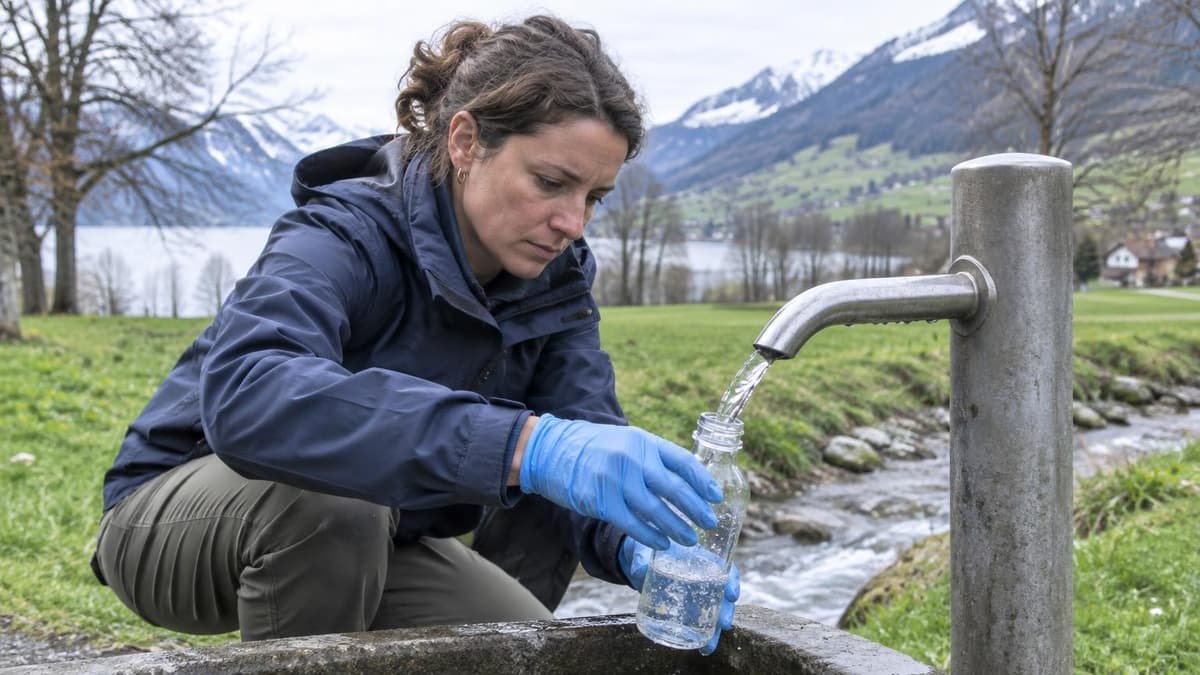
One in four Swiss groundwater monitoring sites exceeded the drinking-water limit for banned pesticide residues in 2024. The finding lands as drought makes water supplies harder to manage: when a polluted well cannot be used, suppliers have one fewer source to draw on.
In August, Dinhard, near Winterthur, switched on a long-dormant pumping station to cope with drought-related shortages. The municipality warned residents that the well’s chlorothalonil residues could push drinking water above its legal limit for a time. Switzerland banned the fungicide in 2020, but residues persist underground.
The results come from six years of measurements by NAQUA, the national groundwater monitoring network. WWF obtained the data and published interactive maps. They show that banned pesticides remain a practical water-supply issue across the Swiss Plateau, the lowlands between the Alps and the Jura. In autumn 2025, tests near Beromünster in canton Lucerne also found very high levels of the insecticide deltamethrin in the Wyna river area.
Separate the target from the tap
A policy target can be met while contaminated water remains in the ground. Parliament set a goal in 2021 to halve the risks pesticides pose to groundwater, compared with the 2012 to 2015 period. The Federal Office for Agriculture says its risk indicator reached that target in 2020, the year chlorothalonil was withdrawn.
That indicator tracks pesticide sales and the likelihood that each product will reach groundwater. It can show whether farmers are buying fewer high-risk pesticides, but it does not measure residue levels in a well. Those are checked directly: water suppliers test their own water, cantonal food inspectors inspect it, and the Federal Office for the Environment monitors groundwater nationally.
Those measurements tell a slower story. Between 2020 and 2024, the number of sites where chlorothalonil exceeded the legal limit declined by only about one fifth. The two measures answer different questions: one tracks risk from pesticide use, while the other records what has reached groundwater. For residents and water suppliers, the measured concentration determines whether action is needed.
Track the fungicide that lingers
Chlorothalonil remains the most widespread pesticide residue found in Swiss groundwater. Farmers used the fungicide on grain, potatoes, vegetables and vines from the 1970s until the federal ban in 2020. Its continued presence reflects how slowly groundwater can recover after a chemical stops being used.
The drinking-water limit for chlorothalonil is deliberately low, the Federal Food Safety Office told SWI swissinfo.ch, setting it “out of an abundance of caution”. When water exceeds the limit, suppliers must act to bring the level down. They can dilute water from the affected well with clean water or treat it.
That response can be difficult because most Swiss water originates in wells. A contaminated source therefore narrows suppliers’ options, especially where other sources are under pressure. The Federal Office for the Environment says groundwater renews slowly and at different rates from place to place. Daniela Mangiarratti, an information officer at the office, said the time until residues fall below the limit at most sites “cannot currently be reliably estimated”.
Protect supplies as summers dry
Drier summers can make every affected well more consequential for local water supplies. A 2021 study by the Federal Office for the Environment expects less groundwater to accumulate in summer. Dinhard’s return to a dormant pumping station shows how drought can push municipalities to rely on sources that have not been used for years, including wells carrying pesticide residues.
When a well exceeds the drinking-water limit, suppliers can blend its water with cleaner supplies or treat it. But the country relies heavily on groundwater, and a contaminated well removes flexibility just as dry conditions place pressure on supply. The issue is therefore not confined to residue measurements: it reaches decisions about which sources can be used and how water can be managed locally.
For now, national monitoring records the continuing presence of residues, while suppliers and cantonal inspectors test water directly. The pesticide-risk indicator has met its target, but that does not clear old contamination from aquifers. In Dinhard and other affected areas, the practical test remains whether a well’s water meets the legal limit when suppliers need it.