pharmaceuticals
US drug-policy shifts could cost Swiss pharma billions, study warns
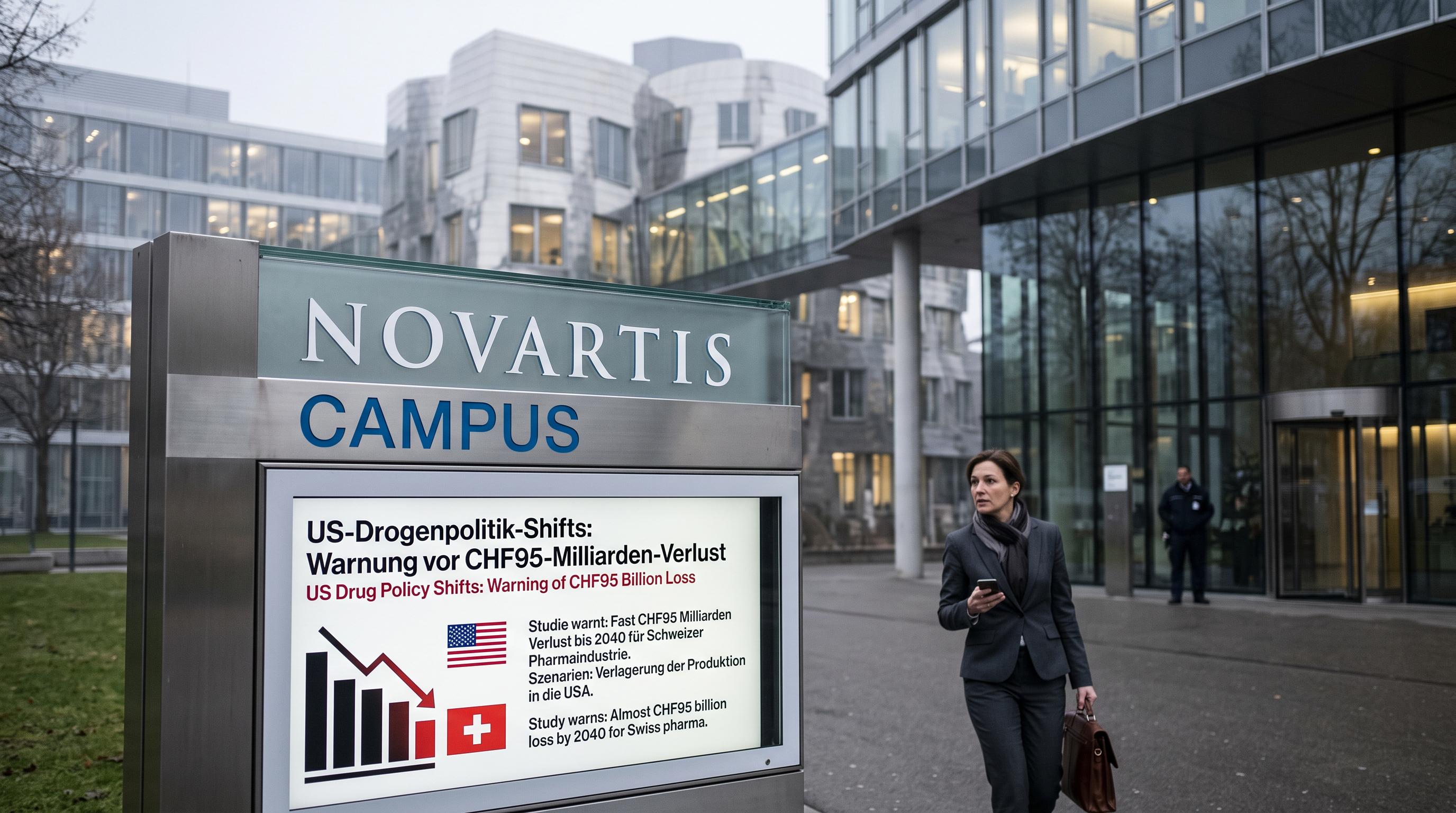
An industry-backed study warns that changes to US pharmaceutical policy could cost Switzerland almost CHF95 billion by 2040. The scenarios include production moving to the United States and a new US approach to drug pricing, with potential consequences for Swiss growth and patients.
Swiss Pharma Faces a US Policy Shock
Up to CHF 194.5 billion in lost economic value is at stake for Switzerland by 2040 under the most damaging scenario examined in a new industry-backed study. The analysis, prepared by BAK Economics for Interpharma, measures the possible impact of a shift in US pharmaceutical policy on production, exports, investment and access to medicines.
The study arrived as Washington considers a tougher approach to drug prices and encourages companies to move production to the United States. For Switzerland, the exposure is substantial. The US accounted for 29.3% of Swiss pharmaceutical exports in 2025, making it the sector’s largest foreign market.
BAK Economics compared a reference path with three alternatives. The reference scenario already assumes a marked slowdown in the sector. Annual growth falls from 12.8% between 2015 and 2025 to 6.9% from 2025 to 2040. The two less severe policy scenarios cut cumulative gross value added by CHF 27 billion and CHF 77.7 billion. A structural break raises the loss to CHF 194.5 billion, equal to 22.4% of Switzerland’s current economic output. The authors stress that this is not their worst-case scenario.
US Pricing Plan Could Delay Medicines
Around two-thirds of the projected losses would come from an indirect effect of US pricing rules, according to the study. The mechanism centres on the proposed Most-Favoured-Nation approach, which would link US medicine prices to those in other industrialised countries.
A lower US price can influence corporate decisions far beyond the American market. If companies fear that launching a medicine in Switzerland or elsewhere could create a reference price that reduces US revenue, they may postpone the launch, restrict availability or skip the market altogether. The study treats those decisions as a larger threat to Swiss value creation than the immediate reduction in US prices.
That pressure is already visible in company decisions, Interpharma says. A survey of its members found that seven of 22 new innovative medicines were not submitted for inclusion on Switzerland’s Specialities List between January 2025 and June 2026. The list determines which medicines basic health insurance reimburses.
The survey does not establish that every missed submission resulted from the US policy debate. Interpharma reported the MFN developments as the reason cited for the decisions. For Swiss patients, delayed or absent submissions can lengthen the wait for reimbursement and access to new treatments.
Production Relocation Threatens Swiss Value
Production decisions could move closer to the US market, adding another channel of pressure on Switzerland’s pharmaceutical economy. The BAK Economics analysis examines a scenario in which companies relocate manufacturing capacity to the United States in response to tariffs, trade policy or incentives from Washington.
Switzerland’s pharmaceutical sector depends on high-value manufacturing, research, global supply chains and a dense network of specialist suppliers. A plant relocation would therefore affect more than the workers employed at a single site. It could reduce demand for engineering, logistics, laboratory services and other activities linked to pharmaceutical production.
The study presents a range of outcomes rather than a single forecast. In the reference path, Swiss pharma continues to expand, although at a slower rate. The alternative scenarios progressively increase the impact of US policy, with cumulative losses reaching CHF 27 billion, CHF 77.7 billion and CHF 194.5 billion compared with the baseline.
Those figures represent gross value added, not a direct bill to the federal budget or an immediate loss of the same amount in tax revenue. They indicate the economic activity Switzerland could forgo over time if investment, production and market launches shift away from the country.
Switzerland Weighs Growth and Access
The United States is the Swiss industry’s largest single export market, giving policy decisions in Washington an outsized effect on companies headquartered in Switzerland. The sector’s exposure is especially important for regions such as Basel, where multinational drugmakers, research organisations and specialised suppliers form a major economic cluster.
The study does not claim that every company would respond in the same way. Its scenarios model broad changes in investment, production and launch strategy. The results depend on how US pricing rules are implemented, how other countries respond and whether companies can maintain global supply chains without shifting capacity.
Interpharma commissioned the analysis, so its conclusions come from an organisation representing the pharmaceutical industry. That connection matters when assessing the study’s assumptions and policy recommendations. BAK Economics supplied the scenario modelling, while the source material does not report an independent government or patient-organisation assessment of the figures.
The analysis nevertheless highlights a concrete policy dilemma for Switzerland. The country must protect a high-value export sector while preserving timely access to medicines and managing the cost of basic insurance. Decisions on pricing, reimbursement, research conditions and trade relations will shape how much of the sector’s future activity remains in Switzerland.
Swiss Policymakers Watch Washington
Policy implementation in Washington will determine whether the study’s scenarios remain warnings or become corporate planning assumptions. Companies are already monitoring the proposed Most-Favoured-Nation model, potential US customs measures and incentives for domestic production.
For Switzerland, the first signals may appear in investment plans and medicine submissions rather than in headline export figures. A delayed factory expansion, a research project redirected to the US or a medicine omitted from the Specialities List can each weaken the country’s position in the pharmaceutical value chain.
The baseline itself sets a demanding outlook. BAK Economics expects the sector to grow through 2040, but at roughly half its earlier annual pace, 6.9% compared with 12.8%. US policy could deepen that slowdown if companies use American prices as a reference for global launch decisions or move more capacity across the Atlantic.
The study gives Swiss policymakers a range of potential damage, from CHF 27 billion to CHF 194.5 billion in forgone gross value added. It also puts medicine access into the same policy frame as exports and industrial jobs. The next steps will depend on the final US rules, company responses and Switzerland’s ability to remain an attractive location for research, manufacturing and early access to new treatments.