social assistance
Nearly 270,000 people received social assistance in Switzerland in 2025
Just under 270,000 people in Switzerland received social assistance in 2025, a 4.5% increase on the previous year, according to the Federal Statistical Office. The social assistance rate remained at 2.9%, with children and young people recording the highest rate among age groups.
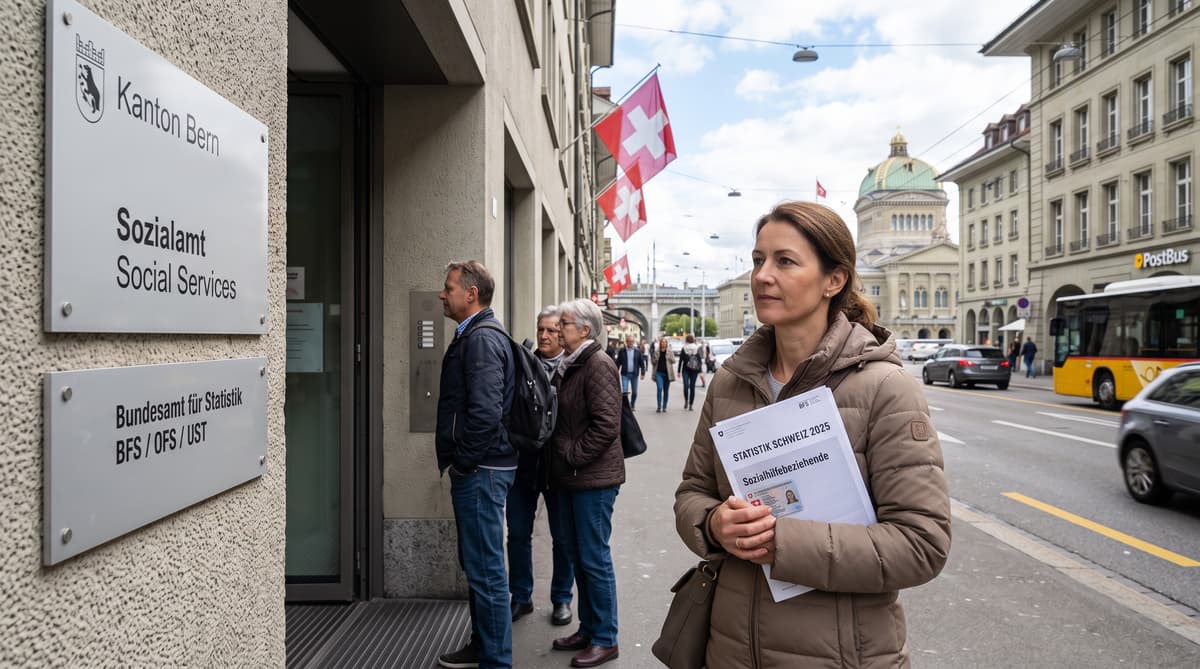
Nearly 270,000 people relied on social assistance in Switzerland in 2025, according to figures released by the Federal Statistical Office on October 27, 2026. The number rose 4.5% from the previous year, while the national assistance rate remained at 2.9%. The figures show more people receiving support even as the share of the population stayed level. Social assistance provides help to people who cannot support themselves or their families, within Switzerland’s system of public support. The national rate offers one measure of how widely that help is used; the recipient total captures the number of people receiving it. Together, the figures point to an increase in caseload alongside a stable overall rate. The FSO’s breakdown also highlights clear differences by age and region.
Track the Age Gap
Children and young people recorded a 4.8% social assistance rate, the highest among the age groups reported by the Federal Statistical Office. The national rate was 2.9%. The FSO said the rate decreases steadily with age, placing younger residents at the highest point in the age pattern. That difference makes age a central part of the national picture: the overall rate describes the population as a whole, while the figure for children and young people shows a higher level of reliance within that group. The figures do not mean that every young person faces the same circumstances. They establish a clear ranking across age groups, with children and young people at the top. For families seeking support, social assistance can help meet needs when they cannot provide for themselves.
Map the Regional Divide
Social assistance rates were highest in several cantons in French-speaking Switzerland and in Basel City, while rural cantons in Central and Eastern Switzerland recorded lower rates. Fribourg, Graubünden and Valais also had lower rates, according to the Federal Statistical Office. The FSO linked these regional differences, among other factors, to economic and demographic structures and to the particular pressures facing urban centres. The pattern spans Switzerland’s varied regions, from cities to rural cantons, and shows why a single national rate cannot describe every local situation. These figures are regional comparisons, not a ranking of individual households. They place the national total in context: social assistance use varies across cantons, and the report points to both local population structures and urban conditions as relevant factors.
Focus on Single-Parent Families
Around one in four single-parent households with children under 18 received social assistance in many towns, a separate Urban Initiative on Social Policy study found. It also reported that the poverty risk for single-parent households is almost five times higher than for all households. Many single parents receive assistance alongside their wages because their earnings are not enough to support their families. The study identifies education and training, suitable childcare and supplementary family benefits as effective forms of support. The Urban Initiative compares figures across 14 cities each year. In its previous-year comparison, the social assistance rate across those cities was 3.9%, slightly below the year before, and the overall figures remained stable. The city findings add a household-level view to the national statistics, particularly for families balancing paid work and care.