Pensions
Confidence in Swiss Pensions Plummets as Study Shows Benefits Cut by 16%
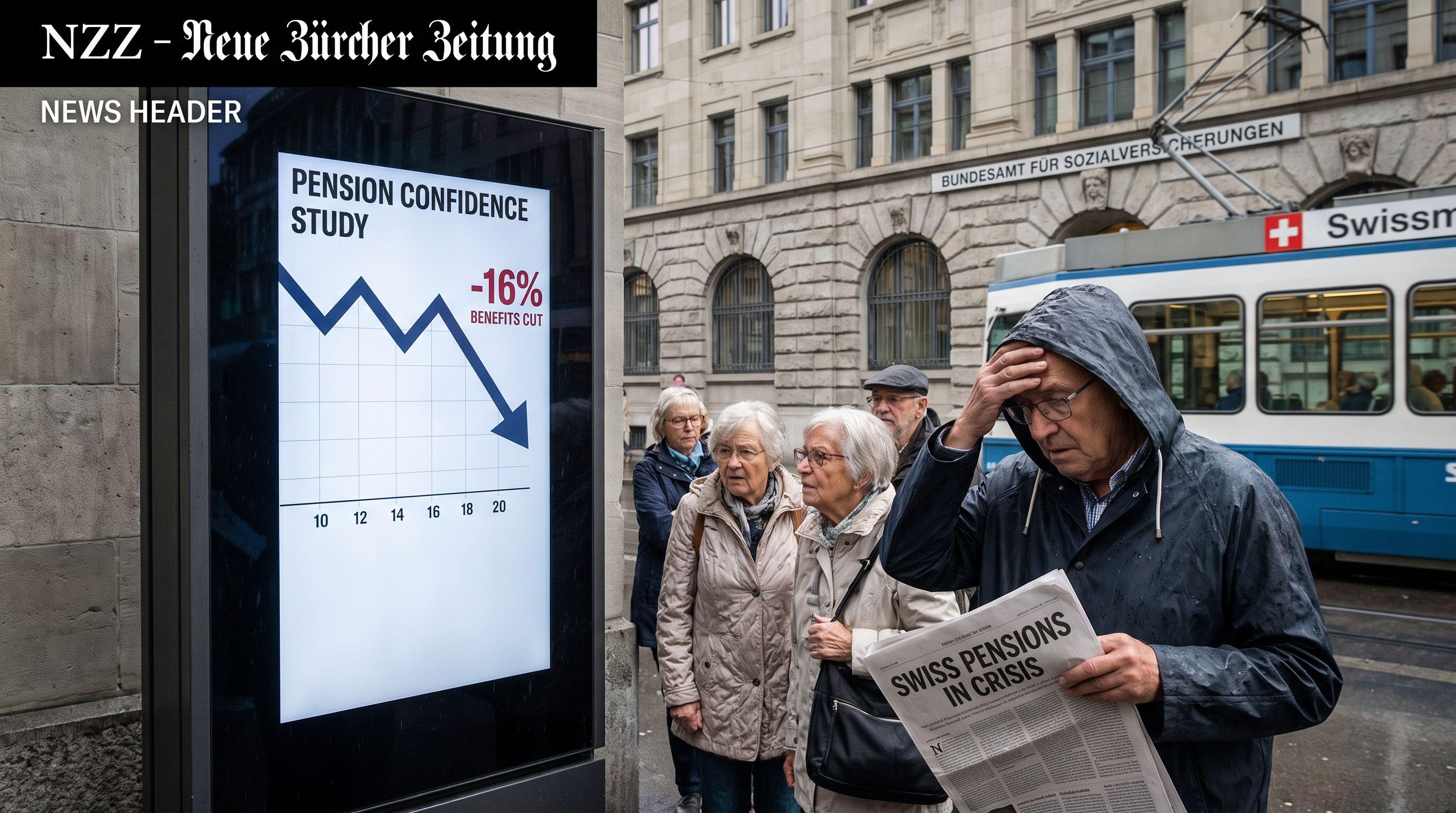
A new study shows only one-quarter of the Swiss believe their old-age pension will be secure in 20 years. Expected benefits have fallen by 16% since 2002, a reduction of CHF12,260 annually for some employees.
The Swiss Retirement Dream Evaporates
A staggering 16% collapse in expected benefits has shattered the legendary Swiss promise of a comfortable retirement. For a professional earning CHF 120,000 annually, this translates to a brutal CHF 12,260 hole in their yearly budget compared to what their predecessors received in 2002. The three-pillar system, once the gold standard of global social security, is failing its primary objective. While the system originally aimed to guarantee 60% of final income through the first and second pillars, that target is now a distant memory for many. Today, a worker on a CHF 100,000 salary will see their pension cover just 51% of their final earnings. The situation is even more dire for high earners; those bringing home CHF 150,000 will confront a replacement rate of a mere 42%. This is not a slow decline; it is a fundamental erosion of the Swiss social contract that demands immediate attention.
Second Pillar Crumples Under Longevity
Longevity is no longer just a blessing; it has become a mathematical nightmare for pension funds. While the state AHV (first pillar) has seen a one-third increase in payments—bolstered by the upcoming 13th monthly payment in late 2026—the occupational second pillar is in freefall. Benefits from these private pension funds have plummeted by a shocking 40% since 2002. To survive, funds have slashed average conversion rates from 6% to a lean 5.26% in just ten years. Managers are desperately stabilizing balance sheets to account for a population that refuses to stop aging, but they are doing so at the direct expense of the future retiree. As life expectancy climbs, the capital saved simply cannot stretch far enough. This creates a widening chasm between the inflation-adjusted state support and the shrinking private fund payouts, leaving the middle class caught in the crossfire of demographic reality.
Public Trust Hits Rock Bottom
Only one-quarter of the Swiss population believes their state pension will be secure in two decades. This crisis of confidence is not merely anecdotal; it is a systemic rejection of the current financial trajectory. According to the latest study by VermögensZentrum (VZ), trust in private pension funds is only marginally better at 30%. The Swiss public is increasingly anxious, citing the skyrocketing costs of old-age care and the long-term sustainability of the AHV as their primary fears. Despite this overwhelming pessimism, a paradoxical defiance remains: 68% of citizens flatly reject raising the retirement age. This leaves the nation in a precarious position where the population recognizes the house is on fire but refuses to move the furniture. The psychological impact of this uncertainty is driving a record number of residents to question whether the 'Swiss Miracle' of stability can survive the decade.
Political Gridlock Meets Economic Reality
Switzerland now faces a critical crossroads that will define the 2030s. The government is banking on the '2030 old-age pension reform' to bridge the gap, but the path forward is choked by political resistance and public skepticism. To fund the recently approved 13th pension payment, VAT is already slated to increase by 0.4 percentage points—a move that highlights the desperate search for liquidity. While 58% of people still hope to maintain their standard of living through a mix of all three pillars, that optimism feels increasingly fragile against the backdrop of falling replacement ratios. The burden now shifts to individual responsibility and private savings (the third pillar), as the collective safety net frays. The coming years will test the Swiss model of direct democracy: can the electorate face the hard truths of demographic shifts, or will the 16% benefit cut be just the beginning of a long, painful decline?