Economy
Swiss government sharply raises 2026 growth forecast
Federal economists have sharply upgraded Switzerland’s 2026 growth forecast to 1.7%, citing unexpectedly strong second-quarter performance, while warning that momentum may moderate later in the year.
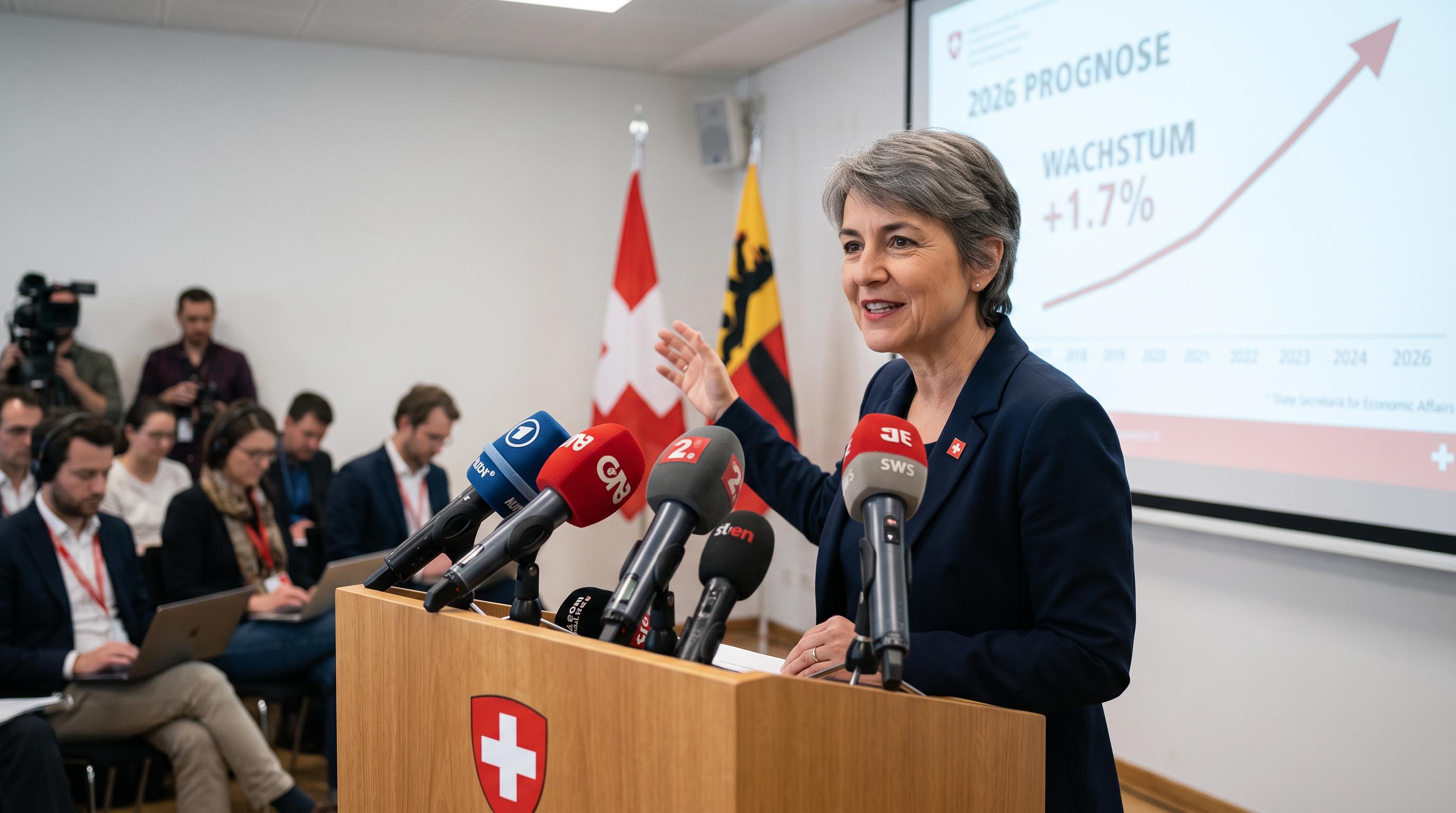
SECO Lifts 2026 Growth Forecast to 1.7%
Switzerland’s 2026 growth forecast has nearly doubled, rising to 1.7% from 0.9%. The Federal Department of Economic Affairs’ expert group made the upgrade on Thursday, September 17, after new national accounts data showed that the economy expanded much faster than expected in the second quarter.
The revision gives Switzerland’s recovery a stronger official footing as companies, households and policymakers assess the year ahead. SECO kept its forecast for 2027 at 1.6%, signalling that federal economists still expect growth to remain broadly solid after the current year’s stronger performance.
The forecast concerns real gross domestic product adjusted for major sporting events, a measure designed to give a clearer view of underlying economic activity. It reflects a better reading of recent output, rather than a broad change in every part of the economy.
The second-quarter figures provide the immediate reason for the shift. Switzerland’s economy delivered an exceptionally strong result, prompting federal economists to reassess the pace of recovery. Their update places the country ahead of the cautious outlook published earlier, while leaving room for slower momentum later in 2026.
Pharma Boom Lifts the Numbers, Then Brings a Warning
Almost half of the second-quarter growth came from chemicals and pharmaceuticals, according to SECO. That contribution helped propel the headline result, but it also limits how confidently the figures can be used to project the rest of the year.
The chemical and pharmaceutical sector can swing sharply because production, exports and the timing of major deliveries may change significantly from one quarter to the next. Federal economists therefore cautioned that the second-quarter performance may have overstated the economy’s underlying momentum.
SECO expects “a certain counter-movement” in the second half of 2026. The phrase points to a moderation in output as the exceptional industry contribution fades. It does not erase the upgrade, but it places the new 1.7% annual forecast in context. A strong quarter can lift the annual figure even when subsequent growth returns closer to a normal pace.
For Switzerland, the composition of the result matters as much as the total. The latest figures show the strength of a globally connected manufacturing base, while also highlighting the economy’s exposure to sector-specific volatility and changing demand abroad.
A Softer Franc Gives Exporters Room to Breathe
A weaker Swiss franc is giving exporters additional support. The recent depreciation improves the price position of Swiss goods and services abroad and can raise the franc value of foreign revenues. That provides some relief for manufacturers and other export-facing businesses as the economy continues its recovery.
The currency effect comes alongside a steady inflation outlook. SECO continues to forecast 0.6% inflation for both 2026 and 2027, suggesting that federal economists do not currently expect the stronger growth profile to produce broad price pressure. The outlook also projects unemployment at 3.1% in 2026, easing to 3.0% in 2027.
Those figures describe a relatively contained domestic environment, although they do not remove the risks facing Swiss companies. Exporters remain sensitive to demand in major markets, currency movements and the cost of imported energy. The franc’s recent weakening helps one side of that equation, while higher commodity costs could work in the opposite direction.
For businesses, the upgraded forecast improves the overall backdrop. The benefits will still depend on whether export demand holds and whether the currency remains supportive over the coming quarters.
Energy, Conflict and Trade Risks Still Hang Over the Forecast
External shocks could still push Switzerland’s outlook off course. SECO singled out the conflict with Iran, high energy prices and continuing uncertainty over trade policy as major risks to the economy. A sustained rise in oil prices would increase costs for households and companies worldwide, with consequences for Switzerland’s import bill and inflation rate.
The federal economists warned that persistently expensive oil could place significant strain on the global economy. Switzerland would feel the effects through energy-intensive production, transport costs and weaker demand in foreign markets. Higher imported prices could also lift domestic inflation above the current 0.6% forecast for 2026 and 2027.
Trade policy remains another pressure point for a country whose prosperity depends heavily on cross-border commerce. The strong second-quarter result underlines the importance of export industries, particularly chemicals and pharmaceuticals. It also means that disruptions to global supply chains or market access could quickly affect Swiss output.
SECO’s new forecast therefore combines a stronger near-term number with a cautious reading of what follows. Growth is expected to reach 1.7% in 2026 and 1.6% in 2027, while the path between those figures will depend on energy markets, geopolitical developments and the durability of foreign demand.