Austria
René Benko receives prison sentence after Signa retrial
Austrian property tycoon René Benko has been sentenced to two and a half years in prison after an Innsbruck retrial found that he caused losses to creditors by paying a €360,000 rent advance while his Signa empire was nearing insolvency.
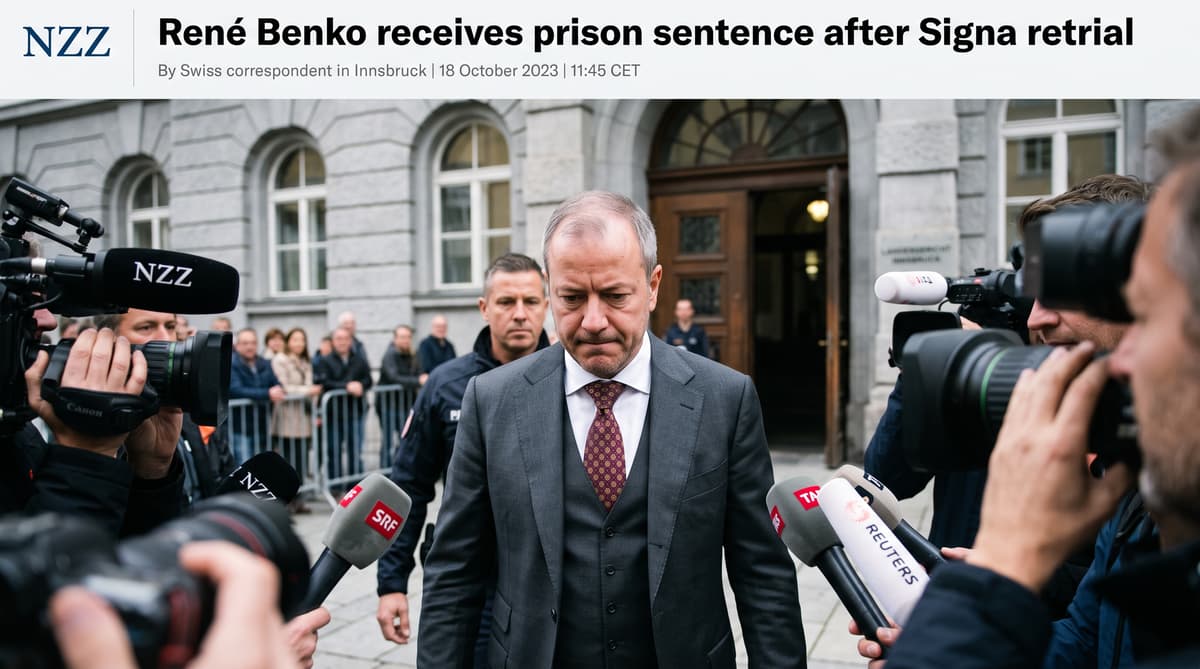
Two and a half years in prison now stand between René Benko and the next chapter of the Signa collapse. An Innsbruck court imposed the sentence after a retrial found that the Austrian property tycoon caused losses to creditors by paying a €360,000 advance on rent for a second residence while his business empire was approaching insolvency.
The court delivered its verdict on Tuesday, according to the report published on September 23, 2026. The case has already passed through several stages. Benko received a two-year prison sentence in October 2025 on the same charges, but Austria’s Supreme Court later quashed an acquittal on one count. That decision sent the case back for a retrial and required the sentence to be reassessed.
Benko pleaded not guilty, according to Austria’s APA news agency. He argued that he believed Signa’s restructuring could succeed when the payment was made. The offence carries a prison term of one to 10 years, placing the new sentence within a broad statutory range.
The ruling adds a criminal judgment to the financial wreckage left by Signa, once a sprawling property and retail group with major links to Germany, Austria and Switzerland.
A rent advance becomes a creditor case
The case centred on one payment: €360,000, or about CHF 338,000, advanced for a second home in Innsbruck. Prosecutors alleged that Benko made the payment despite being on the verge of insolvency, reducing funds available to creditors as Signa’s finances deteriorated.
Benko told the court that his wife had requested the property. He said the additional residence would allow their children to attend school and live a “normal life” without staff, alongside the family’s villa in Igls. His defence maintained that he still expected a successful restructuring of Signa at the time.
The court rejected that position in finding that the transaction harmed creditors. The verdict concerns the handling of money during Signa’s critical period, rather than the entire chain of events that brought down the group. Benko denies all allegations in the wider investigations.
The distinction matters in a bankruptcy case involving numerous companies, lenders and investors. A payment that may appear personal or limited in isolation became part of the court’s assessment of whether creditors were disadvantaged while the group was nearing insolvency. The conviction gives prosecutors a significant ruling as other investigations involving Benko and former Signa managers continue.
Rising costs fracture Signa’s empire
Signa’s collapse turned rising rates and expensive construction into a balance-sheet crisis across the property sector. Benko built a fortune worth billions through an empire that combined real estate with prominent retail assets. The group expanded through high-risk acquisitions, including the German department store chains Karstadt and Kaufhof.
The model faced pressure as interest rates rose, financing became more expensive and construction costs increased. Signa’s insolvency then spread through a network of property companies and retail businesses. Benko and other Signa managers remain under investigation in several additional cases, according to Swissinfo.ch.
The retrial verdict does not resolve those proceedings. It does, however, place a defined court finding against the former group founder at the centre of the broader collapse. The Innsbruck case examines a specific act during the period when Signa’s financial position had become precarious.
For creditors, the timing of payments can determine what remains in an insolvency estate. For prosecutors, it can determine whether a transaction crosses the line into criminal conduct. The sentence shows how the collapse is being tested not only through bankruptcy administration, but also in criminal courtrooms across Austria.
Swiss lenders count the cost
Switzerland felt Signa’s collapse through department stores, lenders and financial oversight. The group was a co-owner of Globus, the Swiss department store chain. The operating business has since been sold to Thailand’s Central Group, separating the retail operation from Signa’s failed property structure.
Zurich-based Julius Baer was one of Signa’s largest lenders. The bank wrote off its entire CHF 606 million loan exposure at the start of 2024. The loss triggered scrutiny of the bank’s risk management and led Swiss financial regulator Finma to open an enforcement procedure concerning failures linked to the Signa lending.
The Swiss consequences extend beyond a single corporate write-off. Signa’s strategy relied on valuable urban properties and retail brands whose fortunes were connected to debt markets across borders. When refinancing conditions changed, institutions in Switzerland were exposed to the group’s financing structure even though the criminal case was heard in Austria.
Benko’s sentence therefore lands in a Swiss context shaped by the fate of Globus, the damage recorded by Julius Baer and continuing questions about how lenders assessed Signa’s risks before the collapse.
The wider Signa cases remain open
Benko has been in pre-trial detention since January 2025, while the wider Signa investigations remain open. The new sentence follows a procedural path that began with the October 2025 judgment, continued through the Supreme Court and returned to Innsbruck for a fresh hearing and penalty assessment.
The ruling does not close the legal questions surrounding Signa’s wider activities. Investigators are examining Benko and other former Signa managers in several cases. Benko denies the allegations, and the rent-payment conviction concerns one specific transaction rather than every disputed decision made during the group’s expansion and collapse.
For Austria, the proceedings test how criminal law responds when a powerful private business fails across a complex web of companies. For Switzerland, the case remains tied to the costs borne by banks, investors and retail partners. The CHF 606 million Julius Baer write-off and the transfer of Globus’s operating business show how Signa’s restructuring has already changed the Swiss commercial landscape.
Further hearings and investigations will determine whether the Innsbruck verdict becomes one judgment in a longer legal reckoning or the main criminal case arising from Signa’s insolvency. The immediate outcome is clear: Benko faces a two-and-a-half-year prison sentence after the retrial.