business
Novartis to Close Morphosys, Affecting 330 Jobs
Swiss pharmaceutical giant Novartis announces closure of recently acquired German biotech firm Morphosys by end of 2025, impacting hundreds of positions.
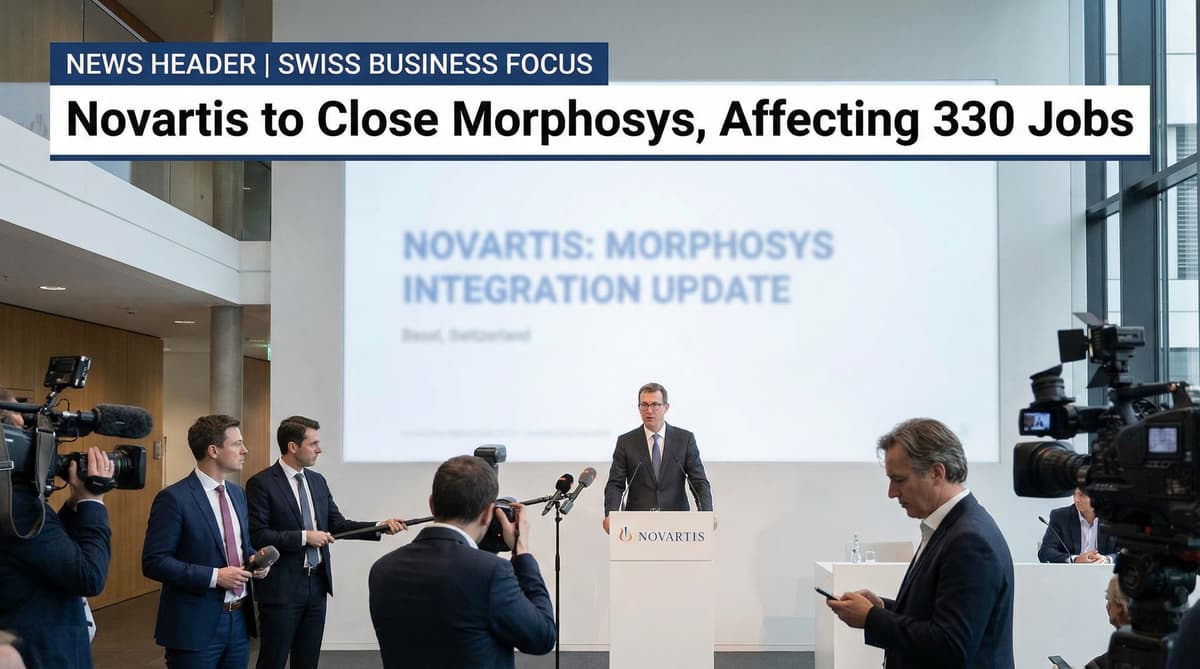
Novartis is pulling the plug. In a decisive move that underscores the volatile nature of the biotech industry, the Basel-based pharmaceutical titan has confirmed it will shutter the operations of Morphosys by the end of 2025. The closure of the German biotech firm, acquired less than a year ago, will trigger the elimination of approximately 330 jobs across Germany and the United States. This is not a mere restructuring; it is a complete dismantling of the acquired entity's physical presence.
The swiftness of this decision is striking. While the ink on the acquisition deal is barely dry, Novartis has already determined that the standalone infrastructure of Morphosys is surplus to requirements. The integration process will see all portfolio activities absorbed directly into the Swiss giant's massive ecosystem. For the hundreds of employees facing redundancy, the message is brutal but clear: efficiency reigns supreme in Basel. This move signals a rapid acceleration in Novartis's strategy to streamline operations, cutting loose any assets that do not immediately contribute to the bottom line.
The Billion-Franc Gamble Sours
A staggering CHF 2.5 billion (€2.7 billion) was poured into the acquisition of Morphosys earlier this year, a bold bet that is now facing a harsh reality check. Novartis, known for its calculated financial maneuvers, has been forced to confront a significant devaluation of its prize asset. In a move that rattled investors, the company recently slashed the book value of Morphosys by a massive $800 million. This is not just a minor adjustment; it is a glaring admission that the initial valuation was overly optimistic.
The financial optics are challenging. While Novartis maintains a robust balance sheet, erasing nearly a billion dollars in value within months of a purchase highlights the perilous risks inherent in high-stakes pharma M&A. The aggressive write-down suggests that the anticipated returns are materializing far slower—or far lower—than the Swiss executives had projected. It serves as a stark reminder that even the most powerful players in the pharmaceutical world are not immune to the volatility of asset valuation.
Pelabresib: The Drug That Failed to Deliver
At the heart of this turmoil lies Pelabresib, the crown jewel of the Morphosys portfolio that is rapidly losing its luster. Novartis bought the company primarily to gain access to this experimental treatment for myelofibrosis, a potentially fatal chronic bone marrow cancer. The hope was for a blockbuster drug that would dominate the market. Instead, the company is grappling with alarming data regarding the drug's safety and efficacy.
The recent $800 million correction is directly tied to these clinical concerns. While the medical need for effective myelofibrosis treatments remains critical, the path forward for Pelabresib has become fraught with uncertainty. Novartis is now forced to re-evaluate the potential of a drug that was supposed to justify a multi-billion franc expenditure. This development casts a long shadow over the R&D pipeline, proving once again that in the high-stakes world of drug development, promise does not always equal performance.
Strategic Ruthlessness: The Swiss Approach
Novartis is not apologizing. In a statement that reflects the unsentimental pragmatism of Swiss corporate culture, the company declared that "all merger-and-acquisition activities... involve a certain degree of risk." This closure is a calculated execution of a broader strategy to optimize the organization for the future. By absorbing the intellectual property while discarding the operational overhead, Novartis is positioning itself to remain lean and competitive in a cutthroat global market.
For the Swiss pharmaceutical sector, this move reinforces a reputation for disciplined portfolio management. While the human cost is undeniable, with 330 skilled positions vanishing, the corporate logic is unassailable from a shareholder perspective. Novartis is aggressively pivoting to meet patient needs, but it is doing so on its own terms. As Morphosys—a company with a legacy dating back to 1992—fades into history, Novartis marches forward, demonstrating that in Basel, sentimentality never gets in the way of strategy.