Politics
Inquiry Finds Vaud Minister Used Public Funds in Deal to Drop Criminal Complaint
An official investigation has revealed that Vaud minister Valérie Dittli brokered a secret deal involving a CHF 10,000 payment of public money to have a criminal complaint against her withdrawn, leading the government to declare its trust is 'compromised'.
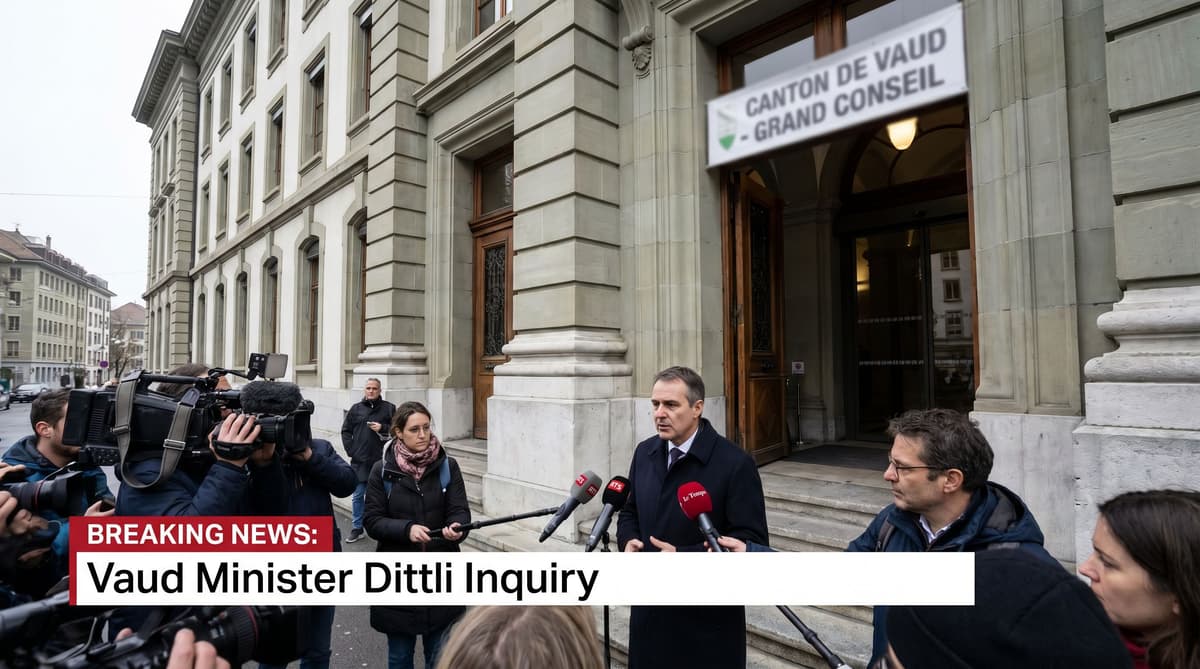
A staggering breach of public trust has sent shockwaves through the Canton of Vaud as an official inquiry confirms that Minister Valérie Dittli brokered a clandestine agreement to bury a criminal complaint. This is not mere speculation; former cantonal judge Jean-François Meylan has unearthed a signed document dated December 12, 2024, that proves the existence of a quid-pro-quo arrangement. While the public expected transparency, they received a masterclass in backroom maneuvering. The investigation reveals that Dittli successfully navigated the withdrawal of a criminal complaint filed by Jean-Claude Mathey, the former president of the Rural Land Commission. This revelation strips away the veneer of accountability that Swiss citizens demand from their elected officials. The scandal erupts at a time when Vaud is already grappling with questions regarding administrative integrity, making this discovery a critical blow to the canton's reputation for clean governance. The immediacy of this crisis cannot be overstated; it represents a fundamental fracture in the democratic contract between the state and the people.
Public Funds Buy Silence
CHF 10,000 of taxpayer money was weaponized to settle a private legal threat. This alarming figure sits at the heart of the Meylan report, which details how public mandates and funds were funneled to Jean-Claude Mathey in exchange for dropping his criminal case against the Minister. Using public coffers as a personal legal shield is a move that confronts the very foundations of Swiss fiscal responsibility. The investigation proves that these suspicious mandates were not assigned based on merit or necessity, but as a calculated payment for silence. While ordinary citizens face the full weight of the law, the inquiry suggests a different set of rules applied to the upper echelons of Vaud power. This use of nearly $12,700 in public resources to resolve a personal liability is a significant escalation from previous 'managerial shortcomings' reported in the department. It transforms a story of incompetence into one of potential corruption, forcing a dramatic re-evaluation of how mandates are awarded within the cantonal administration.
A Government Divided by Deceit
The Vaud government has officially declared that its relationship with Valérie Dittli is 'compromised' after discovering she lied to her colleagues. In an unprecedented public rebuke, the Council of State admitted that the Minister withheld the existence of the written agreement and the subsequent use of public funds. This is a government in open conflict with itself. The executive body now faces a critical dilemma: how to function when trust—the essential currency of the Swiss collegial system—has plummeted to zero. While Dittli remains in office, her colleagues have signaled that re-establishing a working relationship will be 'difficult,' a phrase that in the measured world of Swiss politics is a devastating condemnation. The contrast between the government’s public face of unity and this internal betrayal creates a tension that threatens to paralyze cantonal operations. This is no longer just about one minister; it is about the collective credibility of the Vaud executive, which now struggles to explain how such a deal remained hidden for months under its very nose.