Switzerland
Switzerland ranks among Europe’s renewable-energy leaders—but wind power lags
Switzerland ranks fifth in Europe for renewable electricity generation per person, helped by hydropower and rapid solar expansion. The article should assess the country’s progress against EU peers, explain why wind power is lagging and examine whether current gains are sufficient for the energy transition.
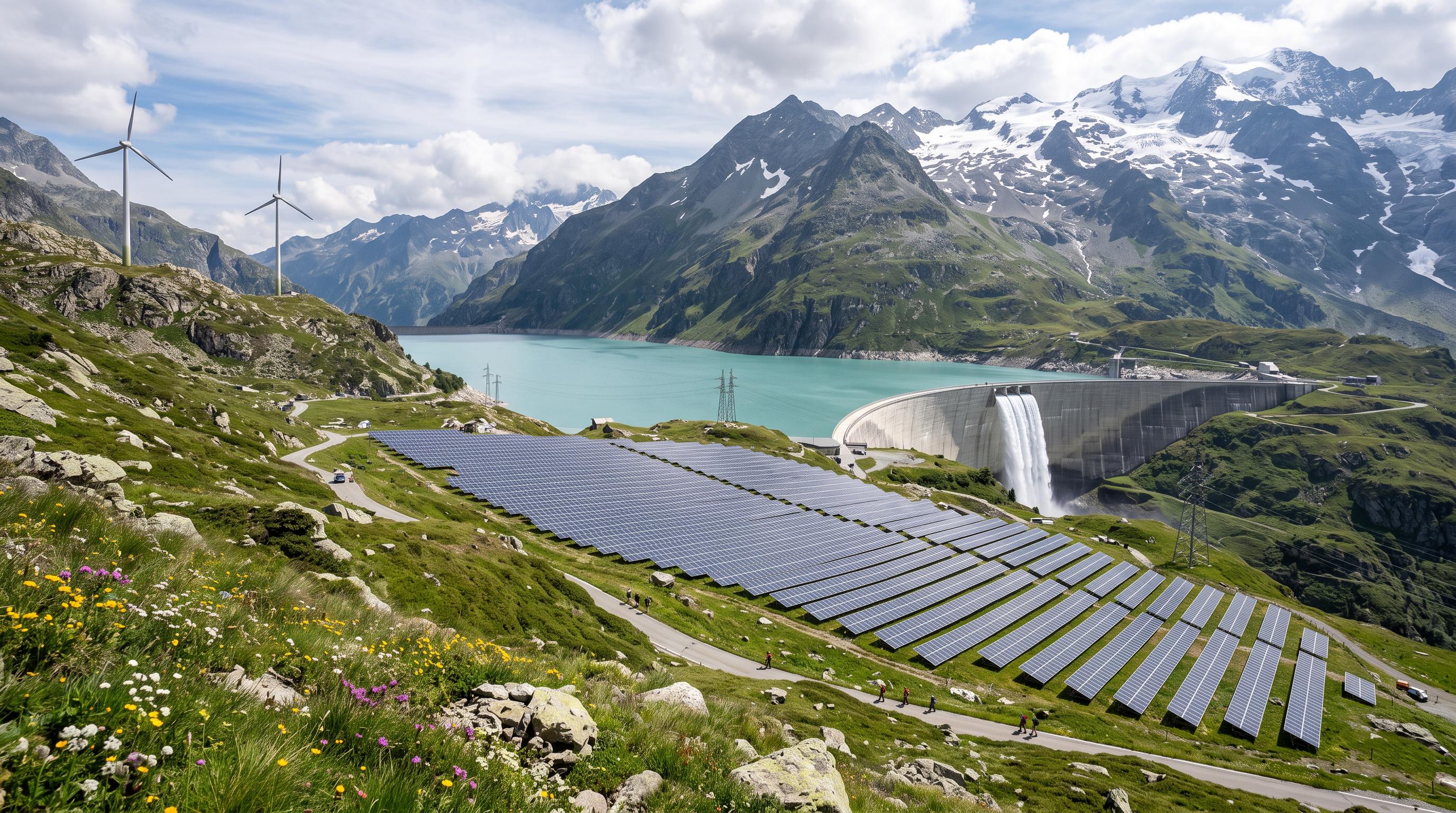
Switzerland Takes Fifth Place
Switzerland generated 4,872 kWh of renewable electricity per person in 2025, placing it fifth among European countries in the comparison by the Swiss Energy Foundation. Only Sweden, Finland, Austria and Denmark performed better on this measure. The result puts Switzerland firmly among the continent's leading renewable-electricity producers, even though its energy transition remains uneven.
The figure matters because it combines the country's established hydropower base with the rapid expansion of photovoltaic generation. Swiss electricity production benefits from alpine rivers and reservoirs, while solar panels have spread across homes, commercial buildings and other sites since the energy-market shock that followed Russia's invasion of Ukraine. Keystone-SDA reported the foundation's findings on August 28, 2026.
The comparison covers Switzerland and the 27 EU member states. It does not measure climate policy in general, total energy consumption or the share of renewables in every part of the economy. It focuses on renewable electricity generated per resident. On that specific measure, Switzerland has built a strong position. The ranking also exposes its dependence on a limited number of technologies, with wind power failing to match the pace of solar growth.
Solar Steps Into the Gap
Solar generation reached 878 kWh per person in 2025, a new Swiss record and enough to rank the country tenth in Europe for photovoltaic output per capita. That progress has helped broaden a power system long dominated by hydropower. The Swiss Energy Foundation still sees substantial room for further growth.
Solar's value extends beyond annual totals. Photovoltaic production rises during the brighter months, when melting snow and dry conditions can put pressure on river flows and reservoir levels. A Swissinfo report published on August 12, 2026, said solar power was helping prevent electricity-supply bottlenecks as rivers dry up. The technologies therefore contribute at different points in the seasonal cycle, although the source material does not quantify how much solar has offset any hydropower shortfall.
The expansion also reflects a change in where renewable electricity is produced. Large dams remain central to the national system, while panels can be installed across thousands of buildings and other already-developed surfaces. That makes solar a visible and rapidly scalable part of the transition. Yet the European ranking shows that Switzerland's record output is not the continent's ceiling. Sweden produced 11,478 kWh of renewable electricity per person overall in 2025, more than twice Switzerland's total.
Wind Runs Into Swiss Constraints
Wind power is the weak point in Switzerland's renewable-electricity performance. The Swiss Energy Foundation's comparison says wind is struggling to keep pace, while solar generation has set records. The supplied analysis does not give a Swiss wind-generation figure or identify individual projects, so the scale of the shortfall cannot be measured from the published data alone.
The obstacles are familiar in the Swiss setting. Wind turbines need suitable and consistently windy sites, but development must also navigate alpine terrain, protected landscapes, settlement density and local planning decisions. Projects can face lengthy approval processes and opposition from communities concerned about scenery, noise or impacts on wildlife. Those constraints limit the number of locations that can move from proposal to construction.
Switzerland's hydropower legacy also shapes the debate. A mature dam network gives the country a substantial renewable base, reducing the political urgency that wind expansion can create elsewhere. Solar installations have found a faster route into the system because they can be distributed across existing buildings and infrastructure. Wind has fewer such sites and attracts more concentrated scrutiny.
That combination helps explain why Switzerland ranks highly overall while lagging in one technology. It also warns against treating the fifth-place ranking as proof that every part of the transition is advancing at the same speed.
Turn Momentum Into Resilience
A fifth-place ranking does not settle Switzerland's energy-transition task. The country produced 4,872 kWh of renewable electricity per resident in 2025, but its solar figure of 878 kWh placed it only tenth in Europe. Wind power remains behind the country's other renewable sources, and the Swiss Energy Foundation says solar still has significant room to grow.
The next phase will require more than preserving the hydropower advantage. Switzerland must continue adding photovoltaic capacity while managing the seasonal and weather-related limits of both solar and hydroelectricity. The August 2026 report on drying rivers underlines that supply conditions can change as water availability shifts. More generation does not automatically remove the need for storage, grid investment and careful planning, although the source does not provide figures for those requirements.
European comparisons give Swiss policymakers a clear reference point. Denmark, the fourth-ranked country, generated 5,066 kWh per person, only modestly above Switzerland, while Austria produced 6,655 kWh and Sweden 11,478. Switzerland is close to one peer and far behind others, depending on the benchmark chosen.
The data support a measured conclusion: Switzerland has momentum, especially in solar, and a powerful hydropower foundation. The transition will remain incomplete until wind and other parts of the electricity system can keep pace with that progress.