transport
Switzerland considers traffic lights to tackle motorway jams
Switzerland is considering using traffic lights and other measures to manage motorway congestion as jams continue to worsen. The proposed approach would regulate traffic entering overloaded stretches of road.
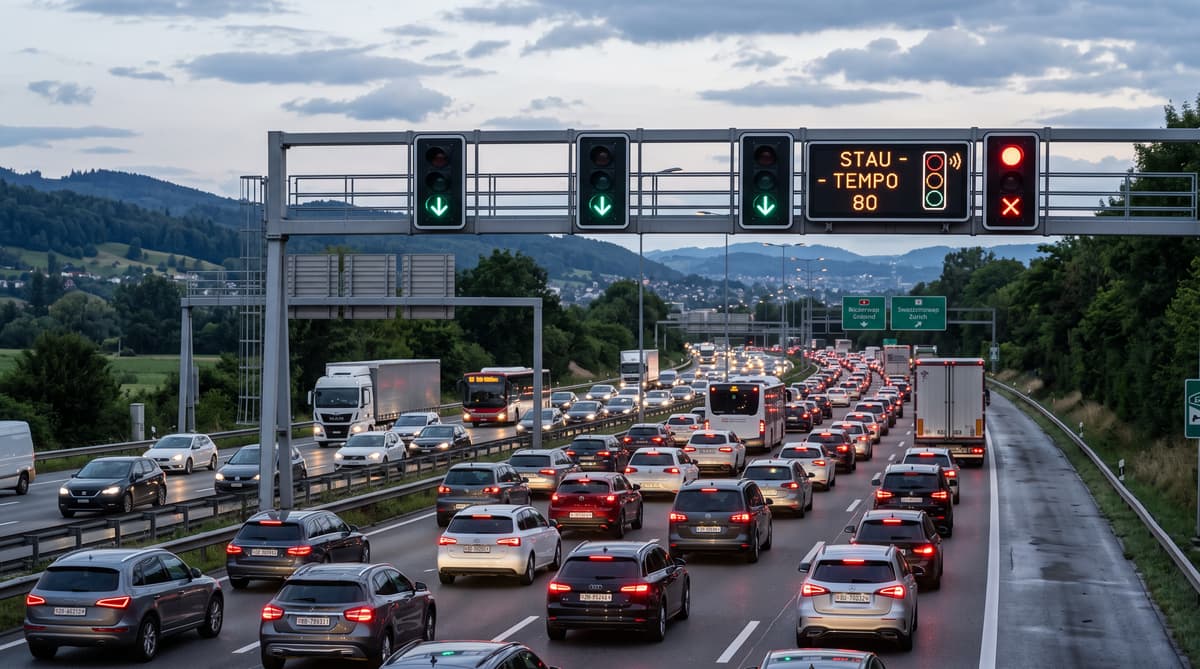
Switzerland’s motorway jams have become frequent enough to prompt a new response from the federal government. Authorities are considering traffic lights and other measures to control the flow of vehicles before overloaded stretches of road reach a standstill. The proposal reflects a simple operational problem: when too many vehicles enter a constrained section at once, the resulting queue can spread quickly across the network.
The Local reported on 12 October 2026 that the number of traffic jams has increased sharply in recent years. Switzerland’s motorway system, much of it built decades ago, now faces a larger volume of traffic than its original design anticipated. The report does not provide a national jam total or identify a rollout date for the proposed controls, so the precise scale and timing of the plan remain unclear.
Traffic lights at motorway entrances would regulate access rather than allow vehicles to join the main carriageway continuously. Such controls could be activated on approaches to sections already carrying heavy traffic. For drivers, the immediate effect could be a short wait before entering the motorway, with the authorities seeking to prevent longer delays on the road ahead.
Regulate the on-ramps
The proposed traffic lights would manage entry to the motorway, not add new road capacity. Their purpose would be to meter vehicles joining a section where traffic is already close to its practical limit. By spacing out entries, authorities could try to keep the main carriageway moving and reduce the stop-start waves that turn a slowing lane into a long queue.
The approach is familiar in traffic management: access is restricted temporarily when the downstream road cannot absorb more vehicles. In Switzerland, the measure would add a new layer of control to a network under pressure from rising vehicle numbers and infrastructure built for earlier traffic patterns. The report describes the government’s goal as limiting jams on Swiss motorways, though it does not specify which entrances, routes or cantons would be involved.
That missing detail matters. A traffic light at a busy interchange could affect commuters, freight operators and drivers making short regional trips in different ways. The effectiveness of the system would depend on where controls were installed, when they operated and how clearly drivers received information. Without those details, the proposal remains a policy direction rather than a confirmed nationwide programme.
Confront an older network
The pressure comes from a widening gap between motorway demand and the network’s available space. The Local describes Switzerland’s motorways as decades old and increasingly unable to accommodate the number of vehicles using them. That mismatch helps explain why the government is examining traffic management alongside the longer process of planning and building infrastructure.
Congestion does more than slow individual journeys. Queues can disrupt deliveries, make journey times less predictable and push traffic onto local roads when motorists search for alternatives. Those effects are especially relevant in a compact country where motorways pass close to towns, urban centres and important cross-border routes. The available source does not identify the worst corridors, quantify the economic cost of delays or distinguish between commuter, leisure and freight traffic.
The government’s proposed response therefore raises practical questions that will shape public debate. Officials will need to define the thresholds that trigger a signal, determine how operators monitor conditions and explain how emergency vehicles and public transport are handled. Drivers will also want to know whether controls would operate only during peak periods or whenever a particular section becomes overloaded. The report confirms that measures are under consideration, but not that these operating rules have been settled.
Set the rules before the queues
Switzerland has begun weighing traffic control because the congestion problem is already testing the limits of the existing network. Traffic lights could provide authorities with a flexible tool for overloaded stretches, especially where expanding the road immediately is not possible. Their introduction would also make motorway access more visibly managed for drivers accustomed to joining the road whenever an entrance is open.
The next stage will depend on the government’s detailed plan. The available report gives no timetable, route list, cost estimate or confirmed decision. It also does not say whether the measures would be trialled first or introduced across multiple regions. Those omissions leave the central implementation questions open, including how the system would be coordinated with road operators and how motorists would receive warnings about delays at motorway entrances.
For people travelling by car, the policy could shift some waiting from the main motorway to the slip road. Whether that produces shorter and more reliable journeys will depend on the traffic conditions downstream. For Switzerland, the debate brings a growing infrastructure constraint into everyday view: managing demand may become part of motorway policy while the country considers how to address a network built for a different era of road use.