Swiss economy
Switzerland raises 2026 growth forecast to 1.7 percent
The Swiss government has raised its 2026 growth forecast to 1.7%, even as higher energy costs linked to the Iran war create a new risk for households and businesses. Explain the assumptions behind the revision, the sectors driving growth and the factors that could still undermine the outlook.
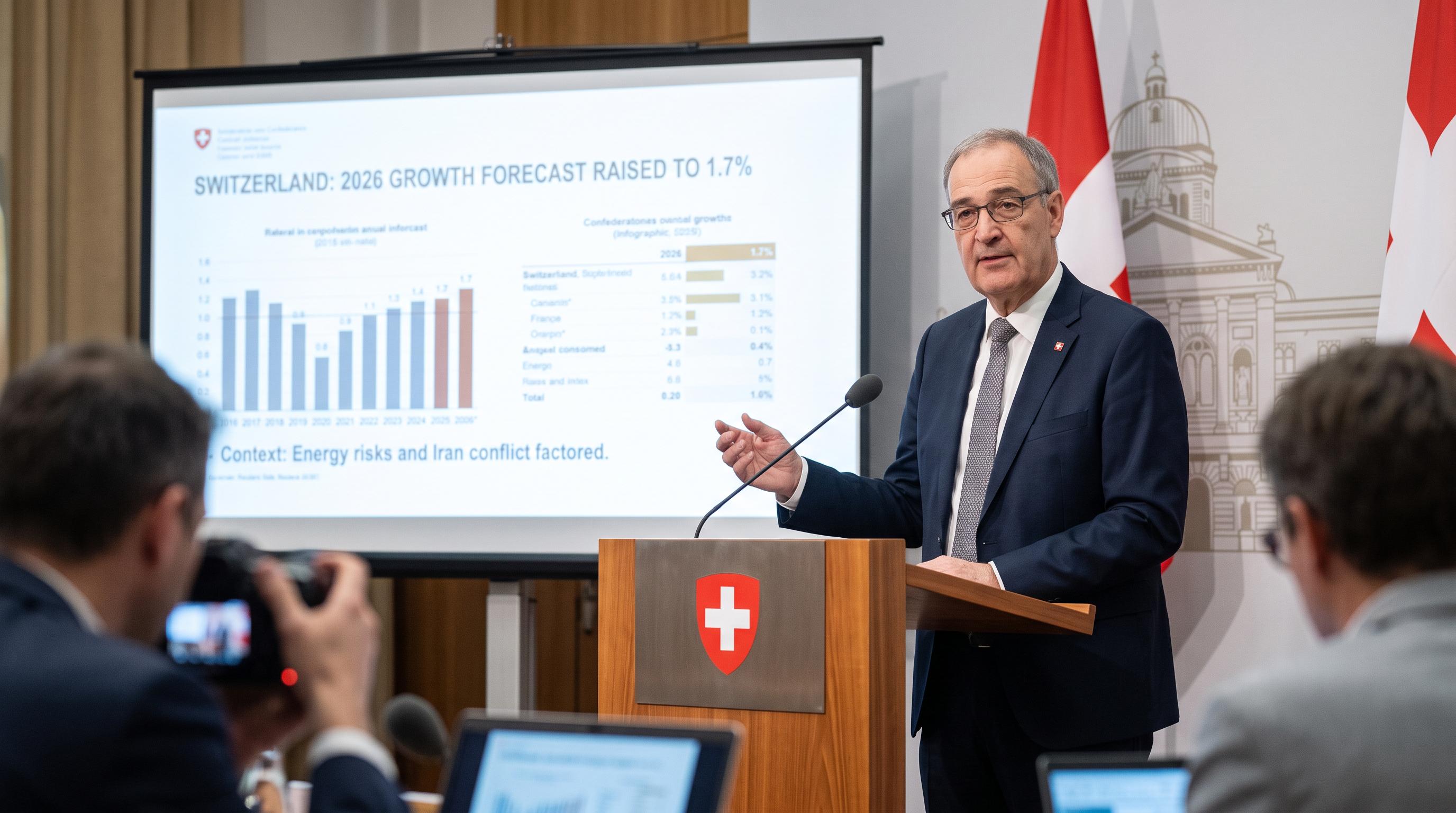
Switzerland Lifts 2026 Growth Forecast
Switzerland now expects the economy to grow 1.7% in 2026, almost twice the 0.9% forecast issued by the government expert group in June. The revision gives the recovery a stronger base, but it arrives as energy markets face fresh pressure from the war involving Iran.
The economy ministry said the upgrade reflects stronger than expected activity in the second quarter. Swiss GDP expanded by 1.5% during the period, after several weaker quarters. The result changed the starting point for the ministry's projection and lifted its assessment of the year ahead.
The government still expects growth to moderate in the coming months. Its expert group nevertheless says the economy remains broadly on track for recovery, with 1.6% growth forecast for 2027. That path depends on the recent improvement carrying through to the wider economy and on external demand holding up.
For households, the forecast offers a more positive employment and income backdrop than the June estimate implied. For companies, especially those exposed to global trade, it signals stronger activity. Energy costs and international policy decisions remain immediate threats to that outlook.
Chemical and Pharma Exports Set the Pace
Chemical and pharmaceutical companies powered the second-quarter rebound, helping GDP grow 1.5% after several sluggish quarters. The ministry did not publish a broader sector-by-sector breakdown, but it identified these industries as the clearest reason for the forecast change.
Their performance matters well beyond individual factories and laboratories. Switzerland's chemical and pharmaceutical businesses are deeply integrated into international supply chains and export markets. Stronger output in these sectors can lift industrial production and improve the contribution from foreign trade, which the ministry now expects to be greater than it had anticipated in June.
The revision therefore rests on more than a single quarter's headline figure. It reflects the ministry's judgment that the second-quarter strength provides a firmer platform for the rest of 2026. That judgment remains conditional. A slowdown after the strong quarter would reduce the pace of expansion, particularly if demand from abroad weakens.
The data also underline the uneven nature of the Swiss recovery. A small group of globally connected industries has provided the clearest momentum in the figures supplied by the government. The next test will be whether that momentum spreads through suppliers, exporters and domestic businesses.
Foreign Trade Adds Force, and Risk
Foreign trade is expected to make a stronger contribution to 2026 growth than the ministry forecast in June. That change places international demand at the centre of Switzerland's improved outlook, alongside the strong second-quarter showing from chemicals and pharmaceuticals.
Switzerland's open economy is sensitive to conditions beyond its borders. Exporters can benefit quickly when overseas orders improve, yet they also face disruption when tariffs, financing costs or financial markets move against them. The ministry specifically warned that the administration of US President Donald Trump could impose further tariffs, creating a direct risk for Swiss companies selling into global markets.
The forecast does not assume that every part of the economy will move at the same speed. The ministry said growth may moderate in the months ahead while still describing the economy as broadly on track for recovery. That wording points to a measured improvement rather than a guarantee of uninterrupted expansion.
Businesses will therefore watch trade policy as closely as order books. New US duties could reduce demand, increase costs or complicate supply chains. A weaker global environment would also make it harder for export strength to support domestic activity, even with the 2026 forecast now standing at 1.7%.
Energy Costs Keep the Forecast Exposed
Higher oil and gas prices linked to the Iran war could weaken the recovery before households feel the benefit of stronger GDP growth. The Swiss economy ministry warned that the conflict has made the inflation outlook more uncertain. More expensive energy would raise costs across the economy and could reduce consumer spending.
That pressure would reach households through fuel, heating and the price of goods and services that depend on energy. Businesses would also face higher operating and transport costs. If companies pass those increases on to customers, inflation could remain elevated. If they absorb them, profit margins could narrow and investment decisions could be delayed.
The ministry listed other threats as well. Possible corrections in financial markets could damage confidence and asset values. Rising international financing costs, combined with high global debt, could make borrowing more expensive for companies and public institutions. Those conditions could restrain demand even as the official forecast points to recovery.
The upgrade to 1.7% therefore describes the ministry's current base case, not a fixed outcome. It assumes the stronger second-quarter performance and improved foreign-trade prospects outweigh the risks now gathering around energy, tariffs, financial markets and debt.
The Next Test: Turn the Upgrade Into Durable Growth
The government's new forecast gives Switzerland a stronger starting point for 2026, with growth projected at 1.7% and 2027 expansion at 1.6%. The figures suggest that officials see the recent industrial rebound as durable enough to support recovery beyond one strong quarter.
The outlook will be tested first by energy markets. A sustained rise in oil and gas prices could squeeze household budgets, keep inflation uncertain and slow spending. Exporters face a separate test from possible additional US tariffs and any weakening in global demand. Financial market corrections and higher international financing costs add pressure to companies that need credit.
Swiss policymakers and businesses will track whether foreign trade delivers the stronger contribution promised in the revised projection. They will also watch whether the chemical and pharmaceutical sectors can maintain the momentum that lifted second-quarter GDP. Those are the measurable supports behind the upgrade.
For now, the ministry's message is cautiously constructive. The Swiss economy has moved onto a firmer recovery path than officials expected in June. The next data releases will show whether that improvement broadens across the economy or remains concentrated in internationally exposed industries.