humanitarian aid
Swiss Solidarity Launches National Appeal for Gaza Aid
Swiss Solidarity organizes national donation day to support humanitarian assistance for civilians in Gaza, highlighting Switzerland's role in international humanitarian efforts.
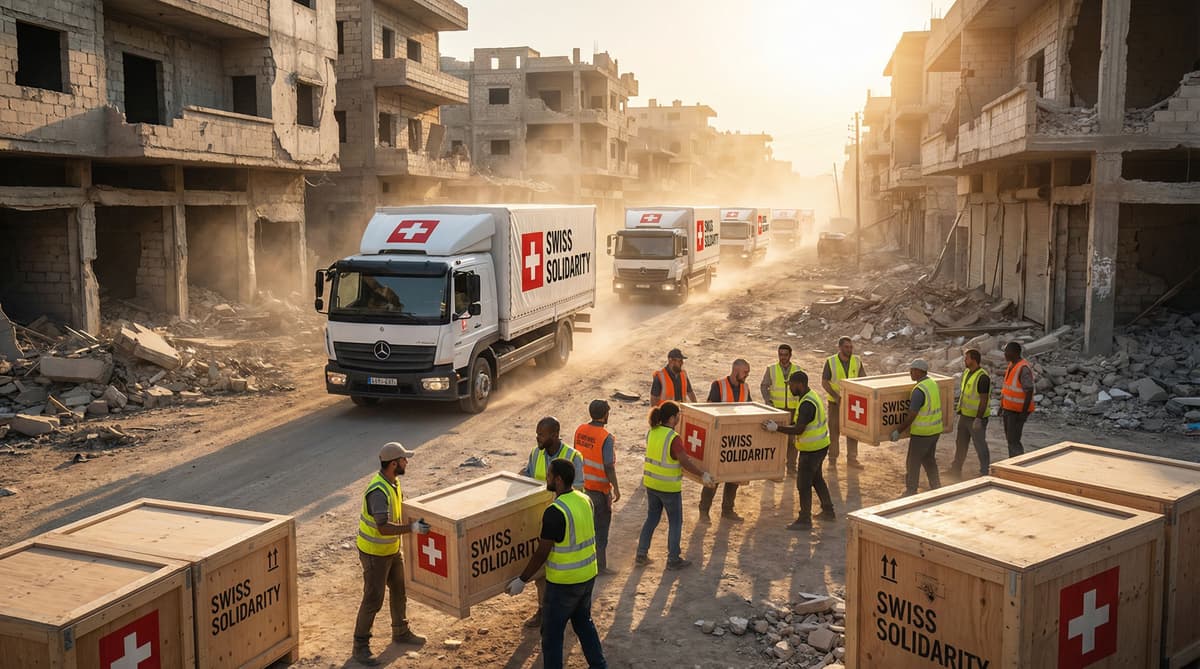
A critical window has finally opened in the Middle East. Following the signing of a pivotal ceasefire agreement between Hamas and Israel, the barriers to humanitarian access are crumbling, allowing aid to flow into a region that has been suffocating for two years. Seizing this moment with characteristic urgency, Swiss Solidarity has declared October 22, 2025, a national day of solidarity. This is not merely a fundraising drive; it is a direct lifeline extended from the Swiss people to the civilians of Gaza.
The ceasefire acts as the catalyst, transforming political maneuvering into a tangible opportunity to save lives. However, the window is narrow, and the need is absolute. Swiss Solidarity, the humanitarian arm of the Swiss Broadcasting Corporation (SBC), is spearheading this massive logistical mobilization. The organization asserts that passivity is no longer an option. As borders open, Switzerland is positioning itself at the forefront of the international response, demanding that resources move immediately from bank accounts in Bern and Zurich to the devastated streets of Gaza.
Anatomy of a Humanitarian Catastrophe
The scale of devastation in Gaza defies simple description; it is an unprecedented humanitarian tragedy that has ground on for two agonizing years. Tens of thousands of victims have fallen, while survivors grapple with a landscape of total destruction. The infrastructure of daily life has been obliterated—hospitals stand silent and out of order, water taps run dry, and the electrical grid has collapsed. This is a population pushed beyond the brink.
Hunger is no longer a threat; it is a daily reality for the exhausted masses. The shortage of medicine turns treatable injuries into death sentences. "The situation remains dramatic," declares Miren Bengoa, director of Swiss Solidarity, with stark clarity. "The population in Gaza is exhausted, hungry and homeless." The sheer magnitude of the ruin demands a response that matches the ferocity of the conflict. We are witnessing a society stripped of its basic pillars, requiring an injection of aid that is nothing short of massive.
The Logistics of Survival
Swiss Solidarity is deploying a two-tiered strategy to combat this crisis, prioritizing speed without losing sight of stability. In the immediate short term, the mission is triage: flooding the zone with food, clean water, medicine, and hygiene products. These are the non-negotiables of survival. Mobile clinics are being reinforced to treat the wounded and the sick where hospitals no longer stand, while specialized support is being rolled out for traumatized children and families who have known nothing but war for twenty-four months.
Yet, survival is only the first step. The long-term vision is equally ambitious. Donations collected today will fuel the colossal task of reconstruction tomorrow. This involves rebuilding the skeleton of society: restoring water supply facilities, reconstructing schools, and erecting homes for the displaced. The strategy is clear—first, stop the dying; second, start the living. This dual approach ensures that Swiss generosity translates into both immediate relief and lasting recovery.