safety
Swiss ski rescue services report 14,000 accidents last season
Annual safety report reveals 80% of incidents involved skiers, with snowboarding accidents accounting for 15%, highlighting the need for continued safety awareness.
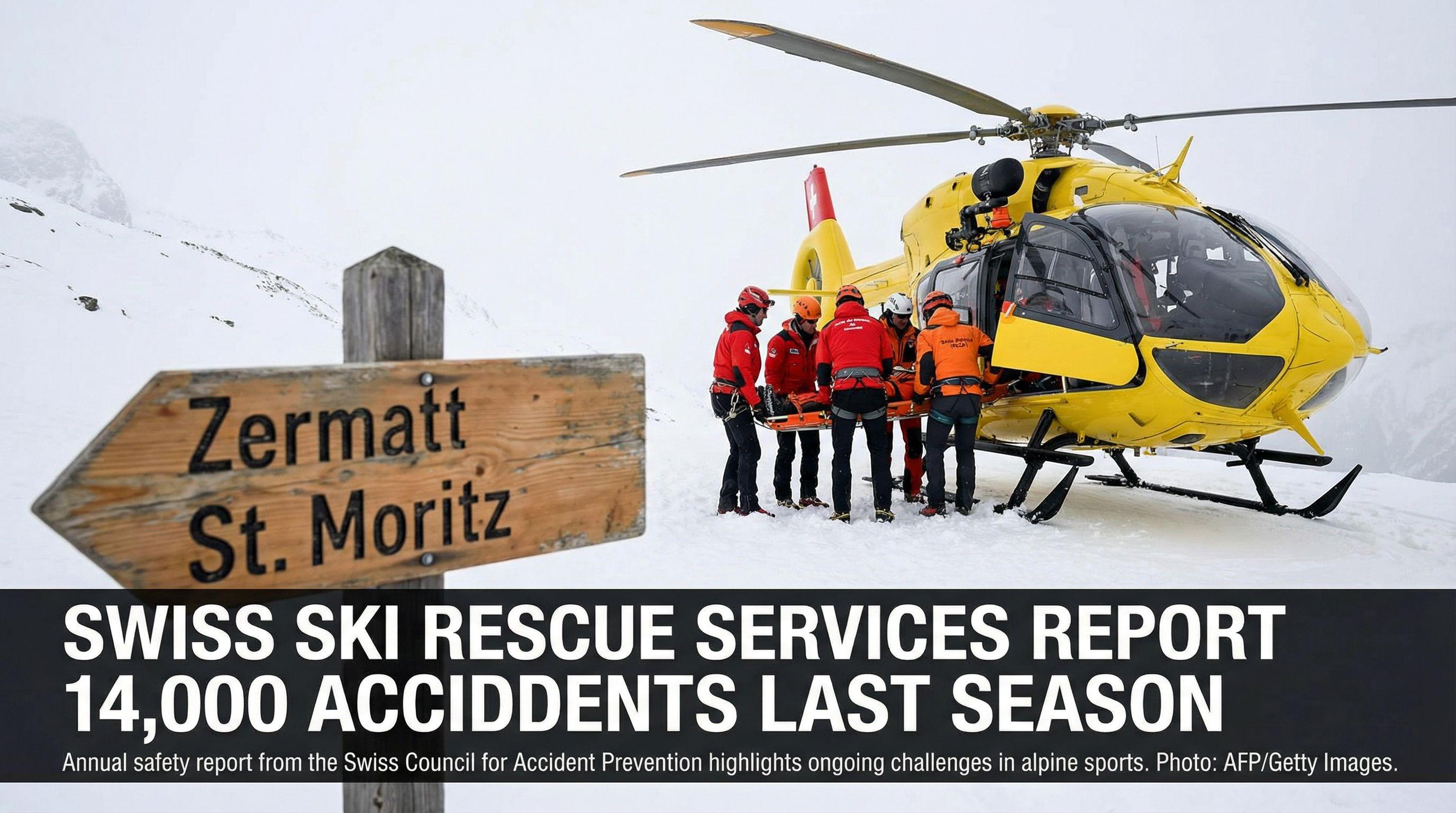
Overview of Swiss Ski Accidents
Swiss winter sports faced significant safety challenges last season, with piste rescue services responding to 14,000 incidents across the nation's ski resorts. The comprehensive data, released by the Swiss Council for Accident Prevention, reveals that skiing dominated the accident statistics, accounting for 80% of all reported cases. This substantial number underscores the ongoing safety concerns in one of Switzerland's most popular recreational activities.
The distribution of accidents across different winter sports provides valuable insights into risk patterns, with snowboarding accounting for 15% of incidents and sledging representing 4% of the total cases. These figures reflect the relative popularity of different winter sports in Switzerland while highlighting the need for targeted safety measures.
Injury Patterns and Statistics
The analysis of injury patterns reveals distinct trends across different winter sports activities. In skiing, knee injuries dominated the statistics, comprising 39% of all skiing-related accidents. Snowboarding showed a different pattern, with wrist and forearm injuries being particularly common, occurring in one-third of all snowboarding incidents.
Particularly noteworthy is that head injuries were reported in 10% of all accidents across all winter sports disciplines. This statistic emphasizes the critical importance of proper protective equipment, especially helmets, which have become nearly universal on Swiss slopes.
Safety Measures and Recommendations
The Swiss Council for Accident Prevention emphasizes that over 90% of accidents are self-inflicted, often resulting from overestimation of personal abilities. This finding has led to enhanced focus on preventive measures and safety recommendations.
Experts strongly advocate for proper equipment maintenance and professional adjustments. Specifically, ski bindings should be professionally adjusted and checked before the season begins. Regular equipment maintenance, including ski and snowboard servicing, is crucial for preventing accidents.
The widespread adoption of helmets has shown promising results, with experts noting that helmet use reduces the risk of serious head injury by approximately one-third.
Prevention and Future Outlook
Looking ahead, the Swiss winter sports industry continues to emphasize the importance of preventive measures. The high number of self-inflicted accidents highlights the need for improved awareness about personal limitations and proper preparation.
Key recommendations from safety experts include:
- Regular equipment maintenance and professional adjustments
- Realistic assessment of personal skiing abilities
- Adherence to slope rules and safety guidelines
- Proper use of protective equipment
The Swiss Council for Accident Prevention continues to monitor trends and adapt safety recommendations to address emerging challenges in winter sports safety.