Swiss Culture
A Tradition's Toxic Legacy: Swiss Shooting Festivals and Their Environmental Cleanup
The 2026 Swiss Federal Shooting Festival recently drew 100,000 visitors, celebrating a deeply rooted tradition. However, this article explores the costly environmental aftermath, as thousands of disused shooting ranges across the country are now classified as contaminated sites requiring extensive and expensive remediation.
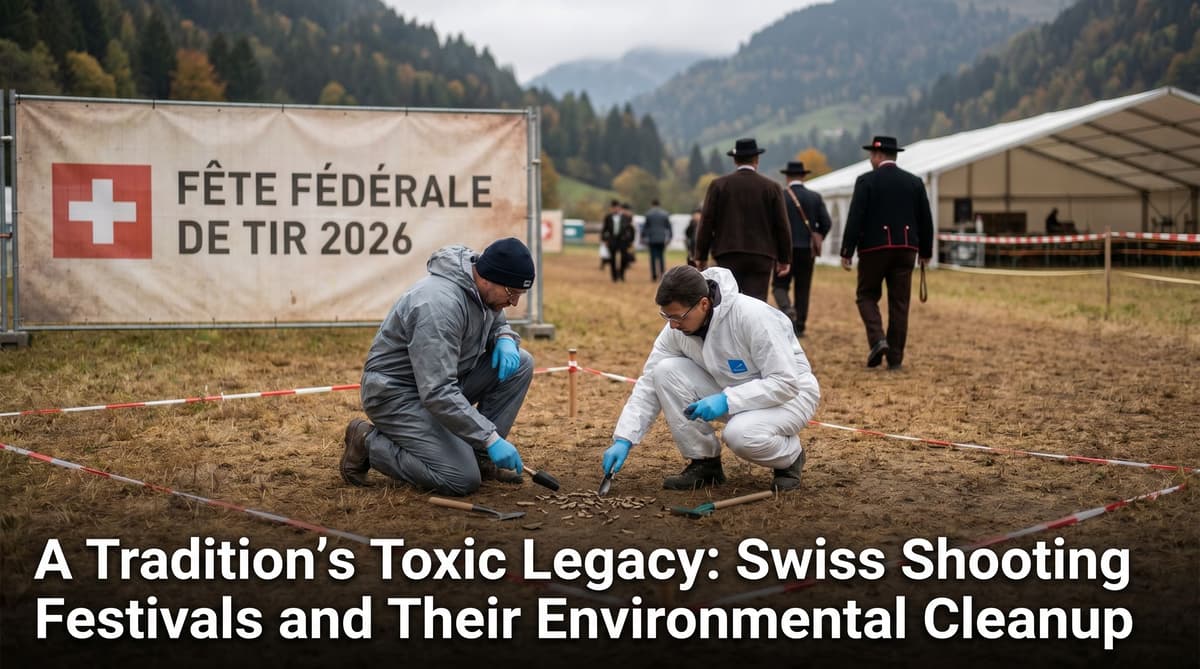
A staggering 2.5 million rounds of ammunition tore through the air in Graubünden this month, marking the thunderous conclusion of the 2026 Swiss Federal Shooting Festival. This was not a military exercise, but a cultural phenomenon that drew 100,000 visitors and 35,000 active marksmen to the city of Chur and 19 surrounding ranges. The scale of the event is unprecedented in modern sporting contexts, requiring a massive CHF 14 million budget and the tireless labor of 5,000 volunteers who clocked 150,000 working hours. While other European nations have seen their shooting cultures wither under restrictive legislation, Switzerland’s passion remains defiant. The festival injected millions into the local hotel and retail sectors, proving that the 'Schützenfest' is as much an economic engine as it is a social cornerstone. However, as the smoke clears and the crowds disperse, the sheer volume of lead deposited into the earth serves as a jarring reminder of the environmental toll this heritage exacts.
The Citizen-Soldier Identity Grapples with Change
Shooting is not merely a hobby in Switzerland; it is a foundational pillar of the state, with three of the first seven Federal Councillors having served as presidents of the Swiss Riflemen’s Society. Since 1848, the image of the 'citizen-soldier' has been synonymous with Swiss sovereignty. For nearly a century, federal law mandated that every soldier join a shooting club, effectively turning every village range into a secondary military academy. At its peak in 1986, membership soared to 590,000—nearly 10% of the entire population. Historian Cedric Zbinden notes that this unique social presence sets Switzerland apart from neighbors like Germany or the Netherlands, where post-war bans or restrictive laws severed the link between the public and firearms. Yet, this unshakeable tradition is confronting a modern identity crisis. While the 2026 festival shows the flame still burns, the 'cracks' in the citizen-soldier model are widening as urban lifestyles and shifting values challenge the necessity of a rifle in every home.
A Toxic Legacy Buried in the Soil
Beneath the pristine green turf of thousands of Swiss municipalities lies a heavy, poisonous secret: tons of lead and antimony. For decades, the earth embankments behind targets—designed to stop bullets—have acted as unintended hazardous waste sites. Today, thousands of disused shooting ranges are officially classified as contaminated, creating an environmental nightmare that can no longer be ignored. The lead doesn't just sit there; it leaches into the groundwater, threatening the very Alpine purity that Switzerland markets to the world. In valleys like Valposchiavo, where children once earned pocket money marking targets, the soil is now a liability. This is the 'costly legacy' of a century of compulsory practice. Every round fired in the name of national defense has contributed to a slow-motion ecological disaster. As the federal government and cantons inventory these sites, the scale of the pollution is proving to be as deep-rooted as the tradition itself.