economy
Swiss National Bank Reports Reduced Foreign Currency Interventions
Central bank's foreign currency purchases drop to CHF1.2 billion in 2024, marking shift in monetary policy
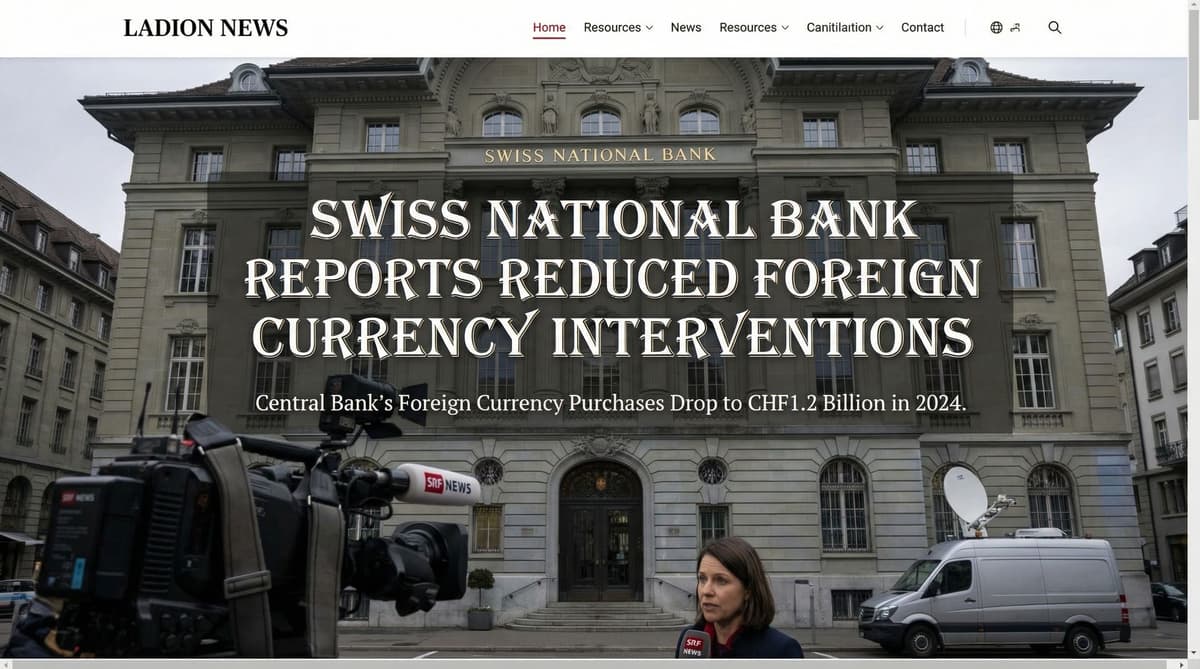
The Swiss National Bank (SNB) has significantly scaled back its foreign currency market interventions in 2024, with purchases totaling just CHF 1.2 billion. This represents a marked shift in the central bank's approach to currency management, with most of the activity concentrated in the third quarter of the year. The reduced intervention reflects the bank's adapting strategy to current economic conditions and its confidence in maintaining price stability.
Policy Shift from 2023
The contrast between 2024 and 2023 interventions highlights a dramatic shift in the SNB's monetary policy stance. While 2024 saw modest purchases of CHF 1.2 billion, the previous year recorded substantial sales of CHF 132.9 billion in foreign currencies. This reversal reflects the successful management of inflation, which has now returned to the SNB's target range of 0-2%. The bank has also adjusted its interest rate policy, bringing the key rate down to 0.5% through several reductions in 2024.
Impact on Swiss Economy
The reduced intervention in currency markets signals the SNB's confidence in the Swiss franc's stability and the overall economic environment. The previous strategy of selling foreign currencies helped strengthen the franc and control imported inflation during the post-pandemic period and amid geopolitical tensions. The current minimal intervention approach suggests that the bank has achieved its immediate goals in managing inflation and currency stability.
Future Outlook
Economic forecasters anticipate further monetary policy adjustments, with many experts predicting additional interest rate cuts in the near term. The SNB's reduced currency market intervention, combined with controlled inflation levels, provides flexibility for future policy decisions. This measured approach suggests a careful balancing act between maintaining currency stability and supporting economic growth in an evolving global financial landscape.