healthcare
Swiss Medical Services Billed at Home Rates Despite Foreign Outsourcing
Investigation reveals Swiss medical services performed abroad are being billed at Swiss rates despite lower costs, raising questions about healthcare pricing transparency.
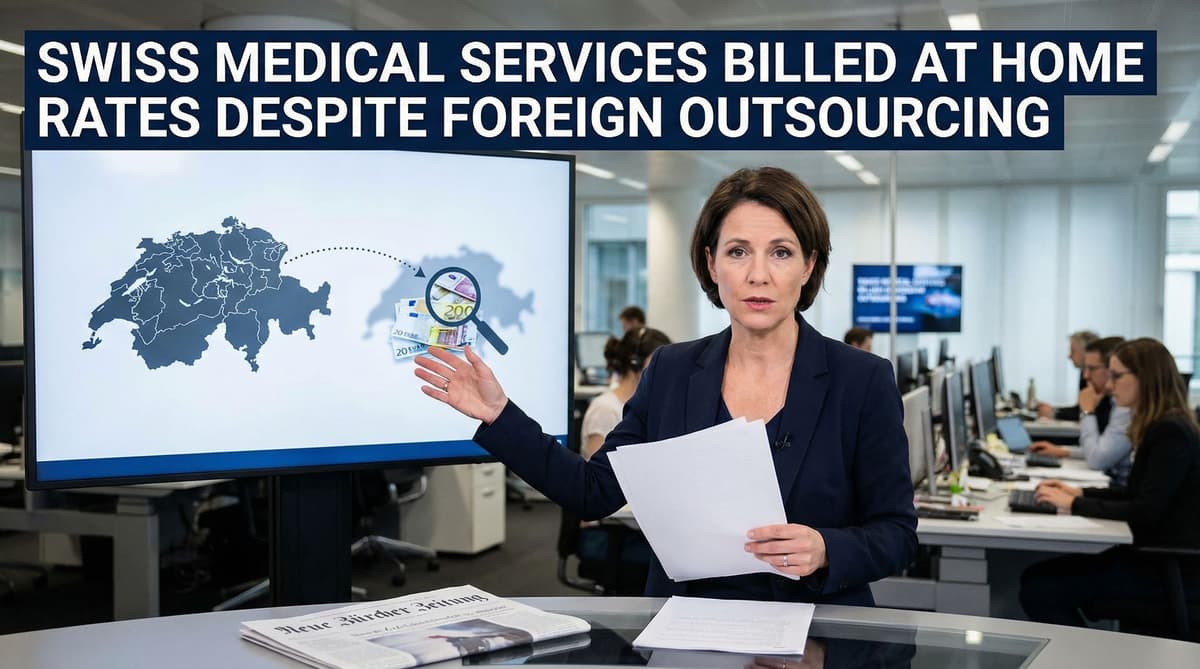
Switzerland’s healthcare system is confronting a startling economic paradox: medical services are being outsourced to low-cost European neighbors while patients and insurers are billed at premium Swiss rates. Investigations by public broadcaster RTS and CH-Media have exposed a lucrative arbitrage scheme where the high cost of Swiss healthcare is maintained artificially, even when the labor is performed hundreds of kilometers away. This is not a fringe occurrence; two major cases have been flagged in a single week, signaling a systemic shift in how medical services are delivered and monetized.
At the center of this controversy is a fundamental breach of transparency. While Swiss policy dictates that mandatory health insurance covers services performed domestically, providers are exploiting the definition of "service location." By charging Swiss prices for work performed in economies with significantly lower wages, these clinics are effectively pocketing the difference. This practice raises immediate, critical questions about the integrity of Swiss healthcare pricing. If the cost of analysis drops due to outsourcing, why do premiums remain sky-high? The disconnect between the cost of production and the billed price suggests a profit-driven maneuver that leaves the Swiss premium payer footing the bill for a service that no longer justifies its price tag.
Digital Borders and Grey Zones
The Hirslanden group, a titan in the private sector operating 17 hospitals nationwide, is now under scrutiny for beaming sensitive medical data across borders. Reports confirm that medical images—including MRIs, X-rays, and complex scans—are being transmitted to France, Germany, and Hungary for analysis. While the digital transfer of data is instantaneous, the economic implications are lasting. These analyses are performed at a fraction of the domestic cost, yet the invoice generated remains unmistakably Swiss. This is not merely an administrative detail; it is a strategic decoupling of service from location.
Simultaneously, Medgate, the dominant player in Swiss telemedicine, is pushing the boundaries of the virtual clinic. The investigation reveals that Medgate doctors are currently operating out of Germany and Spain, with imminent expansion plans for France and Italy. Despite the physical absence of these practitioners from Swiss soil, Medgate asserts that their telemedicine services are "considered to be provided in Switzerland." This semantic gymnastics allows them to bill legally under current frameworks, effectively erasing national borders for their workforce while rigidly enforcing national borders for their pricing structure.
Regulatory Fog and Legal Loopholes
A dense regulatory fog currently hangs over the Federal Office of Public Health (FOPH), creating the perfect environment for these grey-market practices to thrive. The FOPH maintains that "in principle," reimbursement is reserved for services performed within Switzerland by authorized providers. However, the phrase "in principle" is doing heavy lifting, acting less as a barrier and more as a porous gate. Telemedicine performed abroad is not explicitly prohibited, leaving a gaping loophole that commercial entities are all too eager to exploit.
Medgate’s defense highlights the fragility of current regulations. By claiming their services are "considered" to be provided in Switzerland, they are leveraging the lack of precise legal definitions for digital health. This ambiguity allows providers to interpret the rules to their distinct commercial advantage. Until the law catches up with the reality of digital nomadism in medicine, the Swiss healthcare system remains vulnerable to interpretation. The current framework was built for a physical world, and it is visibly failing to contain the fluid dynamics of modern, digitalized medical commerce.