medical
Swiss Medical Breakthrough: Heart Preserved for Record 12 Hours
Bern's Inselspital achieves European record by keeping donor heart viable for 12 hours outside body before successful transplant, marking significant advance in transplant medicine.
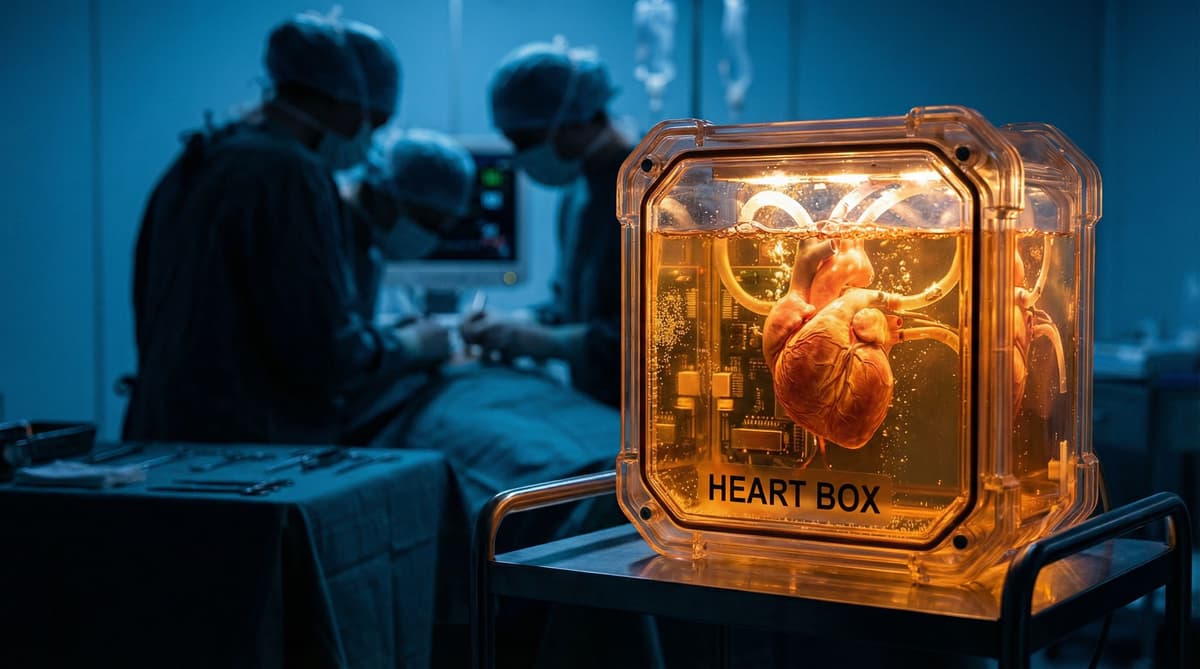
Twelve hours. That is the staggering new benchmark set by Bern’s Inselspital, shattering the previous European record for keeping a donor heart alive outside the human body. In a dramatic turn of events where nature clashed with science, a donor heart remained viable for three times the traditional limit before being successfully transplanted. This is not merely a medical procedure; it is a defiance of biological constraints.
The breakthrough occurred under high-pressure circumstances. Severe weather grounded the transport plane destined for the transplant center, forcing a desperate switch to ground transport. In the past, this logistical nightmare would have been a death sentence for the organ. However, thanks to cutting-edge innovation, the heart arrived beating and healthy. The patient is reportedly recovering exceptionally well, proving that Swiss medicine is pushing the boundaries of what was once considered impossible.
Technology Triumphs Over Logistics
This victory belongs to ex vivo perfusion, a revolutionary technology that is rapidly rendering traditional methods obsolete. Unlike the passive "cold storage" techniques of the past, which simply slowed decay, this system actively sustains life. The machine pumps a specialized solution rich in nutrients, oxygen, and medication through the organ, mimicking the human body's own environment.
David Reineke, Head of Cardiac Surgery at Inselspital, did not mince words regarding the impact of this success. He declared the ability to keep a heart beating outside the body without damage an "absolute game changer" for the nation's transplant capabilities. By maintaining the organ in optimal condition during the grueling 12-hour transit, the medical team turned a potential tragedy into a landmark victory for European healthcare.
A Quantum Leap for Patient Survival
The statistics surrounding this innovation are nothing short of revolutionary. We are witnessing a dramatic surge in transplant efficiency. With the adoption of this perfusion technology, waiting times for suitable organs have been slashed by a massive one-third. Even more compelling, the number of patients successfully receiving organs has doubled in a very short timeframe.
This creates a new paradigm for Swiss patients. The extended viability window means that geography is no longer the barrier it once was. Organs can now travel further and withstand longer delays without compromising the recipient's safety. This is a critical development for Switzerland, ensuring that donor organs—a scarce and precious resource—are utilized with maximum efficiency, saving lives that would otherwise be lost to logistical limitations.
The End of the 'Ice Age' in Medicine
For decades, transplant medicine was shackled by the "ice box" limit. Surgeons raced against a strict four-hour clock, storing organs in simple coolers filled with ice. That era is rapidly coming to a close. The Inselspital's achievement proves that the four-hour ceiling has been obliterated, replaced by a 12-hour window that offers unprecedented flexibility.
This shift does more than just buy time; it buys quality. By avoiding the cellular stress of cold ischemia, organs arrive in better condition, ready to function immediately. As Switzerland continues to lead in this high-tech medical arena, the implications are global. We are moving away from a system defined by frantic rushing and toward one defined by precision, endurance, and significantly improved outcomes for patients facing the most critical fight of their lives.