Finance
Swiss Lawmakers Consider Softer 'Too Big to Fail' Rules for UBS
In the wake of the Credit Suisse collapse, Swiss parliamentarians are signaling a willingness to compromise on stringent new capital requirements for UBS, potentially reducing the proposed $22 billion increase as the government finalizes its new reform package.
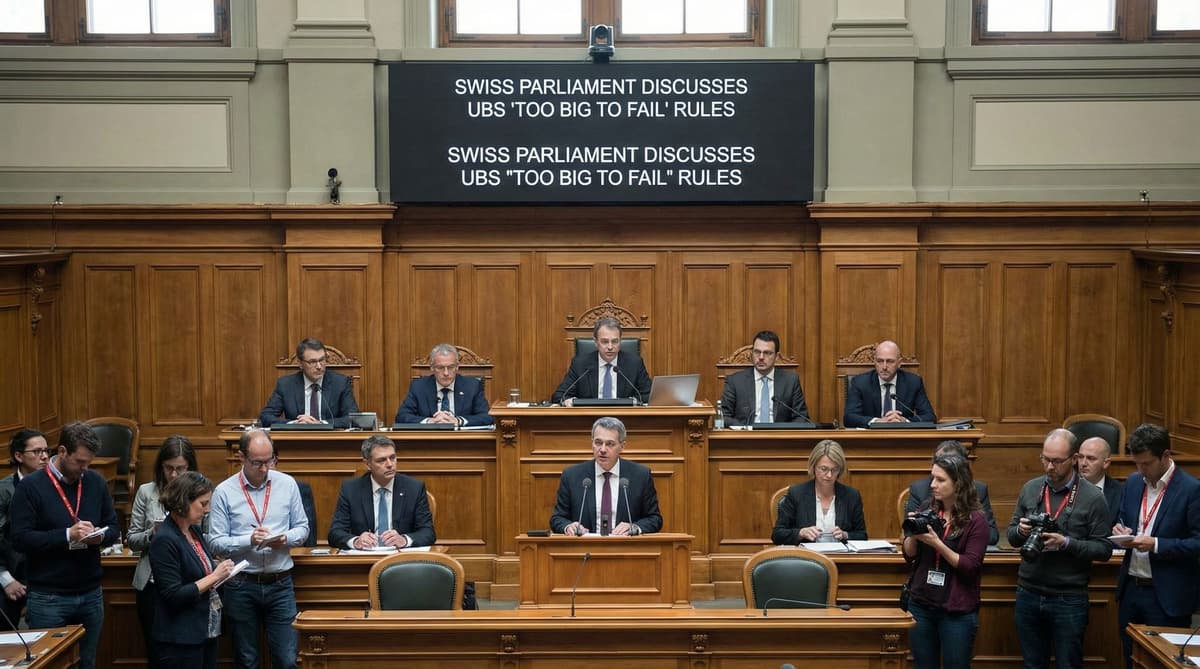
A staggering $22 billion capital demand is hanging in the balance as Swiss parliamentarians signal a dramatic retreat from the government’s hardline banking reforms. In a move that shifts the tectonic plates of Swiss finance, senior lawmakers have privately assured UBS executives that the stringent 'Too Big to Fail' rules will be watered down. This potential compromise threatens to dismantle the center-piece of Finance Minister Karin Keller-Sutter’s response to the 2023 Credit Suisse collapse. While the Finance Ministry initially sought to fortify the nation's last global banking giant with CHF 17.6 billion in fresh capital, the political appetite for such a massive burden is evaporating. Proponents of the compromise argue that the original proposal is too stringent, potentially crippling the very institution it seeks to stabilize. However, this pivot sets the stage for a fierce confrontation with left-wing parties who demand absolute security over corporate profitability. As the government prepares to publish its final decision this April, the financial world is watching Bern to see if Switzerland still has the stomach to police its banking titans.
UBS Leverages the 'Exodus' Threat
UBS is not merely negotiating; it is fighting for its global standing. Executives have issued a critical warning: failure to reach a compromise could push the bank to relocate to more 'favourable' jurisdictions. The bank contends that the proposed rules would leave the Swiss sector significantly more regulated than rivals in London or New York, creating an unprecedented competitive disadvantage. This 'regulatory arbitrage' argument has struck a nerve in a country that prides itself on being a premier global financial hub. UBS is pinning its hopes on a key parliamentary economic affairs committee that takes control of the legislative process in May. By framing the $22 billion requirement as 'capital punishment,' the bank has successfully moved the debate from safety to competitiveness. While the Finance Ministry previously rejected a proposal to use AT1 debt to meet half the requirements, the shifting political winds suggest that the bank’s pressure campaign is yielding results. The tension is palpable as Switzerland decides how much risk it can tolerate from a bank whose balance sheet dwarfs the domestic economy.
Dissecting the $20 Billion Foreign Capital Shield
The battleground for this compromise is centered on a massive $20 billion component of the reform package: the capital held against foreign subsidiaries. This specific requirement is designed to ensure that international units can be resolved independently during a crisis without a Swiss taxpayer bailout. However, because this part of the package requires a parliamentary vote—unlike the smaller $2 billion to $3 billion in 'ordinance changes'—it is highly vulnerable to dilution. Lawmakers now have the leverage to slash this figure, potentially saving UBS billions. Analysts estimate that the broader impact of the proposed measures could have restricted UBS’s capital flexibility by up to $11 billion even before the foreign subsidiary rules were applied. By targeting the $20 billion international equity requirement, parliamentarians can claim they are protecting Swiss competitiveness while still maintaining the 'quality' of capital through executive ordinances. This two-part regulatory structure has created a loophole that lawmakers are now eager to exploit, much to the frustration of regulators who insist these buffers are the only way to prevent a repeat of the Credit Suisse disaster.