Asylum
Swiss House backs tougher asylum and citizenship measures
The House of Representatives has backed tougher asylum and citizenship measures, including possible citizenship revocation and deportation for dual nationals convicted of serious crimes, as well as changes to the treatment of Afghan women’s asylum claims.
National Council Sets a Harder Asylum Line
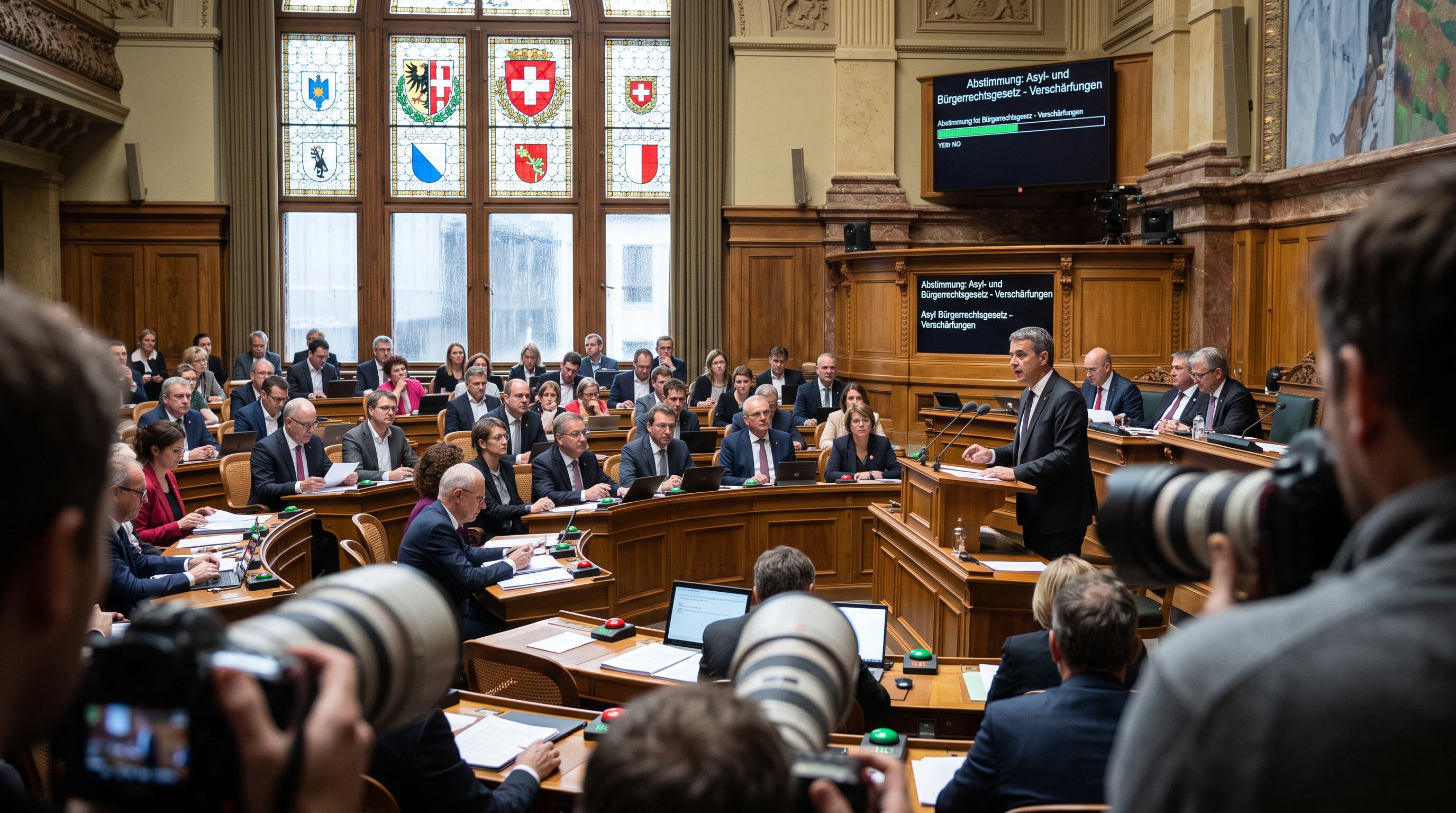
The National Council backed a package of tougher asylum and migration measures on Thursday, September 17, 2026, opening a new parliamentary test for Switzerland’s asylum policy. The lower house approved motions covering citizenship, deportation, Afghan asylum claims and pressure on countries that refuse to cooperate with removals.
The votes came during an extraordinary session focused on the European Union and asylum. The measures now move to the Council of States, which must decide whether to endorse them. Until then, the votes set the direction of political debate but do not change Swiss law or administrative practice on their own.
The federal government opposed each of the nine motions discussed during the session. The National Council nevertheless advanced proposals that would give the government a harder line on serious criminality among dual nationals, the status of Afghan women seeking protection and cooperation with countries of origin.
The package also included a motion from the right wing Swiss People’s Party parliamentary group calling on the government to reject any proposed change to EU rules on compensation for unemployed cross border workers in the Joint Committee on the Free Movement of Persons. That measure links asylum politics to Switzerland’s wider relationship with the EU.
Dual Nationals Face a Citizenship Test
A proposed citizenship measure would target dual nationals convicted of the most serious crimes, with revocation of Swiss citizenship followed by deportation. The National Council backed a motion instructing the federal government to pursue that approach.
The proposal concerns people who hold Swiss citizenship alongside another nationality. Its adoption does not itself strip anyone of citizenship, order a deportation or establish a new criminal threshold. Any implementation would require the legal and administrative steps that follow a parliamentary motion, as well as consideration by the Council of States.
Swiss citizenship law already treats citizenship and removal as matters subject to legal safeguards. The motion would test how far Parliament is prepared to go when a person with dual nationality commits a grave offence. It also raises practical questions about the destination country, the person’s legal status there and the compatibility of such a policy with existing Swiss and international obligations.
The source report does not identify individual cases, the crimes covered or the number of people who could be affected. The political signal is clear: a majority in the lower house wants serious criminal convictions to carry possible consequences for citizenship as well as criminal punishment.
House Targets Afghan Asylum Practice
The House also called for a change in how Switzerland handles asylum applications from Afghan women. Under the proposed approach, Afghan women would no longer be automatically eligible for asylum and would instead receive provisional admission status.
The distinction matters. Asylum grants recognised protection under Swiss asylum law, while provisional admission is a different status that allows a person to remain in Switzerland when return is currently considered impossible, unlawful or unreasonable. The National Council’s motion seeks to shift Afghan women into that category through a change in government practice.
The report does not provide a figure for the number of Afghan women affected, nor does it describe how authorities would assess individual applications under the proposed system. Each claim would still require a decision by the competent authorities and could face legal review under the applicable procedures.
The measure enters a broader debate over protection for people fleeing Afghanistan, family reunification and the limits of Switzerland’s asylum system. Swissinfo has separately reported on major obstacles facing asylum seekers seeking to bring family members to Switzerland. The Senate’s decision will determine whether the proposal advances beyond the National Council.
Senate Holds the Next Move
The National Council also backed targeted sanctions against countries that refuse to cooperate with Switzerland on returns. The proposal would require legislative amendments before such sanctions could be introduced.
The measure reflects a recurring problem in migration policy: a removal decision depends on practical cooperation with the country of origin. Without travel documents or acceptance by that country, Swiss authorities can struggle to carry out a return. The motion seeks to add pressure through country specific sanctions, although the report does not specify which countries or what form the penalties would take.
Another motion addressed cross border workers and the EU. It calls on the federal government to reject, within the Joint Committee on the Free Movement of Persons, any proposed change to EU rules governing compensation for unemployed cross border workers. The National Council’s agenda therefore combined asylum enforcement with a sensitive area of Switzerland’s bilateral relationship with the EU.
The next decision belongs to the Council of States. If the upper house rejects or amends the motions, the proposals will face further parliamentary negotiations. If both chambers agree, the government would still need to translate the political instructions into legislation or administrative action, depending on the measure.