healthcare
Swiss Hospitals Report CHF750 Million Loss in 2024
KPMG study reveals Swiss healthcare facilities faced significant financial challenges despite increased turnover, with over half posting negative results after depreciation.
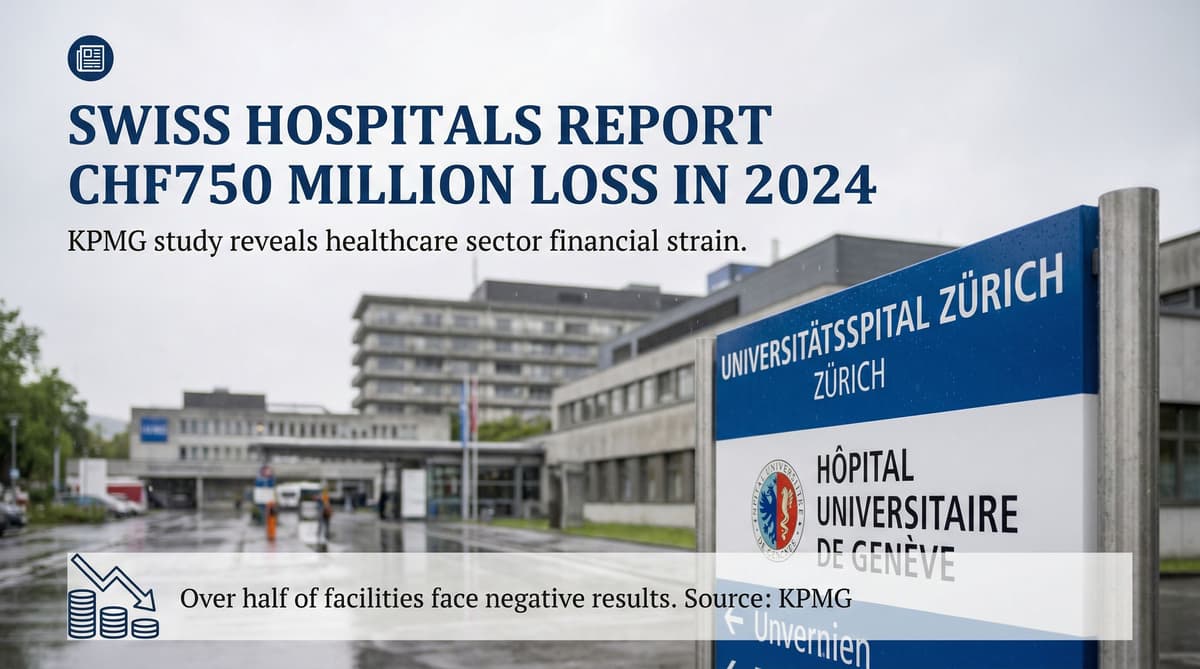
A staggering CHF 750 million has evaporated from the Swiss healthcare sector in 2024, plunging the nation's hospitals into a critical financial state. A definitive study by consultancy firm KPMG, analyzing 50 major hospitals and clinics, reveals a landscape of fiscal distress that threatens the stability of Switzerland's renowned medical infrastructure. This is not a minor dip; it is a systemic shock.
Despite the tireless operation of these facilities, more than half of the service providers are now posting negative operating results once depreciation is factored in. The sheer scale of this deficit—nearly $1 billion USD—signals that the current funding model is buckling under pressure. While the headlines often focus on quality of care, the balance sheets tell a darker story of an industry fighting for its economic survival. The alarm bells are ringing louder than ever: without immediate structural correction, Swiss hospitals are bleeding capital at an unsustainable rate.
The Zero-Sum Growth Trap
Hospitals are running faster just to stand still. In a cruel twist of economic fate, the sector witnessed a robust 4.9% surge in turnover, driven partly by a 1.5% hike in inpatient rates. Yet, this revenue boost was instantly nullified by a matching 4.9% explosion in costs. This perfect storm of rising expenses has completely eroded the benefits of increased activity, trapping institutions in a vicious zero-sum cycle.
This statistical deadlock exposes the fragility of the current operational model. While patient throughput and fee structures are climbing, they cannot outpace the relentless inflation of healthcare delivery costs. The data paints a picture of an industry working at maximum capacity but failing to generate the surplus needed for stability. It is a frantic race against overheads where the finish line keeps moving, leaving administrators and policymakers grappling with a math problem that simply does not solve.
Investment Paralysis
The gap between reality and necessity is widening to a chasm. To maintain infrastructure, upgrade technology, and ensure future readiness, Swiss hospitals require an EBITDA margin of 10%. The reality? A meager 3.4%. While this is a slight uptick from the abysmal 1.9% seen the previous year, it remains woefully insufficient. This shortfall is not just a number on a spreadsheet; it represents deferred maintenance, delayed technology rollouts, and a halt to modernization.
KPMG's analysis is stark: the sector is failing to generate the cash flow required to cover its own investments. Without hitting that critical 10% threshold, hospitals are effectively eating into their substance, unable to finance the innovations that patients expect from a world-class health system. We are witnessing a slow-motion investment paralysis that could leave Swiss facilities lagging behind in medical advancements, solely due to a lack of financial oxygen.