Switzerland
Swiss historian Sacha Zala elected to lead global history organisation
Swiss historian Sacha Zala has been elected president of the International Council of Historical Sciences, the global organisation’s first Swiss leader in the current cycle. The article should explain Zala’s role, the significance of his work at the Dodis research centre and what his election says about Switzerland’s contribution to international historical scholarship.
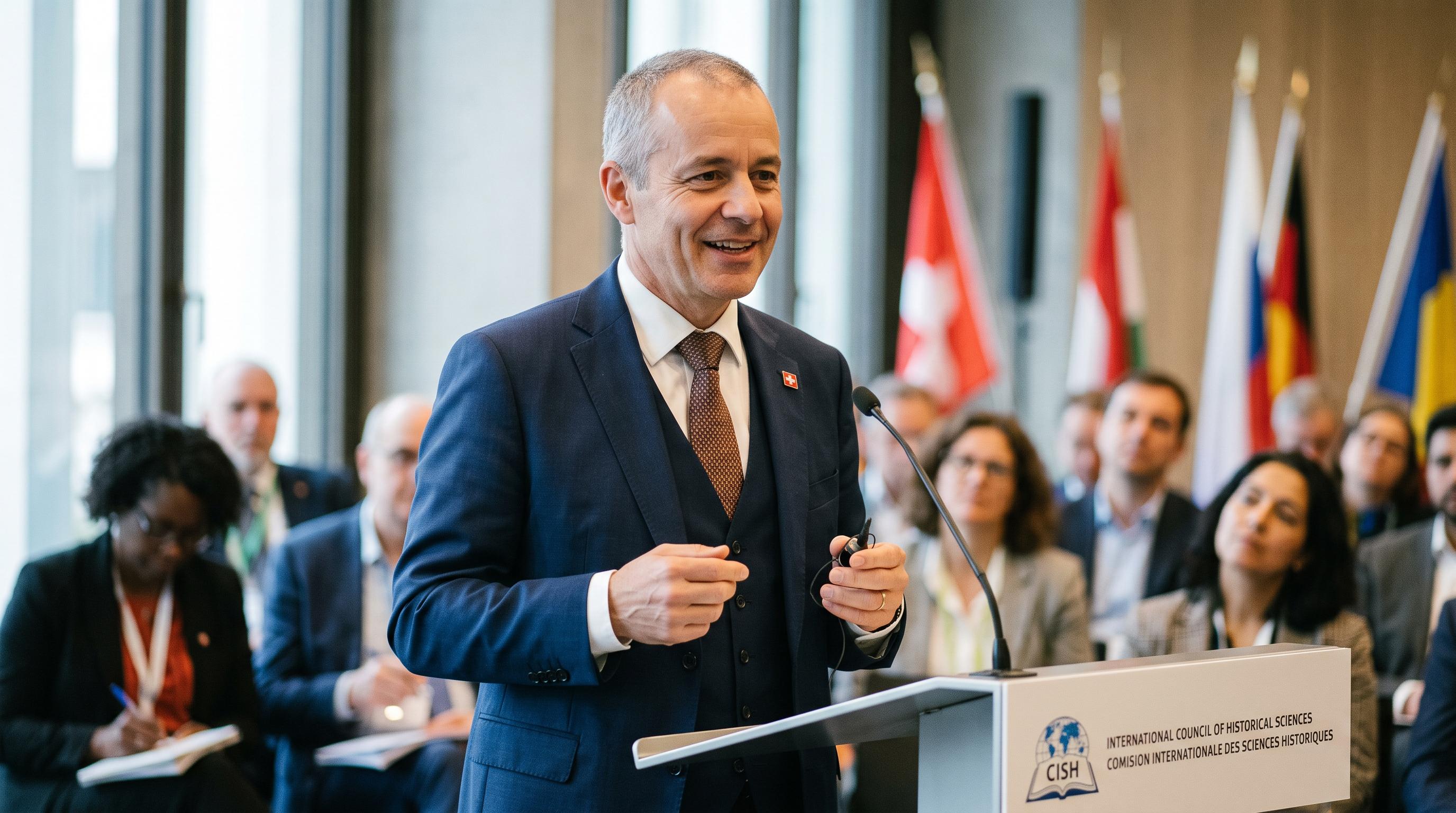
Zala Takes the International Chair
Sacha Zala now leads the world’s main organisation for historians. The Swiss scholar was elected president of the International Council of Historical Sciences, or CISH, at a congress marking the organisation’s 100th anniversary. He will succeed Catherine Horel of France.
The appointment gives Switzerland a prominent voice in an international field that depends on cooperation across languages, archives and national traditions. CISH brings together historical scholarship at a global level, and its presidency involves guiding the organisation’s priorities, governance and professional networks.
Zala arrives with extensive experience inside the council. He has served on its executive board since 2017, and CISH credited him with helping advance a programme of renewal and professionalisation. Those efforts reached a formal milestone at the anniversary congress, where members adopted new statutes.
His election also extends a period of leadership in Swiss historical institutions. Zala served as president of the Swiss Historical Society from 2012 to 2026, giving him a national platform before taking on the international role. The transition places a Swiss historian at the centre of an organisation reshaping its structures for its next century.
Zala Carries the Reform Agenda
The new statutes give Zala a reform agenda to carry forward. CISH described him as a driving force behind the council’s renewal and professionalisation. The organisation adopted the statutes during the congress that marked its centenary, turning years of institutional work into a new framework for its operations.
The source does not detail every provision of the statutes, but the timing is significant. Zala begins his presidency after a period focused on how the global body is organised and how it serves the historical profession. His experience on the executive board gives him direct knowledge of the council’s internal work, while his presidency of the Swiss Historical Society provides a record of managing a national scholarly organisation.
For historians, institutional design affects practical matters: how associations cooperate, how international meetings are organised and how professional standards develop across borders. CISH operates in a field shaped by different academic systems and political histories. Its leadership therefore requires administrative judgment as well as scholarly standing.
Zala’s election links those responsibilities to a clear Swiss contribution. Switzerland has supplied a historian familiar with both national association work and the governance of a worldwide scholarly network.
Dodis Connects Switzerland to the World
The Dodis Research Centre anchors Zala’s international profile in Switzerland’s documentary record. He is director of Dodis, the Diplomatic Documents of Switzerland research centre at the Swiss Academy of Humanities and Social Sciences, and Professor of History at the University of Bern.
Dodis gives his work a direct connection to the study of Swiss foreign relations and the country’s place in international affairs. The centre’s focus on diplomatic documents places archival evidence at the heart of historical research. That perspective is particularly relevant to a global organisation whose members examine how states, societies and institutions have interacted across time.
Zala’s academic positions also connect research, teaching and public scholarly institutions. At the University of Bern, he works within one of Switzerland’s leading university environments. At Dodis, he directs a specialist centre with a national documentary mandate. Together, those roles have made him a visible figure in Swiss historical scholarship.
His background matters beyond professional biography. Switzerland’s international reputation often rests on diplomacy, mediation and multilateral engagement. Zala’s election offers another example of that outward facing tradition, expressed through archival research and academic cooperation rather than government office. It places Swiss expertise in diplomatic history within a worldwide professional network.
Switzerland Steps Forward in History
Switzerland’s historical profession now has an international representative with experience at every level of the field. Zala was born in Val Poschiavo in southeastern Switzerland in 1968, has taught and conducted research at university level, directed Dodis and led the Swiss Historical Society until 2026. His CISH presidency brings those strands together.
The appointment also reflects the country’s linguistic and regional breadth. Val Poschiavo, an Italian speaking valley in Graubünden, is part of a multilingual country whose historical scholarship develops across several academic and cultural traditions. Zala’s career has moved from that Swiss setting into institutions with national and international reach.
CISH’s decision came at a moment of institutional renewal. The council has adopted new statutes, and Zala will be responsible for helping translate that reform into the organisation’s next phase. His priorities and public interventions will help define how Switzerland is seen within international historical scholarship, particularly through the work of its universities, learned societies and research centres.
The presidency does not make Swiss history the centre of the global discipline. It gives a Swiss scholar responsibility for strengthening the channels through which historians compare evidence, exchange methods and work across borders.