humanitarian aid
Swiss Government Pledges CHF11 Million for Gaza Humanitarian Aid
Switzerland increases humanitarian support with a CHF11 million contribution to UNRWA and additional funding for other aid organizations, demonstrating continued commitment to international humanitarian assistance.
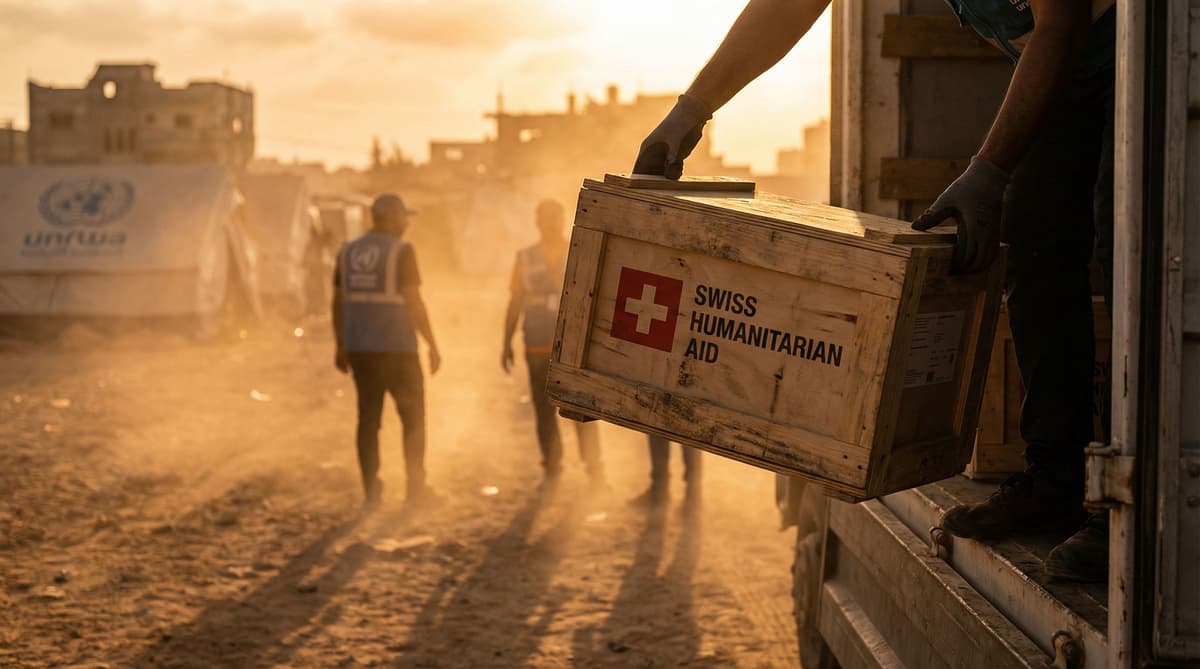
Switzerland is confronting the humanitarian catastrophe in Gaza head-on, pledging a robust CHF 20 million package to alleviate suffering in the region. In a decisive move announced this Wednesday, the Federal Council committed CHF 11 million specifically to the UN agency for Palestinian refugees (UNRWA), reinforcing its role as a key humanitarian player. This isn't just a financial transaction; it is a critical lifeline extended as the crisis deepens.
The bulk of this funding—CHF 10 million—matches last year’s contribution and is strictly earmarked for essential projects in Jordan, Lebanon, and Syria, where nearly 3.5 million refugees rely on Swiss-backed services for survival. The government has voiced "deep concern" over the deteriorating situation, explicitly citing the lack of aid access as a compounding factor. By maintaining this funding level despite global political tensions, Bern is sending a clear signal: humanitarian mandates supersede political deadlock.
Reform or Bust: The Strings Attached
This aid comes with a demand for accountability. Switzerland is not writing a blank check; it is investing in governance. Of the total pledge to UNRWA, a specific CHF 1 million allocation is ring-fenced exclusively for strengthening the agency's internal structure. This strategic move follows the "Colonna Report," an independent review led by former French Foreign Minister Catherine Colonna, which scrutinized the agency's neutrality.
While the report confirmed that UNRWA possesses a solid oversight system, it issued 50 critical recommendations for improvement. The Federal Council is putting its money where its mouth is, funding the implementation of these reforms to ensure absolute impartiality. This follows a period of intense scrutiny after Israel accused agency staff of involvement in the October 7 attacks. Switzerland, ranking as the 12th largest donor in 2023, is leveraging its financial weight to enforce better governance while keeping the aid pipeline open.
Diversifying the Lifeline
Beyond UNRWA, the Federal Council is aggressively diversifying its humanitarian portfolio. A substantial CHF 9 million is being directed toward four other heavyweight organizations: UNICEF, the World Food Programme (WFP), the World Health Organization (WHO), and the Swiss Red Cross in partnership with the Palestinian Red Crescent. This multi-pronged approach ensures that aid reaches the most vulnerable through various channels, mitigating the risk of reliance on a single entity.
This fresh injection of capital builds upon the CHF 12 million already disbursed by Switzerland’s executive body earlier this year to partners including the International Committee of the Red Cross (ICRC). The strategy is clear: saturate the region with support across health, food security, and social protection sectors. By spreading resources across the Occupied Palestinian Territory—including the West Bank and East Jerusalem—Switzerland is attempting to stabilize a region grappling with unprecedented volatility.