business
Swiss Executive Pay Gap Remains Wide Despite Slight Decrease
Top executives in Swiss companies earn 143 times more than lowest-paid employees, with pharmaceutical sector showing largest disparities despite minor improvement from previous year.
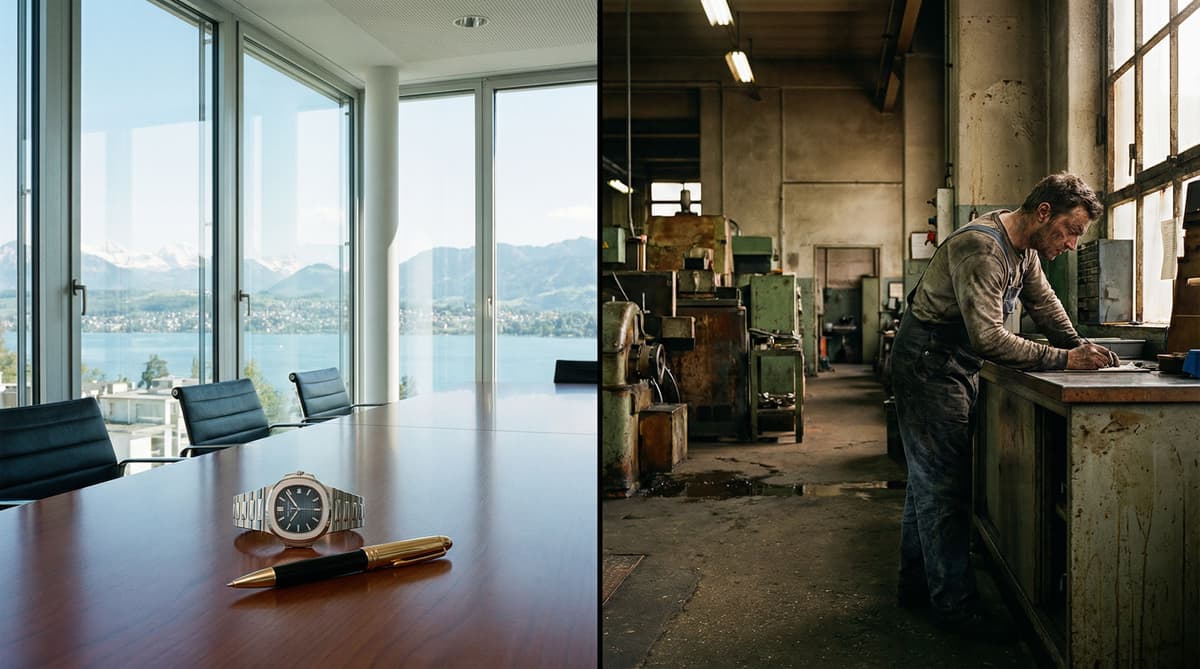
143 times. That is the staggering multiplier separating the elite from the essential in Switzerland's corporate hierarchy. While the latest data from trade union Unia suggests a slight cooling from the previous year's ratio of 1:150, the chasm remains undeniably vast. This is not a victory for equality; it is merely a statistical blip in a system where the disparity remains entrenched.
The narrative of a "narrowing gap" crumbles under scrutiny when confronted with the raw numbers. For the average worker on the shop floor, the executive suite might as well be on another planet. This persistent inequality signals a corporate culture that continues to value top-tier management at an astronomical premium compared to the workforce that drives daily operations. As the cost of living in Switzerland remains among the highest globally, this disparity isn't just a number on a spreadsheet—it is a defining economic fault line.
Pharma and Finance Titans Dominate
Nowhere is the excess more palpable than in the pharmaceutical and financial sectors, where salaries have surged into the stratosphere. Leading the charge is Novartis CEO Vasant Narasimhan, who commanded a breathtaking CHF 19.2 million ($24.1 million) last year. This figure eclipses the earnings of his lowest-paid colleague by a factor of 333. It is a disparity that defies gravity.
The trend is systemic across high-stakes industries. Partners Group follows closely with a spread of 1:328, while pharmaceutical giant Galderma posts a ratio of 1:298. Even UBS, a pillar of Swiss banking, maintains a formidable gap of 1:276. These figures expose a reality where executive compensation in specific sectors has detached completely from standard wage growth, creating a class of super-earners whose fortunes are made independently of the broader workforce's reality.
A Tale of Two Switzerlands
In stark contrast to the global conglomerates, a different Switzerland exists—one grounded in public service and domestic retail. Coop and SBB (Swiss Federal Railways) stand as outliers in this landscape of excess, reporting a wage gap of just 1:11. This dramatic divergence highlights a fundamental split in the Swiss economy: the globalized corporate giants versus the domestic pillars of daily life.
While a ratio of 1:11 is still significant, it pales in comparison to the three-digit multipliers seen in the pharma and finance sectors. This data proves that operational scale does not necessitate astronomical wage inequality. It challenges the narrative that retaining top talent requires compensation packages that dwarf the earnings of the average employee by hundreds of times. The restraint shown by these entities serves as a mirror, reflecting the unchecked acceleration of executive pay elsewhere.
Profits Over Paychecks
The money is there; it just isn't flowing to the workers. Swiss corporations unleashed a torrent of cash to shareholders, paying out a colossal CHF 46 billion in dividends and share buybacks. This figure obliterates the argument that companies lack the liquidity to improve base wages. As Unia forcefully emphasizes, the financial health of these companies is robust—it is the distribution of that wealth that remains critically lopsided.
This massive transfer of wealth to investors and executives, occurring alongside stagnant wages for the lowest earners, paints a picture of an economy prioritizing capital returns over labor compensation. With billions funneled into buybacks to boost stock prices, the refusal to significantly narrow the wage gap is a choice, not an inevitability. As Switzerland grapples with these disparities, the pressure is mounting on corporate boards to justify why the pie is sliced so unevenly.