Crime
Global Bird Smuggling Ring Involving Forged Documents Uncovered by Swiss Customs
Swiss border authorities have dismantled an international bird smuggling operation that illegally imported dozens of protected birds into Switzerland from several European countries. The investigation revealed the use of forged purchase receipts to circumvent regulations.
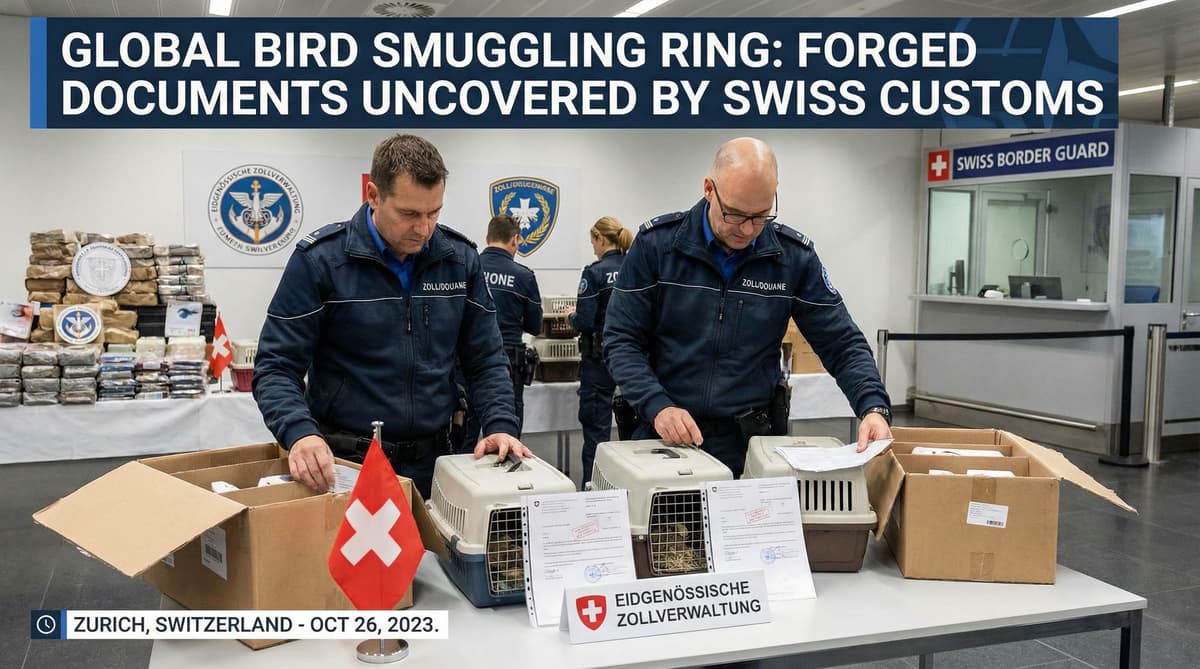
A routine inspection at the Great St Bernard Tunnel has shattered the secrecy of a high-stakes wildlife trafficking ring. In November 2024, alert Swiss border authorities intercepted two Portuguese nationals, aged 54 and 46, attempting to slip through the alpine crossing with a hidden cargo of roughly ten protected birds. This was not a simple administrative oversight; it was the loose thread that would unravel a sophisticated criminal enterprise.
The Federal Office for Customs and Border Security (FOCBS) acted swiftly. The discovery of the undeclared animals immediately triggered a deeper probe, exposing a blatant disregard for Swiss sovereignty and international law. While the suspects attempted to pass through unnoticed, the vigilance of Swiss officers at this critical juncture prevented the exploitation of vulnerable wildlife. This initial bust served as the catalyst for a sprawling investigation that would soon expose a much darker, calculated operation aimed at circumventing the rigorous controls that protect Switzerland's borders.
Unravelling a Continental Web
The scale of this operation is nothing short of alarming. Investigators have uncovered a staggering CHF 100,000 worth of protected birds illegally trafficked into Switzerland, revealing a lucrative black market driven by greed. The network was not isolated; it spanned a complex web across Europe, linking Switzerland with Italy, the Netherlands, Belgium, Luxembourg, and Portugal.
At the heart of this deception was the use of forged purchase receipts. The perpetrators, including a third accomplice identified during the investigation, meticulously falsified documents to mimic legitimate trade, using their own company premises to warehouse the live contraband. Since 2024, over 50 protected birds have been funneled through this illicit pipeline. This calculated fraud demonstrates a high level of criminal intent, designed specifically to bypass the Convention on International Trade in Endangered Species (CITES) and deceive customs officials who stand as the guardians of legal trade.
Raids Intensify Across Cantons
The crackdown did not stop at the tunnel. Following the initial arrests, the investigation surged forward into 2025 with renewed intensity, targeting locations deep within Swiss territory. Customs investigators launched coordinated inspections across Western Switzerland and the canton of Ticino, striking a significant blow against the traffickers. These raids resulted in the confiscation of approximately 30 additional protected birds, proving that the network had established a foothold within the country.
The legal ramifications are severe. The three primary perpetrators now face a barrage of charges, including offenses against customs regulations, tax laws, species protection, and animal welfare legislation. The sheer volume of evidence has led to the opening of multiple new investigations across various cantons. Authorities are sending a clear, uncompromising message: Switzerland is not a safe haven for wildlife criminals, and the pursuit of justice will be relentless across all jurisdictional boundaries.