legal
Swiss Court Blocks Russian Tax Information Request
Federal Court rules against sharing banking information with Russia, citing current geopolitical situation and sanctions, in landmark decision affecting administrative assistance.
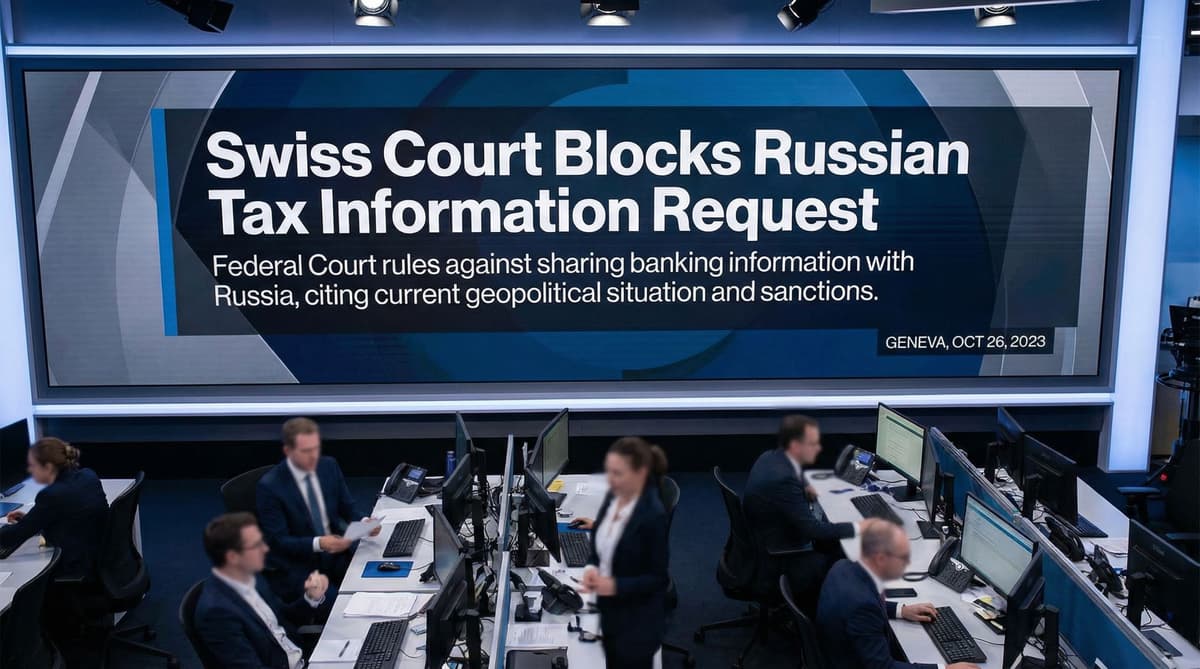
In a significant ruling, the Swiss Federal Court has rejected Russia's request for administrative tax assistance, blocking the transmission of banking information to Moscow. The decision, announced on February 21, 2025, marks a crucial stance in Switzerland's approach to international administrative assistance in the current geopolitical climate. The court's ruling explicitly stated that 'there is currently no reason to transmit banking information to the Russian Federation,' upholding the appeal of individuals involved in the case.
Background and Timeline
The case originated in 2018 when Russia sought information about Swiss bank accounts held by a Russian company with beneficial owners having Ukrainian connections. Initially, the Federal Tax Administration approved the assistance request in 2019. The Federal Administrative Court subsequently upheld this decision, notably just three days before Russia's invasion of Ukraine in February 2022. Following the invasion, the proceedings were suspended in light of international sanctions against Moscow, with case review resuming in November 2023.
Legal Implications
The court's decision is grounded in the double taxation agreement between Switzerland and Russia, specifically invoking a clause that permits information disclosure refusal when it conflicts with public policy. The ruling emphasizes that future Russian requests will be evaluated case-by-case, leaving the door open for potential cooperation under different circumstances. This approach demonstrates Switzerland's commitment to maintaining its legal principles while navigating complex international relations.
International Context
The decision reflects broader international developments, particularly Russia's changed status in global institutions. Since its aggression against Ukraine, Russia has been suspended from the UN Human Rights Council and is no longer a member of the Council of Europe or party to the European Convention on Human Rights. The Swiss court expressed concern that Russia's legislative framework might be used to restrict human rights, particularly given that the requested information involved Ukrainian citizens. This ruling aligns Switzerland with international sanctions while maintaining its traditional role in global banking.