Economy
US Pressure Over Monetary Policy Puts Swiss National Bank in a Squeeze
The Swiss National Bank is facing unease as Washington increases pressure over its currency market interventions, prompting the Federal Council to summon SNB President Martin Schlegel for high-level talks.
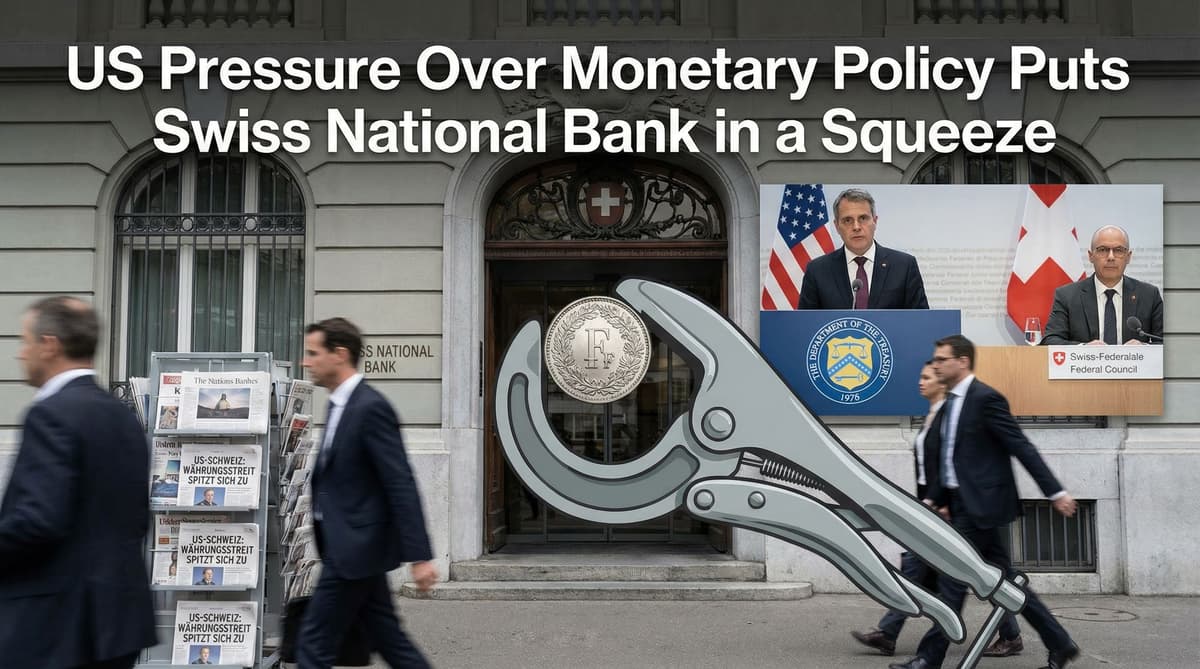
The Swiss National Bank (SNB) is currently locked in a high-stakes geopolitical squeeze as Washington intensifies its assault on Bern’s monetary sovereignty. In an unprecedented move, the Federal Council has summoned SNB President Martin Schlegel for emergency consultations to navigate a diplomatic minefield. The United States has long viewed Switzerland’s currency interventions with deep-seated suspicion, but the rhetoric has now escalated into active hostility. Despite a joint statement last September intended to thaw relations, the Trump administration’s unpredictability has shattered any sense of security. Washington’s scrutiny is relentless, fueled by a persistent trade surplus that American officials view as an economic affront. While Bern attempts to play down the prospect of a trade war, the reality is stark: Switzerland is once again in the crosshairs of the world’s largest economy, accused of manipulating the franc to gain an unfair advantage in global markets.
The 27% Surge Crushing Swiss Exporters
A staggering 27% appreciation of the Swiss franc against the euro over the last decade has transformed the nation’s currency into a double-edged sword. For Swiss exporters, this relentless climb is more damaging than any foreign tariff could ever be. The SNB maintains that its interventions—totaling a modest CHF 5.5 billion last year—are essential tools for maintaining price stability and preventing the catastrophic spiral of deflation. In contrast to the massive CHF 86 billion spree in 2015, the bank’s recent actions appear restrained, yet they remain a flashpoint for American regulators. A strong franc makes imports cheaper for Swiss consumers, but it threatens to hollow out the industrial base by making Swiss goods prohibitively expensive abroad. The SNB finds itself in an impossible position: intervene and risk the 'manipulator' label from the US Treasury, or stand aside and watch the national economy buckle under the weight of an overvalued currency.
Section 301: The Weaponization of Trade
The United States has officially weaponized trade policy by invoking Section 301, a draconian provision that allows for aggressive action against perceived unfair trade practices. This move follows a chaotic period where the US Supreme Court struck down previous tariffs, only for the administration to respond with a blanket 10% levy on all imports. Switzerland now sits on a precarious 'watch list,' a designation that carries the threat of severe economic sanctions. The core of the dispute remains the trade surplus, an 'irritant' that has festered for years. American officials argue that Switzerland is effectively subsidizing its own prosperity at the expense of US manufacturers. However, the SNB rejects this narrative entirely, asserting that its mandate is domestic price stability, not competitive devaluation. The tension is palpable as the March 31st deadline for a trade agreement passed without a deal, leaving Swiss businesses in a state of agonizing uncertainty while the specter of Section 301 investigations looms large.