education
Russia Bans Swiss-Based International Baccalaureate as 'Undesirable'
Geneva-headquartered International Baccalaureate declared 'undesirable' by Russian authorities over alleged Russophobia, affecting thousands of students just before academic year.
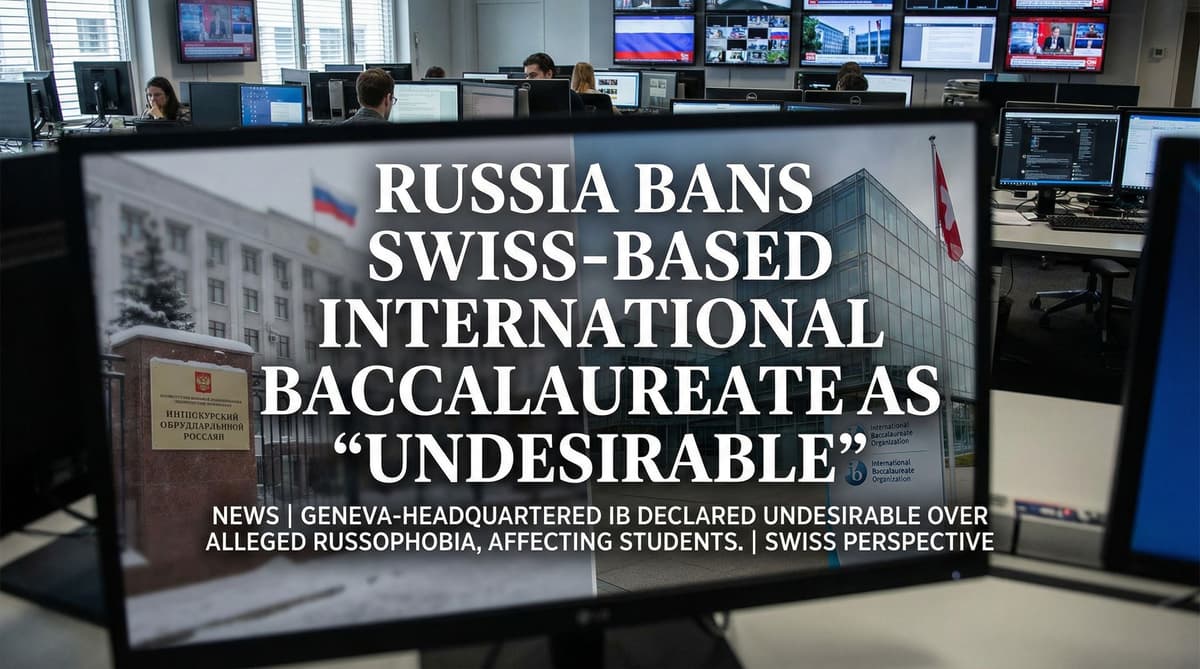
In a significant move that further isolates Russia from international educational standards, the Russian Prosecutor General's Office has declared the Geneva-headquartered International Baccalaureate (IB) an 'undesirable organization' on August 25, 2025. The decision, announced just days before the start of the new academic year, effectively bans the prestigious international education program from operating within Russian territory. The prosecutor's office accused the IB of 'shaping Russian youth according to Western templates' and promoting what they term as 'Russophobia.'
Impact on Russian Education
The ban has immediate and far-reaching consequences for Russian education. Prior to the declaration, 29 Russian schools offered IB programmes, including the prestigious 'Letovo' school near Moscow, which had been ranked as the world's best IB school based on average results. The sudden prohibition has left thousands of students in limbo, forcing schools to hastily terminate their IB contracts and disrupting educational plans for many who aimed to attend international universities. The day following the announcement, most Russian IB schools requested urgent contract terminations with the organization, highlighting the immediate compliance pressure faced by educational institutions.
International Baccalaureate Background
The International Baccalaureate, established in Geneva in 1968, has grown into a globally respected educational framework operating in over 160 countries with more than 6,000 participating schools. The program is renowned for its comprehensive approach to education, fostering critical thinking and international mindedness. From its Swiss headquarters, the IB has maintained that its programs are designed solely to raise educational standards rather than advance any political agenda. The organization's Swiss base and international character have historically provided it with a neutral platform for delivering high-quality education worldwide.
Political Context and Implications
The ban on IB appears to be part of a broader pattern of Russia's increasing isolation from Western educational and cultural institutions. The decision has been linked to prominent Russian political figures, including Deputy Speaker of the State Duma Anna Kuznetsova and Kremlin ally Konstantin Malofeev. The designation of 'undesirable organization' places the IB alongside other blacklisted foreign education and research institutions, including the Institute of International Education and EF Education First from Switzerland. This move reflects Russia's growing tendency to view international educational programs through a geopolitical lens, treating them as potential threats to state security and the constitutional order.