Switzerland
Roger Federer’s Hall of Fame induction marks a defining Swiss sporting legacy
Roger Federer is due to enter the International Tennis Hall of Fame in his first year of eligibility. This profile should use the induction to assess his sporting legacy, his continuing influence on Swiss identity and tennis, and the significance of the ceremony for one of Switzerland’s best-known global figures.
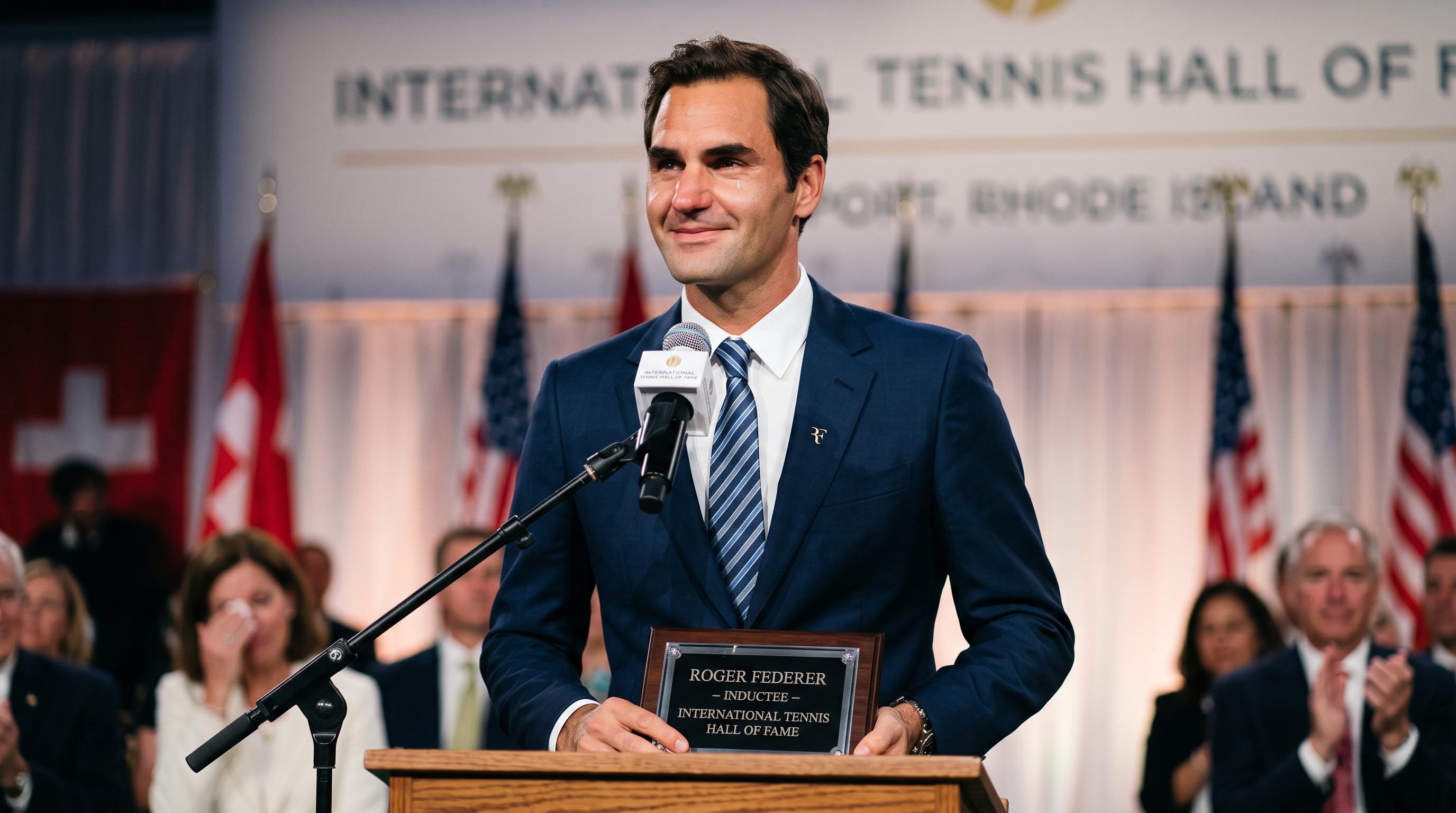
Federer Takes His Place in Newport
Roger Federer will enter the International Tennis Hall of Fame on Saturday in Newport, Rhode Island, in his first year of eligibility. The ceremony gives Switzerland one of its most recognisable public figures a formal place among tennis's historic names, five years after his last genuine competitive match at Wimbledon.
Federer, now 45, returned briefly to the public tennis stage this week in New York. He joined John McEnroe, Andy Roddick and Andre Agassi for an exhibition match titled “Roger Federer: An Icon Returns to New York”. The appearance took place at Flushing Meadows, where Federer won five consecutive US Open titles from 2004 to 2008.
A drone display projected his image over Manhattan, while the crowd welcomed the former champion back with sustained enthusiasm. The setting also underlined the reach of his career. Federer built his reputation on courts across the world, yet his induction carries particular weight in Switzerland, where the Basel native became a national reference point in sport, business and culture.
The Newport ceremony will formalise what his results and influence have already established. Federer was the first man to win 20 Grand Slam singles titles, and his style helped make tennis a global television event for a generation.
Twenty Slams Anchor a Lasting Record
Federer's 20 Grand Slam titles provide the clearest measure of a career that reshaped expectations in men's tennis. The number alone places him among the sport's defining champions, while the manner of his success added another layer to his public image. He was known for a technically complete game, an efficient movement across the court and a calm presence in high-pressure matches.
His record also links several eras of the sport. Federer shared the centre of tennis with Rafael Nadal and Novak Djokovic, rivalries that extended across Grand Slam finals and helped define the modern men's game. The source does not present the Hall of Fame ceremony as a statistical review alone. It shows how former champions responded to Federer as a peer whose career had entered tennis history.
When Federer learned of his induction in November, 33 Hall of Fame members congratulated him during a live broadcast. Chris Evert, Stefan Edberg, Martina Navratilova and Rod Laver were among them. Pat Rafter joined despite it being 3am in Australia.
“Hearing all these heroes at a moment like this means a great deal to me,” Federer said. The reaction placed his achievements within a lineage that extends well beyond Switzerland.
He Put Basel on Tennis's World Map
Federer is only the second Swiss player to enter the Newport Hall of Fame, following Martina Hingis's induction in 2013. That sequence reflects the country's outsized contribution to modern tennis through two players who became global figures while remaining closely associated with Switzerland.
Federer's Swiss identity has always been part of his public profile. He was born in Basel, trained and competed within a country with no tradition of presenting itself as a large sporting power, and turned the Swiss flag into a familiar sight at the biggest tournaments. His success gave tennis a stronger place in Swiss popular culture and supplied schools, clubs and junior players with an immediate national reference point.
The emotional announcement came while Federer was surrounded by 50 junior players in Biel/Bienne. The location matters. Biel/Bienne hosts the Swiss Tennis federation and has long served as an important centre for the country's player development. Federer received the news in front of young athletes, then heard tributes from champions whose careers preceded his.
His legacy therefore reaches beyond a personal medal count. It includes the juniors who watched him, the Swiss clubs that used his visibility to attract attention and the international audience that came to associate sporting excellence with Basel and Switzerland.
He Leaves Competition to the Next Generation
Federer has closed the door on a professional comeback, giving the Newport ceremony a clear sense of transition. His eligibility followed the 2021 Wimbledon quarter-final against Hubert Hurkacz, the last match recognised under the Hall of Fame's five-year rule. Federer has since appeared selectively, choosing public events that celebrate tennis without reopening his competitive career.
The New York exhibition illustrated that position. Federer shared the court with McEnroe, Roddick and Agassi, players whose own careers helped define different chapters of American tennis. The event offered spectators a rare chance to see him pick up a racket again at Flushing Meadows, while Federer used the occasion to dismiss any suggestion that he might return to the tour.
“I'm glad you asked,” he said with a smile. “But no, there are far too many obstacles.” He added that he could hardly find time for an exhibition match, let alone a professional tour. “Now I'm just a fan and I'm enjoying watching the game.”
That stance places the Hall of Fame induction within Federer's continuing influence. He remains present through exhibitions, junior development and public engagement, while the demanding daily schedule of professional tennis belongs to the next generation.
Newport Records a Swiss Sporting Legacy
The Newport ceremony will bring Federer, his family and his peers together for a public account of what Switzerland's most famous tennis career achieved. His parents, wife and children are attending the event, which takes place in the historic Rhode Island resort known for its late 19th-century estates and sporting traditions.
The identity of the speaker delivering the tribute remains a point of interest. Rafael Nadal is among those tipped to give the laudatory speech, a possibility that would connect the ceremony to one of the defining rivalries in tennis history. Federer and Nadal shared major finals, contrasting styles and a relationship that extended beyond competition.
For Swiss audiences, the occasion will also mark a shift in how Federer's career is remembered. The daily results have ended, and the debate over rankings has receded. What remains is a body of work that helped expand Swiss tennis's visibility and gave the country a widely recognised sporting ambassador.
Federer's induction will not close his relationship with tennis. His appearance in Newport, after the New York exhibition and the tribute from 33 Hall of Fame members, shows how his role has changed. He now stands as a reference point for the sport, and as a Swiss public figure whose influence continues through the players and audiences that follow him.