environment
Record-Breaking Drone Operation Saves Over 6,400 Fawns in Swiss Fields
Swiss volunteers equipped with thermal imaging drones rescued 6,451 fawns from agricultural mowing operations, setting a new conservation record across 62,693 hectares.
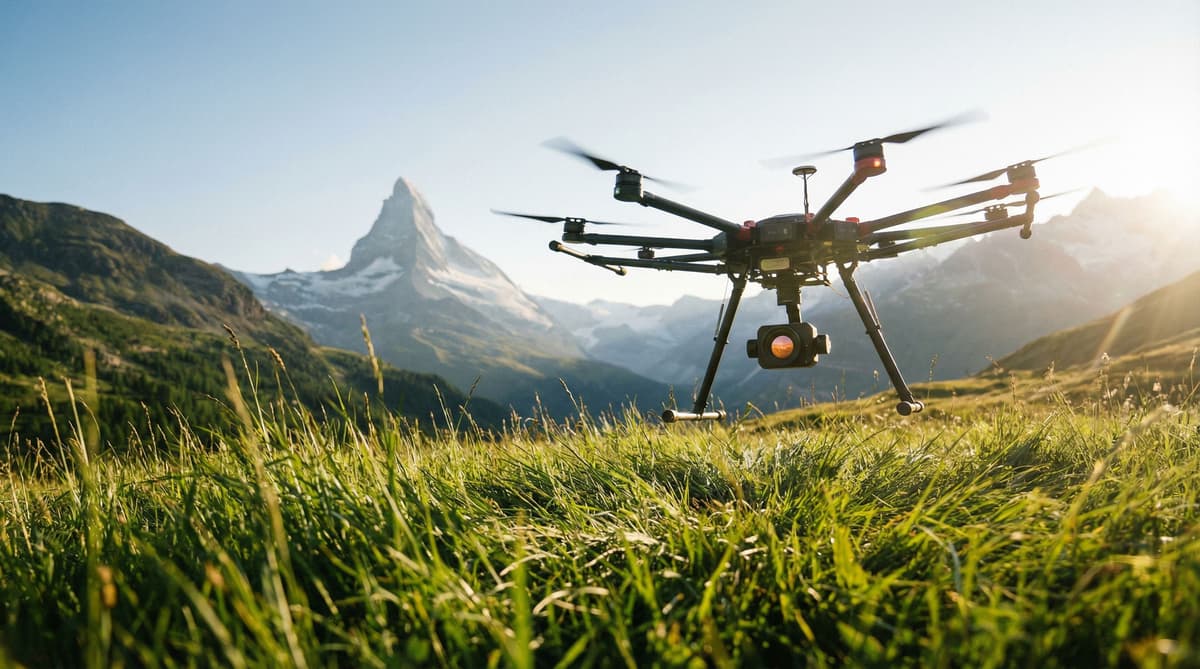
6,451 lives saved. That is the staggering result of Switzerland’s most successful wildlife rescue operation to date. In a massive coordinated effort, volunteer drone pilots have rewritten the playbook on conservation, shattering previous records and proving the critical role of technology in preserving Swiss wildlife. According to the Roe Deer Rescue Association, this year’s campaign mobilized 722 dedicated teams who scoured the countryside to protect vulnerable fawns from the blades of industrial mowers.
The numbers speak for themselves. This year’s rescue count obliterates the 2024 figure of 5,159, marking a significant leap in effectiveness. This isn't just a marginal improvement; it is a conservation triumph. Volunteers, armed with thermal imaging technology, have turned the tide in a battle that has historically resulted in thousands of silent casualties in our fields. The success of this operation highlights a growing, powerful alliance between agricultural interests and wildlife preservationists.
A Massive Aerial Mobilization
The scale of the operation is unprecedented. Volunteers scanned a colossal 62,693 hectares of Swiss farmland—an area roughly equivalent to 620 square kilometers. To put this into perspective, that is an area larger than the Canton of Geneva. This represents a dramatic surge of over 20,304 hectares compared to the previous year, demonstrating a rapid scaling of capabilities and volunteer engagement.
This aerial dragnet focused on the tall grass of agricultural fields, which serve as deceptive sanctuaries for young deer. By systematically sweeping these vast territories before mowers could enter, drone teams ensured that the fields were clear. The sheer logistical magnitude of covering such expansive terrain underscores the dedication of the volunteers. They are not merely hobbyists; they are a disciplined force standing between nature and machinery, ensuring that the harvest season does not become a slaughter season.
The Deadly Instinct Trap
Nature’s defense mechanism has become a modern liability. For millennia, a fawn’s instinct to freeze and crouch in tall grass protected it from predators. Today, against the relentless speed of agricultural machinery, that same instinct is fatal. Does hide their young in these meadows while they forage, relying on the tall grass for concealment. The fawns do not run; they wait.
Without intervention, the results are gruesome. Official statistics cite approximately 1,500 fawns killed annually by mowers, though the Association warns the true toll is likely far higher. This grim reality makes the work of the drone pilots essential. By detecting the heat signatures of the hidden animals, they bridge the gap between ancient biological programming and modern industrial farming. It is a race against time, where thermal sensors provide the only warning system these animals have.