Food Safety
Pesticide Residues Found in 63% of Food in Switzerland, Federal Report Finds
According to the Federal Office of Food Safety's annual report, pesticide residues were detected in 63% of food samples tested in Switzerland during 2024, with ten samples, including apricots and strawberries, exceeding legal maximum limits.
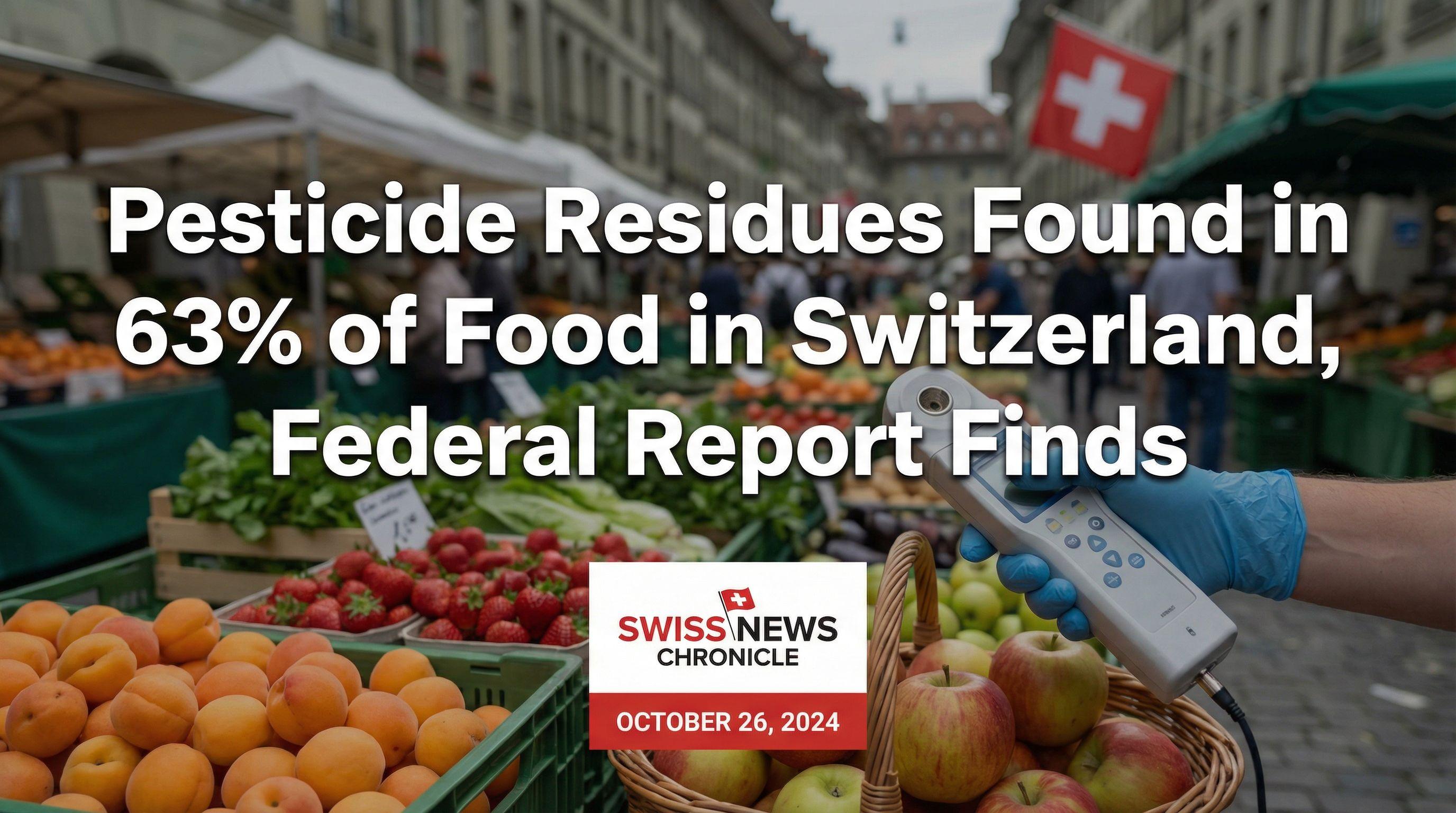
Confronting the Chemical Reality on Swiss Plates
A staggering 63% of food samples tested across Switzerland contain pesticide residues, a figure that forces an immediate reckoning with the purity of our national diet. The Federal Office of Food Safety and Veterinary Affairs (FSVO) has released its annual report for the 2024 monitoring period, and the data paints a pervasive picture of chemical presence in our daily sustenance. Out of 405 samples rigorously analyzed, the majority were not free from synthetic intervention. This is not a fringe issue; it is a mainstream consumer reality that permeates the aisles of our grocery stores. While the presence of residues does not always equate to a violation of law, the sheer volume of positive tests underscores the heavy reliance on chemical agents in modern agriculture. As Swiss consumers increasingly demand transparency and organic purity, these findings present a stark contrast between expectation and reality, demanding that we look closer at what exactly is being served for dinner.
Identifying the Toxic Outliers
While prevalence is high, the true alarm bells are ringing for the ten specific samples that breached legal maximum limits. Apricots and strawberries stand at the epicenter of this compliance failure, identified by federal inspectors as the products most affected by excessive chemical loads. In a concerning revelation, seven of these ten violations were deemed statistically significant, moving beyond minor margins of error into clear regulatory breaches. The report explicitly names the chemical culprits: Captan, Haloxyfop, Iprodione, and Spinosad. These are not abstract scientific terms but active substances found in concentrations higher than the law permits on fruit intended for Swiss households. This data highlights a critical gap in quality control for these specific soft fruits, which are staples in lunchboxes and desserts across the cantons. The detection of such distinct exceedances raises urgent questions about supply chain oversight and the rigorousness of pre-market testing for these vulnerable crop categories.
Scanning the Wider Basket
The federal investigation cast a wide net, proving that the issue extends far beyond the fruit bowl. Inspectors scrutinized a diverse array of pantry staples, including vegetables like carrots, courgettes, and cabbage, alongside cereals and vegetable oils. This comprehensive approach ensures that the 63% statistic reflects a broad cross-section of the Swiss diet, rather than an isolated agricultural sector. By testing such a variety of essential goods, the FSVO acknowledges that pesticide exposure is a cumulative issue, potentially affecting multiple components of a single meal. While the headline violations were concentrated in specific fruits, the widespread detection of residues across these categories serves as a reminder of the ubiquity of agricultural chemicals. It challenges the consumer assumption that staples like grains or root vegetables are inherently cleaner or less treated than their delicate fruit counterparts.
Navigating Risk and Regulation
Despite the startling statistics, federal authorities maintain a stance of calculated reassurance regarding immediate public health. The FSVO emphasizes that legal maximum limits are established with a wide safety margin, set significantly lower than the thresholds where health risks become acute. This regulatory buffer means that while a product may be non-compliant, it is not necessarily toxic in the immediate sense. However, this distinction offers little comfort to a public increasingly wary of chemical accumulation. The existence of a safety margin does not negate the failure of compliance. As we move forward, the conversation must shift from merely avoiding acute toxicity to achieving the high standards of purity that Swiss consumers expect. The data from 2024 serves as a critical benchmark, signaling that while the safety net is holding, the pressure on it is undeniable.