Politics
Parliament Rejects 'Perpetual Neutrality' Initiative, Forgoes Counter-Proposal
The Swiss House of Representatives has voted decisively against a popular initiative aimed at enshrining permanent and armed neutrality in the constitution. Following an extensive debate, parliament rejected the proposal backed by the Swiss People's Party and also decided against developing a direct counter-proposal.
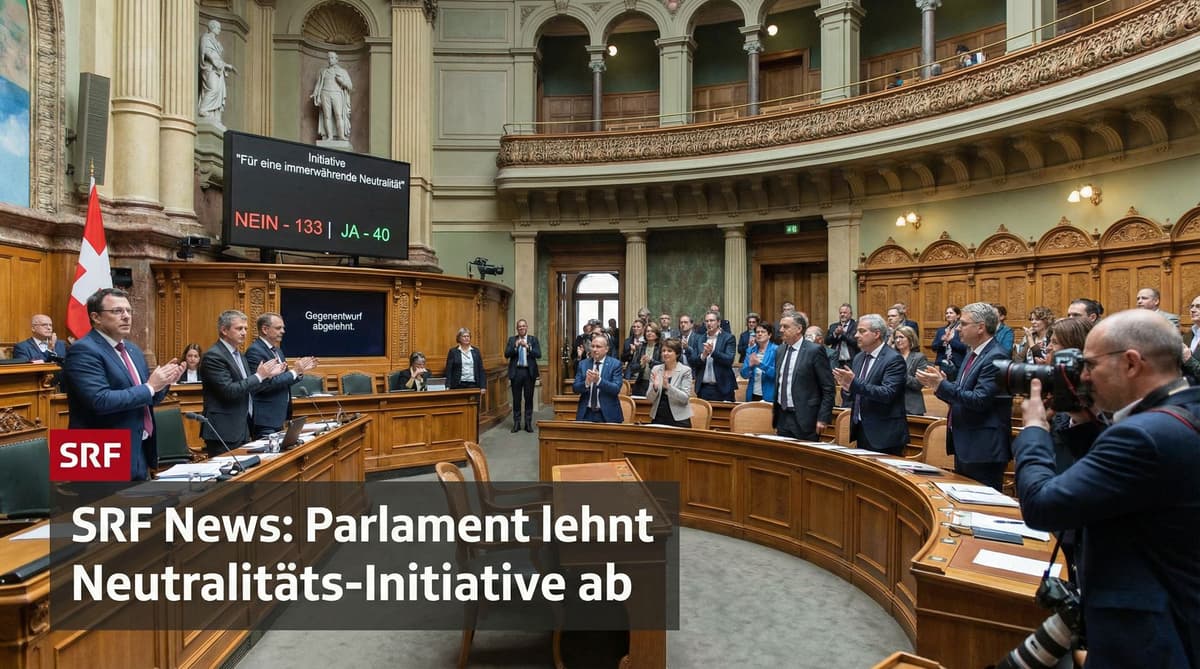
In a thunderous verdict that reverberated through the Federal Palace, the Swiss House of Representatives has categorically rejected the push for a constitutional amendment on "perpetual and armed" neutrality. After a grueling marathon debate spanning nearly eight hours, the lower house voted down the initiative by a decisive margin of 128 to 60. This overwhelming rejection isolates the right-wing Swiss People’s Party (SVP), the sole political force championing a return to an uncompromising, isolationist stance.
The vote signals a clear refusal by the parliamentary majority to shackle Switzerland's foreign policy maneuvering room. While the SVP argues the nation is drifting dangerously close to foreign alliances, the House's verdict is unambiguous: rigid constitutional constraints are a liability, not a shield. The sheer scale of the defeat—with more than two-thirds of the chamber voting 'No'—underscores the deep divide between the isolationist right and the rest of the political spectrum regarding Switzerland's role on the modern global stage.
House Scraps Compromise, Defying Senate Strategy
Shattering hopes for a legislative middle ground, the House also torpedoed the Senate's attempt at a counter-proposal. By a vote of 109 to 77, representatives dismissed the idea of offering voters an alternative constitutional article. This move puts the House on a collision course with the Senate, which had previously crafted a compromise designed to enshrine neutrality without handicapping the government's ability to impose sanctions.
The refusal to entertain a counter-proposal aligns the House strictly with the Federal Council's hardline stance: total rejection. While members of the Centre and Liberal-Green parties attempted to salvage the counter-proposal alongside the SVP, their efforts crumbled against a solid wall of opposition. This tactical decision raises the stakes significantly. By stripping away the safety net of a moderate alternative, parliament is setting up a stark, all-or-nothing battle for the soul of Swiss foreign policy.
Global Sanctions and NATO Ties on the Chopping Block
At the heart of this fierce political tussle is the initiative's radical demand to ban virtually all non-military sanctions. If passed, the proposal would strip Bern of the power to align with EU sanctions, such as those currently targeting Russia, unless explicitly authorized by the UN Security Council—a body frequently paralyzed by vetoes. Proponents argue that Switzerland is "abandoning its neutrality, piece by piece" through closer ties with NATO and alignment with Brussels.
However, opponents warn that this initiative would freeze Swiss diplomacy in a bygone era. The current constitution grants the federal government the flexibility to interpret neutrality in response to shifting geopolitical tectonic plates. The proposed ban would obliterate this adaptability, effectively forcing Switzerland to continue trade with aggressor states unless the UN intervenes. This clash represents a fundamental disagreement on what it means to be neutral in the 21st century: active engagement versus strict, codified isolation.