National Security
Pandemics and Power Shortages Top List of Switzerland's Greatest Risks
A new national risk analysis from the Federal Office for Civil Protection identifies pandemics and a prolonged electricity shortage as the most significant threats to Switzerland, based on their high potential for damage and probability of occurrence.
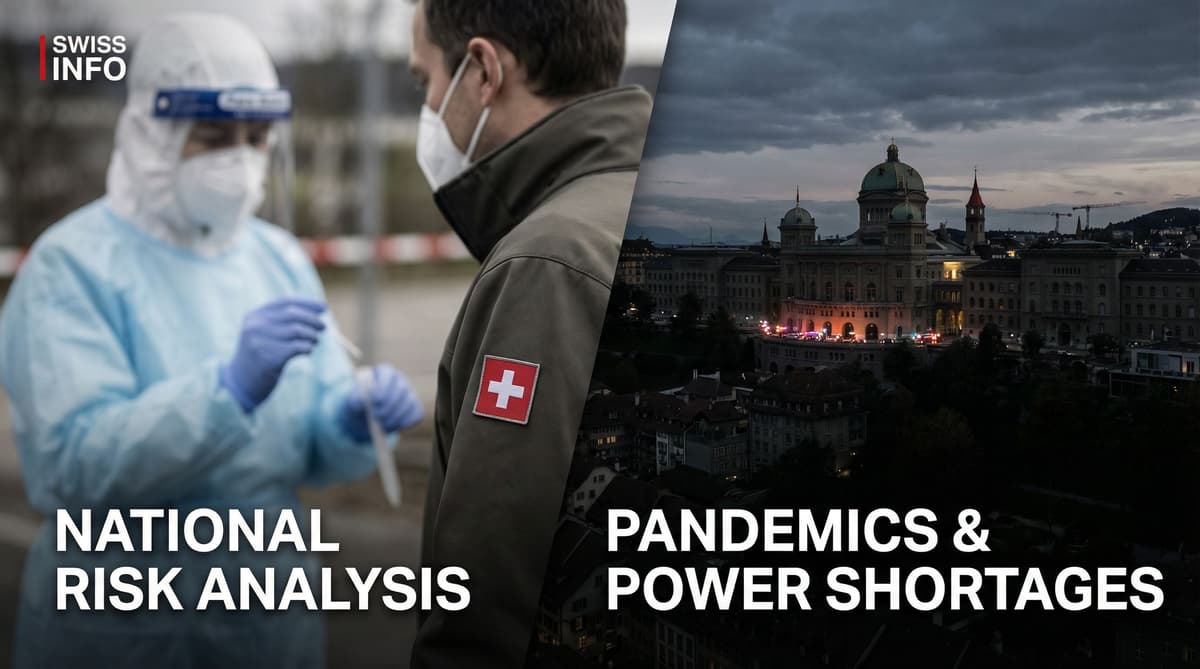
Switzerland is confronting a sobering new reality. The Federal Office for Civil Protection (FOCP) has released its definitive 2025 risk analysis, and the verdict is stark: pandemics and prolonged electricity shortages now stand as the absolute greatest threats to the nation. This is not a drill—it is a data-driven wake-up call.
The report, titled Disasters and Emergencies in Switzerland 2025, identifies these two catastrophes as having a terrifying combination: a massive potential for damage coupled with a disturbingly high probability of occurrence. While Switzerland remains one of the safest nations on Earth, the FOCP's analysis shatters any complacency. We are facing a landscape where biological threats and energy insecurity loom larger than ever before. With 44 distinct hazards analyzed, the prominence of these two specific dangers signals a critical shift in national security priorities. The government is sounding the alarm, and the message is clear: the question is not if a crisis will challenge the Confederation, but which one will strike first.
Power Grid Under Pressure: The Persistent Shadow of Energy Scarcity
The lights may be on today, but the threat of them going out remains critically high. Despite aggressive new rationing plans and mitigation strategies implemented since 2020, the probability of a debilitating electricity shortage has not plummeted—it endures. The FOCP report categorizes this as a top-tier technical hazard, one that could paralyze the economy and disrupt daily life on a massive scale.
While the risk—calculated by potential damage—has seen a slight decline thanks to preparedness measures, the probability of occurrence refuses to drop. Switzerland is grappling with a fragile energy landscape where supply cannot always be guaranteed. This distinction is vital: we are better prepared to handle a shortage, yet the likelihood of facing one remains stubbornly elevated. Furthermore, the analysis highlights the danger of accidents at nuclear power plants and large-scale power failures as related technical threats. In a digitized society dependent on constant voltage, the persistence of this threat is a stark reminder of our infrastructure's vulnerability.
Viral Volatility: Why the Pandemic Threat is Soaring
In a disturbing trend, the threat of a new pandemic has surged significantly over the last six years. While the world attempts to move past recent history, Swiss experts warn that the conditions for biological disaster are more fertile than ever. The FOCP attributes this escalating danger to a lethal triad: rampant globalisation, intensified interactions between humans and animals, and the destabilizing effects of climate change.
Unlike energy shortages, where mitigation has stabilized the risk, the pandemic threat is on an upward trajectory. The potential for damage—measured in both human victims and economic devastation—is classified as extreme. Among social hazards, pandemics now sit alongside armed conflicts as the most destructive forces facing the Confederation. This is a clear signal that public health is no longer just a medical issue; it is a paramount national security concern. The report suggests that as our world becomes more interconnected and our environment more volatile, our exposure to viral threats inevitably climbs.