climate change
Why record ocean heat matters to landlocked Switzerland
Record ocean temperatures in the Mediterranean and globally are creating consequences far beyond coastal regions. Use Swiss climate researchers’ findings to explain the effects on Alpine weather, water resources, ecosystems and the country’s climate policy debate.
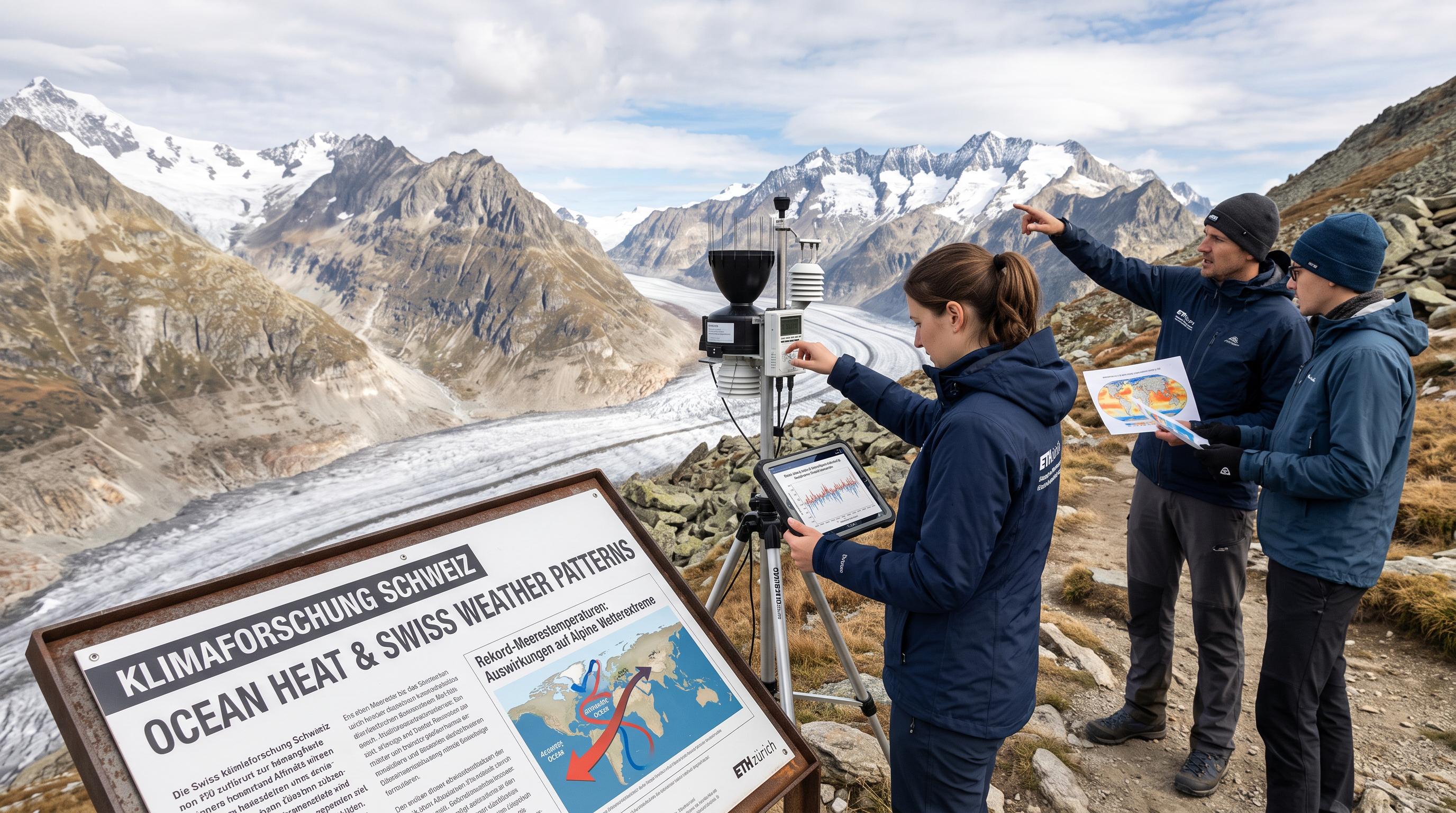
Record Seas Send Heat Toward the Alps
A buoy near Mallorca recorded 33°C this August, bringing ocean warming close to the temperature of a hot bath. The reading captured the scale of a marine heatwave that reaches well beyond holiday beaches. In parts of the Mediterranean, water temperatures climbed as much as 6°C above the seasonal average. Globally, the average sea surface temperature reached 21.1°C in summer 2026, exceeding the record set in 2024, the hottest year since measurements began.
Switzerland has no coastline, yet its atmosphere and water cycle remain connected to the surrounding seas. Warm ocean surfaces add heat and moisture to the air. Weather systems carry that energy across Europe and into the Alps, where it can influence the timing and intensity of rainfall, snowfall and heat. The precise effects vary by season and weather pattern, so no single Swiss storm or dry spell can be attributed to one sea-temperature reading.
Thomas Frölicher, professor of climate and environmental physics at the University of Bern, says the Mediterranean record is “truly an extraordinary temperature record”. His warning is longer term: temperatures that now appear exceptional could become ordinary within 10 to 20 years. That prospect gives Switzerland a direct stake in ocean observations, even from the centre of Europe.
How Ocean Heat Rewrites European Weather
The oceans have absorbed more than 90% of the excess heat produced by human activity. Carbon dioxide, methane and other greenhouse gases trap energy in the atmosphere. The sea takes up most of that additional heat, protecting land areas from an even faster rise in air temperature while accumulating energy throughout its waters.
That storage has limits. Warming is concentrated in the upper 2,000 metres, while measurements around Antarctica and in the North Atlantic show that deeper waters are also gradually heating. Marine heatwaves have become more frequent, more intense and longer lasting. Across European ocean waters, the area affected rose from an average of 40% in the 1980s to 98% during 2023 to 2025, according to the Copernicus European State of the Climate report.
For Swiss researchers and forecasters, this changes the background conditions around every European weather system. Warmer water can increase evaporation and load the atmosphere with moisture. When that air reaches mountainous terrain, the result can be heavier precipitation in some situations. In other patterns, persistent high pressure can reinforce heat and dryness. The ocean does not determine Alpine weather on its own, but its rising temperature alters the energy and moisture available to the systems that affect Switzerland.
Plan Swiss Water Around a Warmer Climate
Water arriving in Switzerland depends on a climate system that begins far beyond the country’s borders. Rain and snow feed Alpine rivers, reservoirs and groundwater. A warmer atmosphere can hold more moisture, while changing circulation determines where and when that moisture falls. The same system can produce intense rainfall during one period and prolonged dryness during another.
That uncertainty matters for Swiss water management. Hydropower operators must balance reservoirs against shifting inflows. Cantonal authorities plan for floods, drought and summer demand. Farmers need reliable water for crops, while cities and ecosystems depend on rivers and lakes that are already exposed to warmer conditions. The source material does not assign any individual Swiss flood or drought directly to the 2026 sea-temperature record. The connection is through the broader climate system, whose baseline is moving as oceans warm.
Frölicher’s concern is that today’s extremes could become routine within 10 to 20 years. That forecast would complicate decisions about reservoir capacity, irrigation, flood protection and early-warning systems. It also strengthens the case for treating marine observations as part of Swiss climate planning. A landlocked country still needs to track what happens over the Mediterranean, the Atlantic and the wider global ocean when assessing future water security.
Track the Ecological Costs Beyond the Coast
Marine life is taking the first blow, but Switzerland is tied to the consequences through food, trade and biodiversity. Prolonged heat places stress on organisms adapted to narrower temperature ranges. Frölicher warns that fragile ecosystems may exceed their ability to adapt, with cascading effects on biodiversity, fisheries, food security and coastal communities.
Switzerland imports food and relies on European transport and markets. Disruption in Mediterranean fisheries or coastal infrastructure would therefore matter to Swiss consumers and businesses even without a Swiss shoreline. The country’s lakes and rivers face their own warming pressures, although the supplied research does not quantify those changes or connect them to one specific marine heatwave.
The ecological signal is already clear at sea. Ocean warming is not confined to the surface, and marine heatwaves now affect nearly all European ocean waters during the latest reported period. Coral reefs, fish populations and coastal habitats respond to sustained heat over time, not just to the temperature recorded on one day. For Switzerland, that makes ocean warming an issue for conservation policy and supply-chain resilience as well as marine science. Protecting inland ecosystems cannot substitute for reducing the emissions that drive warming across the entire climate system.
Put Ocean Heat on Switzerland’s Policy Agenda
The climate policy debate in Switzerland cannot stop at the national border. The World Weather Attribution study cited by Swissinfo identifies fossil-fuel burning as the primary driver of rising temperatures in European seas. Frölicher, one of the study’s co-authors, says every additional tonne of carbon emitted pushes coastal waters and ecosystems toward conditions without a previous equivalent.
That finding gives Swiss emissions policy a measurable regional context. Cutting greenhouse gases does not cool the Mediterranean immediately, and national action cannot reverse a global trend on its own. It does reduce the contribution that Swiss households, transport, industry and energy use make to the accumulation of heat. Adaptation remains necessary because ocean warming is already affecting the climate system, while mitigation limits the severity of future changes.
Swiss climate policy therefore has two linked tasks. Authorities must prepare cantons, cities, farmers, hydropower operators and emergency services for changing water and weather risks. They must also maintain credible plans to reduce emissions, alongside international cooperation. The latest figures provide a clear benchmark: ocean warming is already 1.1°C to 1.2°C above pre-industrial levels, and 98% of European ocean waters were affected by marine heatwaves during 2023 to 2025. Those numbers belong in Swiss policy discussions, even when the nearest sea is hundreds of kilometres away.