tourism
New CHF 400M Chocolate-Themed Park Announced for Broc, Fribourg
A new large-scale, chocolate-themed park is planned for Broc in the canton of Fribourg, with a total investment of CHF 400 million. The project, a partnership between Nestlé Switzerland and Jogne Invest, will expand the existing Cailler museum at the historic chocolate production site.
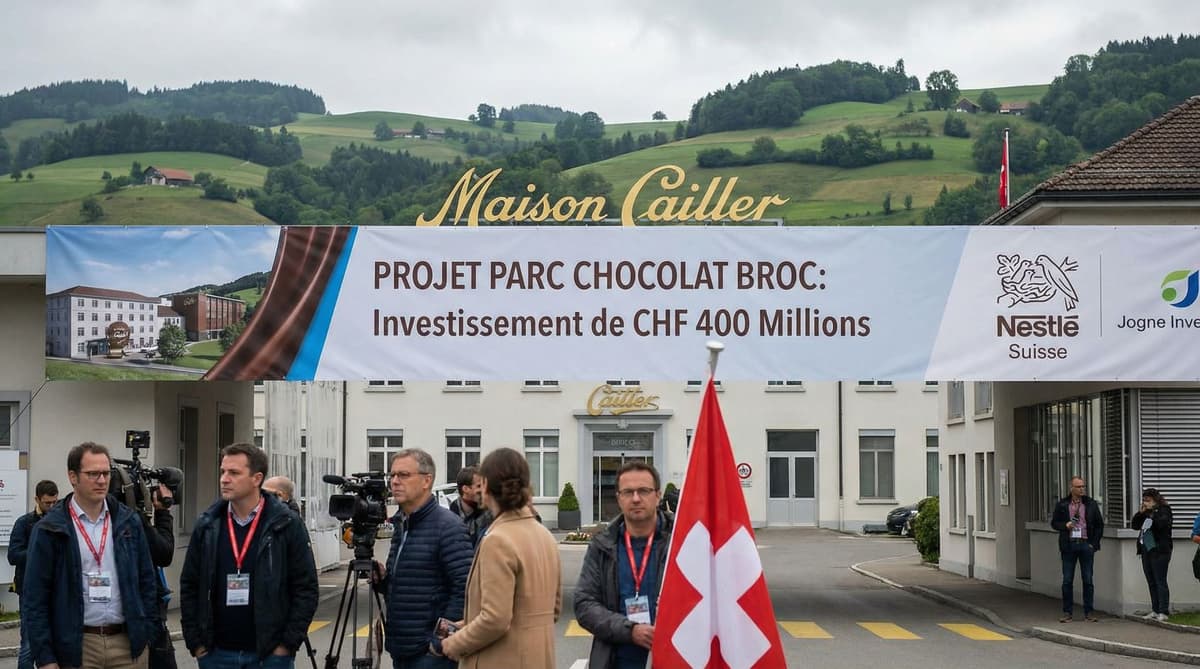
A staggering CHF 400 million is set to flood into the canton of Fribourg, marking one of the most ambitious tourism investments in recent Swiss history. Nestlé Switzerland and investment firm Jogne Invest have officially unveiled plans to transform the historic home of Cailler chocolate into a world-class theme park destination. This is not merely a renovation; it is a complete reimagining of the Broc site, split evenly with CHF 200 million dedicated to the park itself and another CHF 200 million poured into critical infrastructure.
The project represents a bold vote of confidence in the region's economic future. While other sectors grapple with uncertainty, this partnership is doubling down on the allure of Swiss chocolate. The sheer scale of the investment signals a shift from simple manufacturing tourism to a high-stakes, immersive entertainment model. By committing nearly half a billion francs, the developers are making a definitive statement: Broc is poised to become the epicenter of European chocolate tourism. The plans, set for public display in late March, will likely dominate local discourse as the region prepares for a decade of transformative construction.
Engineering an Immersive Chocolate Utopia
Spanning a massive 30,000 square meters, the proposed development dwarfs the current museum footprint. The blueprint reveals a sophisticated integration of agriculture and industry, featuring expansive greenhouses filled with live cocoa trees and a rooftop 'emporium' designed to dominate the skyline. Designers are moving beyond the passive museum experience; they are engineering a sensory assault centered on the taste and smell of chocolate, with a full visit estimated to last up to five hours.
Disused factory workshops, silent for years, will be resurrected and thrown open to the public, blending the gritty reality of 19th-century production with 21st-century entertainment. This is an aggressive expansion of the visitor experience. Where the current tour offers a glimpse, the new park promises total immersion. The inclusion of live cocoa cultivation in the Swiss pre-Alps is particularly audacious, challenging the climatic norms of the region to bring the tropical origins of chocolate directly to Fribourg. This is not just a building project; it is an attempt to synthesize the entire chocolate supply chain into a single, walkable destination.
Navigating the Clash of Heritage and Modernity
The project confronts a critical challenge: modernizing a site that has been in continuous operation since 1898. The Cailler factory is not just a production facility; it is a monument listed in the federal inventory of heritage sites of national importance. This status forced developers to scrap earlier drafts after a 2025 review by federal commissions on heritage and landscape protection demanded the project be scaled back to preserve the site's architectural integrity.
This tension between preservation and progress defines the current proposal. The revised plans walk a razor-thin line, attempting to inject futuristic tourism infrastructure without erasing over a century of industrial history. Existing buildings housing the shop and café will be demolished to make way for the new vision, while the core historic fabric remains protected. The developers have had to bow to federal oversight, proving that even a CHF 400 million budget cannot bypass the strict custodianship of Swiss heritage. The resulting compromise aims to harmonize the industrial legacy of the 19th century with the commercial demands of the 2030s.