Business
Nestlé Faces Fresh Scrutiny with Raids and Critical Report on Scandals
Swiss food giant Nestlé is under pressure on multiple fronts. French authorities have conducted surprise searches at Nestlé Waters sites as part of a fraud investigation. Simultaneously, a French parliamentary report has criticized both the government and manufacturers, including Nestlé, for 'shortcomings' in handling the recent infant formula scandal.
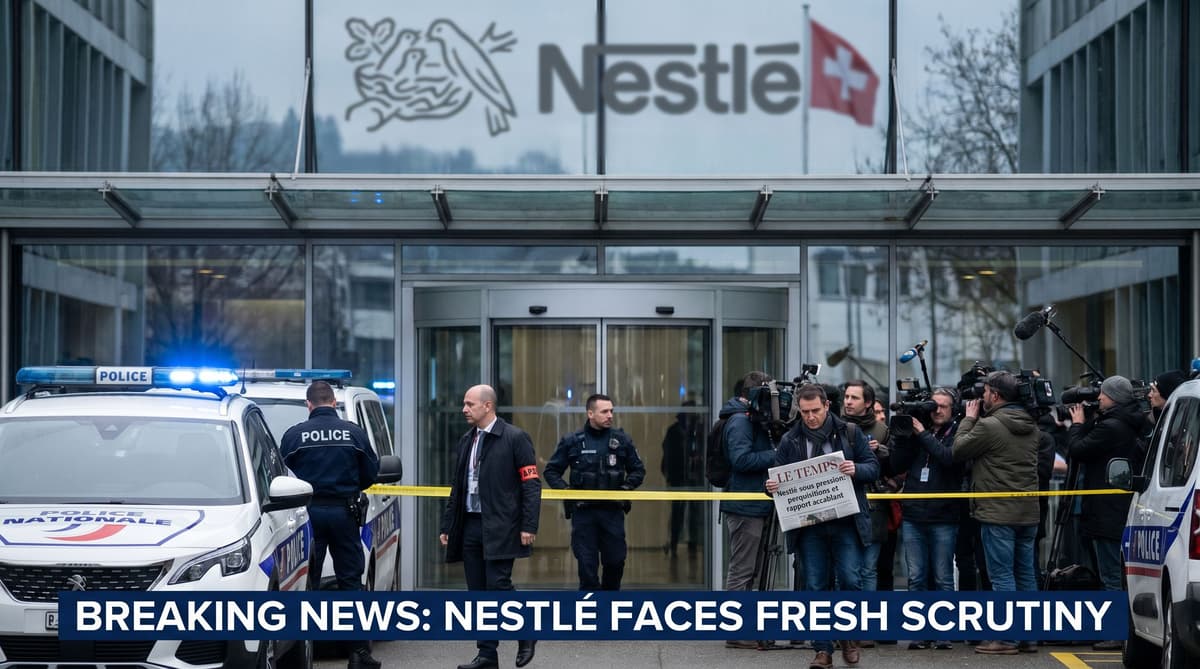
A staggering force of 40 fraud investigators descended upon Nestlé Waters facilities this Tuesday, marking a dramatic escalation in the legal battle surrounding the world’s largest food company. The unannounced raids targeted the iconic Perrier plant in Vergèze and a specialized laboratory in Vittel, as the Paris public prosecutor intensifies an investigation into alleged fraudulent water treatment practices. This is no mere administrative check; it is a high-stakes law enforcement operation triggered by complaints from the NGO Foodwatch. While Nestlé insists it is 'cooperating fully,' the optics of state agents scouring its labs send a clear message: the era of corporate self-regulation is under siege. The investigation probes whether the Swiss giant utilized prohibited filtration methods while marketing products as 'natural mineral water,' a distinction that carries immense brand value and consumer trust. As French authorities tighten the noose, the pressure on Nestlé’s executive suite in Vevey reaches a fever pitch, threatening to tarnish the 'Swiss Made' seal of quality that the company has leveraged for over a century.
The Global Recall Contagion
Nearly 60 countries were plunged into a health panic when Nestlé initiated the largest infant formula recall in its storied history. The crisis, which erupted in late 2025, centered on dozens of batches contaminated with cereulide—a potent toxin capable of inducing severe vomiting in newborns. What began as a localized concern quickly spiraled into a global contagion, forcing competitors like Danone and Lactalis into similar defensive maneuvers. The common thread? A single contaminated ingredient: arachidonic acid (ARA) oil sourced from a Chinese supplier. This systemic failure highlights a dangerous over-reliance on complex, international supply chains for the most sensitive consumer demographic. In Switzerland, firms like Hochdorf were swept into the vortex, proving that no manufacturer is immune to the risks of globalized sourcing. The scale is unprecedented, surpassing previous food safety scares in both geographic reach and the vulnerability of the victims. For a company that built its empire on 'Farine Lactée' for infants, the irony is as bitter as it is damaging.
Twelve Days of Silence
Twelve days—that is the critical window during which Nestlé allegedly sat on evidence of contamination before notifying French authorities. A scathing parliamentary report released this Tuesday slams the 'shortcomings' of both the manufacturer and the state. According to co-author Mathilde Hignet, Nestlé identified the ARA oil contamination on December 24, yet waited until December 30 to warn other manufacturers, and delayed informing the government until January 5. This delay is more than a clerical error; it is a fundamental breach of transparency that put infants at risk. The report further criticizes the French government for its 'growing reliance' on manufacturers' internal controls, a policy that backfired spectacularly during this crisis. It took a staggering 17 days for health professionals to be fully briefed on the risks, a timeline the report describes as 'clearly problematic.' This revelation shifts the narrative from a simple supply chain accident to a question of corporate ethics and the efficacy of state oversight. The findings demand a radical overhaul of how multinational giants report internal failures to the public.