Valais
Mountaineer dies after fall on Matterhorn’s Lion Ridge
A mountaineer died after falling on the Matterhorn’s Lion Ridge at an altitude of about 4,300 metres. The article should report what is known about the accident, the rescue operation and the investigation, while placing the dangers of the route in context without speculating about the cause.
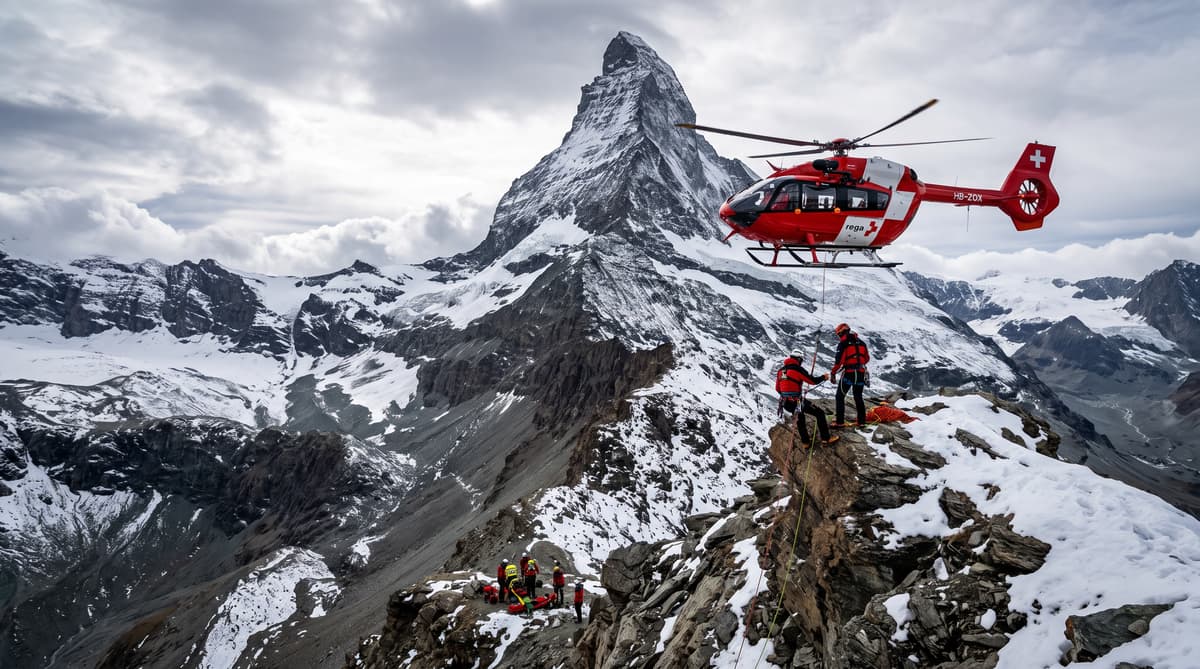
Fall on the Lion Ridge
A fall at about 4,300 metres killed a mountaineer on the Matterhorn’s Lion Ridge early Sunday. The accident happened at around 7am on August 30, according to Valais cantonal police. The climber was travelling with another mountaineer when he fell to his death.
Police have released few details and have not stated what caused the fall. Their statement said it happened “for reasons yet to be determined”. Authorities are also working to formally identify the dead man.
The Matterhorn rises to 4,478 metres, leaving the accident site only a short distance below the summit in an environment where altitude, steep rock and rapidly changing mountain conditions can all increase the demands on climbers. The Lion Ridge, known in Italian as the Cresta del Leone, is the route on the mountain’s southern, Italian-facing side. It involves exposed climbing and technical terrain, requiring careful movement and protection.
The death adds to the risks faced by climbers drawn to one of the Alps’ most recognisable peaks. The available facts remain limited. Police have confirmed the fall, the time and altitude, but no further account of the sequence has been made public.
Rescuers Reach the Ridge
The climbing partner raised the alarm immediately, triggering an airborne rescue response from Valais. The Valais Cantonal Rescue Organisation, known by its French acronym OCVS, dispatched an Air Zermatt helicopter to the Matterhorn.
Rescuers reached the scene from the air and confirmed that the fallen mountaineer had died. The operation’s reported outcome reflects the limits of emergency response at extreme altitude and on steep alpine terrain. The police statement did not provide details about the helicopter’s approach, the condition of the route or whether recovery work had been completed.
Air Zermatt is a familiar presence in the region, providing helicopter rescue services across the Valais Alps. Its crews regularly operate in difficult terrain where weather, visibility, rockfall and landing limitations can shape the response. In this case, the alarm came from the person climbing with the victim, allowing authorities to mobilise quickly.
The incident also illustrates the importance of direct communication between climbing teams and rescue services. At high altitude, an immediate emergency call can provide vital information about location and access. Police have not identified the surviving mountaineer, and no injuries to that person have been reported.
A Demanding Alpine Route
The Lion Ridge places climbers in exposed terrain close to the Matterhorn’s 4,478-metre summit. The route is one of the established ways up the peak, approached from the Italian side through the Breuil-Cervinia area. Its upper sections demand sustained attention, with climbers moving through steep rock and mixed alpine ground above the glacial approaches.
That setting leaves little room for error. A climber’s security depends on route-finding, movement, protection and the conditions encountered on the day. At roughly 4,300 metres, oxygen levels are significantly lower than at sea level, and fatigue can affect physical performance. Those general hazards provide context for the accident, but they do not establish why this particular fall occurred.
The Matterhorn’s profile has made it a symbol of Swiss mountaineering and a major destination for experienced alpinists. Its popularity also means that rescue agencies and mountain guides operate in a landscape where technical skill and preparation are essential. The route’s reputation should not be read as evidence of a specific mistake or failure in Sunday’s climb.
Police have released no information about the climbers’ experience, equipment, route progress or weather conditions. Those details may form part of the investigation now under way.