Lugano airport
Lugano airport secures 30-year future as Ticino hub
Lugano airport has received a 30-year operating concession through 2056 after returning to a modest operating profit. Assess the airport’s strategic role for Ticino, its financial recovery and the challenges it faces as Switzerland considers opening more domestic routes to foreign airlines.
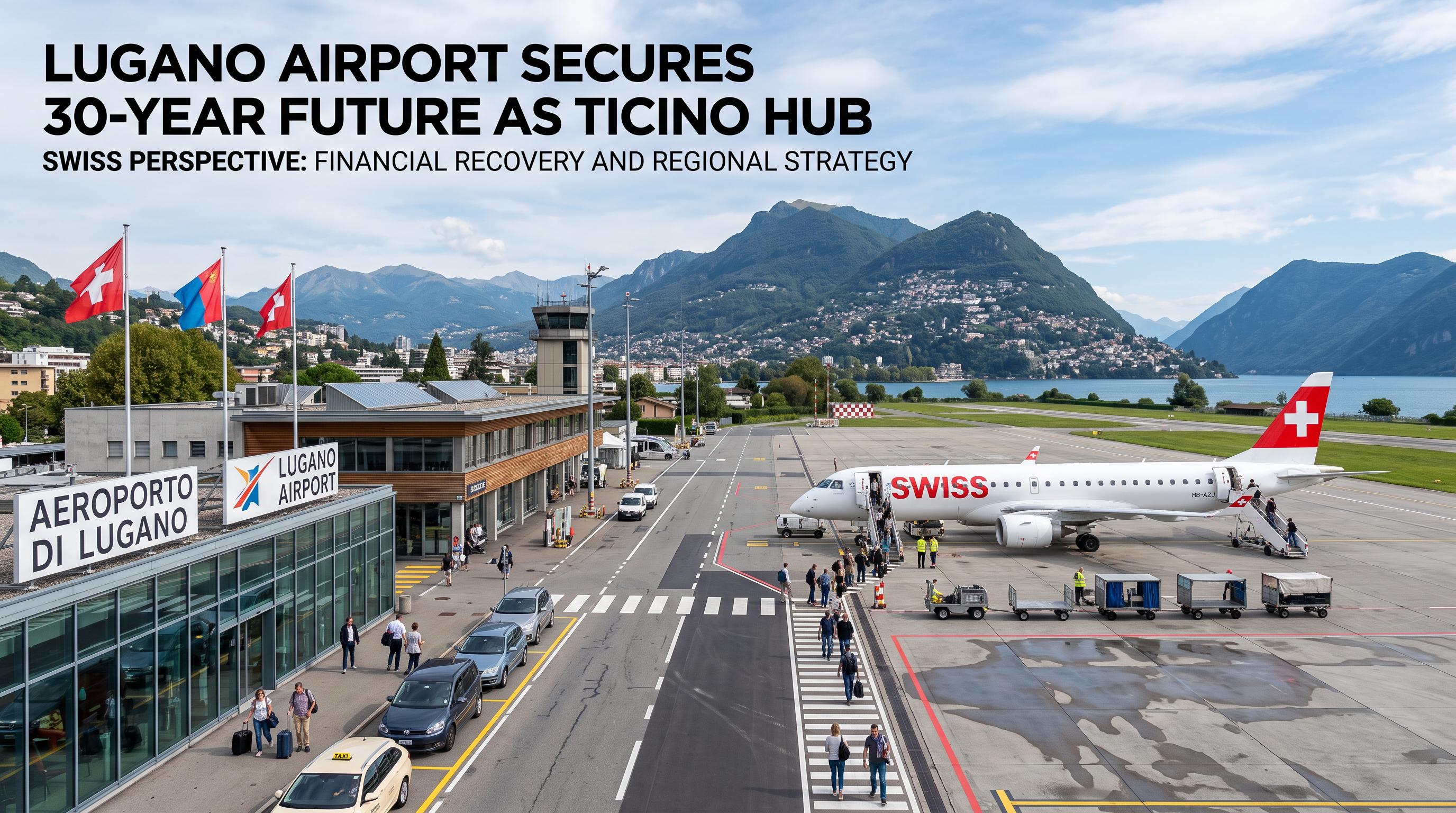
Lugano wins a 30 year runway
Lugano airport has secured a licence that carries it through to September 15, 2056, giving Ticino’s regional airport the longest planning horizon it has had since the pandemic crisis. The Swiss transport ministry’s decision took effect on September 16, 2026, and ends a period in which the airport’s future depended heavily on short term operating and financial arrangements.
For Lugano and the surrounding region, the concession protects an important piece of transport infrastructure. The airport links southern Ticino with Switzerland and neighbouring European markets, while supporting the canton’s appeal to businesses, visitors and residents. Lugano city authorities described it as strategic infrastructure serving “mobility, the economy and the attractiveness of the Lugano region and the whole of the canton of Ticino.”
The licence does not guarantee a full schedule or remove the airport’s financial pressures. It establishes the regulatory basis for investment and route development. Those decisions will determine whether Lugano can convert a long concession into dependable connectivity.
The timing is significant. The airport has moved into what the city calls a phase of gradual consolidation, and its prospects have improved as Bern considers opening selected domestic routes to European airlines. That debate could directly affect Lugano’s ability to rebuild links with Geneva.
A modest profit changes the outlook
The airport returned to an operating profit of more than CHF 200,000 in the first half of 2026, a marked improvement from the deficit of just under CHF 100,000 recorded in the same period last year. Revenue exceeded CHF 7 million, while total costs finished slightly below forecasts.
The figures offer evidence of stabilisation after years of uncertainty. They do not amount to a full financial turnaround, and the source does not provide a net result, passenger total or breakdown of aviation and non aviation income. Still, the change in operating performance gives the airport and its public owners a stronger basis for planning.
Lugano’s financial recovery follows a difficult period. During the Covid pandemic, the former operating company entered insolvency and liquidation. The city stepped in to keep flights operating as a temporary measure and opened a new tender process. A proposed privatisation collapsed in 2021 when the chosen private consortium failed to deliver the required financial guarantees by the deadline.
That history explains why the new concession matters beyond its duration. A stable licence can support negotiations with airlines, lenders and public authorities. It also places responsibility on the airport to show that the recent improvement can continue through changing demand, operating costs and airline decisions.
Bern opens a route back to Geneva
The Lugano to Geneva route could return if Switzerland changes its domestic aviation rules, giving the airport a potential connection to the country’s main political and business centre. The Swiss Senate has backed a measure intended to allow European airlines to operate domestic flights within Switzerland under certain conditions.
That legislative step improves Lugano’s prospects, although it does not itself restore the route. An airline would still need to commit aircraft, crews and a commercially viable timetable. Regulators and operators would also have to settle the conditions attached to foreign participation in the domestic market. The source gives no timetable for the route’s resumption.
For Ticino, Geneva access would offer more than a point to point flight. It could support connections to international services and reduce the need for some travellers to cross the Gotthard or reach airports outside the canton. Business passengers, public officials and visitors could gain a direct link between the country’s Italian speaking south and its western hub.
The route’s return would also test the airport’s new financial footing. Regular service could strengthen revenue and regional access, but an unreliable schedule would deliver limited value. Lugano must make the case to carriers with evidence of demand while keeping costs under control.
Ticino must turn access into strategy
The concession gives Ticino time, but it does not settle the airport’s place in Switzerland’s transport network. Lugano operates in a country with strong rail links, major airports and a limited domestic market. Its case rests on the value of rapid regional access and on the economic activity that reliable air links can support.
The airport’s location gives it a distinctive role. It serves Lugano, the surrounding canton and parts of the Italian speaking region, with the city’s authorities presenting it as infrastructure for the wider Ticino economy. That role will require coordination with rail, road and other airports rather than a simple race for passenger numbers.
Its recent history also shows the limits of political support. Lugano kept the airport operating after the pandemic insolvency and failed privatisation, but public ownership came with continuing financial exposure. The first half 2026 profit is encouraging, yet the figures remain modest relative to the long term investment and maintenance demands of an airport.
The next phase will require clear priorities. Management and public authorities must identify the routes that deliver the greatest regional benefit, secure operators able to sustain them and publish a credible financial path. The 2056 concession creates room for that work. It also gives Ticino a long period in which results will be measured against promises.
The long licence starts a harder phase
The licence now runs for three decades, while the airport’s next test will arrive much sooner through airline and regulatory decisions. Lugano needs to use the stability of the concession to build a durable operating model, not simply to preserve the status quo.
The Senate’s support for conditional access by European airlines could widen the pool of carriers able to serve Swiss domestic routes. For Lugano, that creates an opportunity to pursue the Geneva connection and potentially strengthen its relevance within the national network. It also introduces competition. Foreign airlines may assess demand differently from Swiss operators, and any new service will have to compete with rail and road travel.
The airport enters that debate with a better financial result than a year ago and with revenue above CHF 7 million in the first half of 2026. Those numbers give the city and airport management a useful starting point. They do not remove the need for careful cost control, transparent planning and realistic route commitments.
Lugano’s future as a Ticino hub will therefore depend on execution. The concession supplies the runway for long term planning. The next decisions, over routes, operators and investment, will determine how much of that future the airport can actually deliver.