energy
Kazakhstan to Supply Swiss Nuclear Power Plants with Uranium
Historic first agreement between Kazakhstan's Kazatomprom and Swiss energy company Axpo marks strategic shift in nuclear fuel supply for Switzerland's power plants.
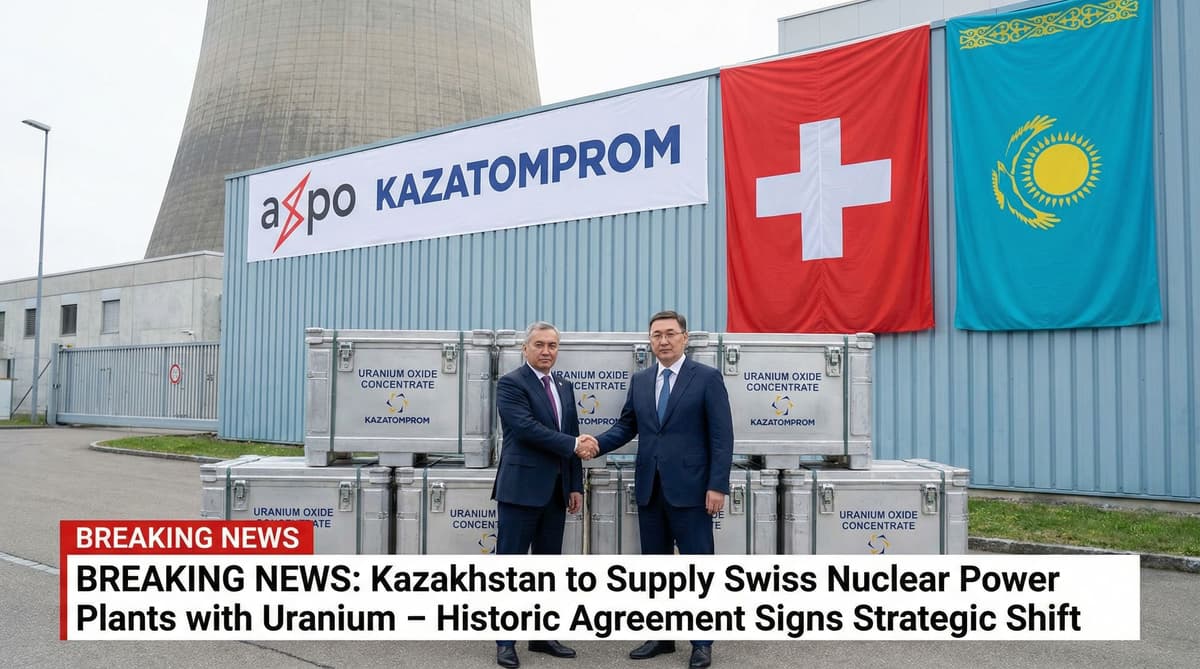
For the first time in history, the lights in Swiss homes will be kept on by the raw power of the Central Asian steppes. In a landmark move that redefines Switzerland's energy security architecture, the Axpo Group has struck a deal with Kazatomprom—the world's undisputed heavyweight champion of uranium mining. This is not merely a transaction; it is a strategic pivot. By tapping into the resources of the world's largest uranium producer, Switzerland is aggressively fortifying its energy independence against volatile global markets.
The agreement, announced Monday, directs Kazakh natural uranium concentrate straight into the reactors of the Beznau and Leibstadt plants in Aargau. While financial details remain under lock and key, the implications are crystal clear: Switzerland is serious about maintaining its nuclear baseload. Axpo’s decisive action ensures that as Europe grapples with energy uncertainty, the Swiss grid remains robust, stable, and powered by a diversified portfolio of global partners.
Diversification Strategy in Action
Reliance on a single source is a strategic failure Axpo refuses to entertain. Bruno Zimmermann, Axpo’s Head of Nuclear Fuel, asserts that this agreement "ensures a stable energy supply for Switzerland and contributes to global decarbonisation efforts." The move is a masterclass in risk management. By securing a direct line to Kazatomprom, Axpo and KKL AG are insulating Swiss infrastructure from geopolitical shocks that have rattled energy markets elsewhere.
This contract is explicitly designed to "diversify and secure" fuel supplies. In an era where energy sovereignty is synonymous with national security, opening a trade route with the world's leading producer is a critical maneuver. It signals that Swiss operators are looking far beyond traditional Western supply chains to guarantee that the turbines in Aargau keep spinning, regardless of shifting global alliances.
Extending the Nuclear Lifeline
Switzerland’s nuclear fleet is aging, but it is far from obsolete. The Beznau plant, a workhorse of the grid operating since 1969, has now been confirmed for service until at least 2033. This new fuel supply is the lifeblood that will sustain these veterans of the atomic age. The timeline for Switzerland's nuclear backbone is stretching further into the future than many anticipated, with the Gösgen plant slated to run until at least 2039 and Leibstadt operating until 2045.
These are not short-term fixes; they are multi-decade commitments. The sheer longevity of these plants demands a supply chain that is equally enduring. By locking in fuel supplies now, Axpo is effectively future-proofing the Swiss grid for the next twenty years. The decision underscores a pragmatic reality: despite the rise of renewables, nuclear power remains the indispensable spine of Switzerland’s low-carbon energy strategy.